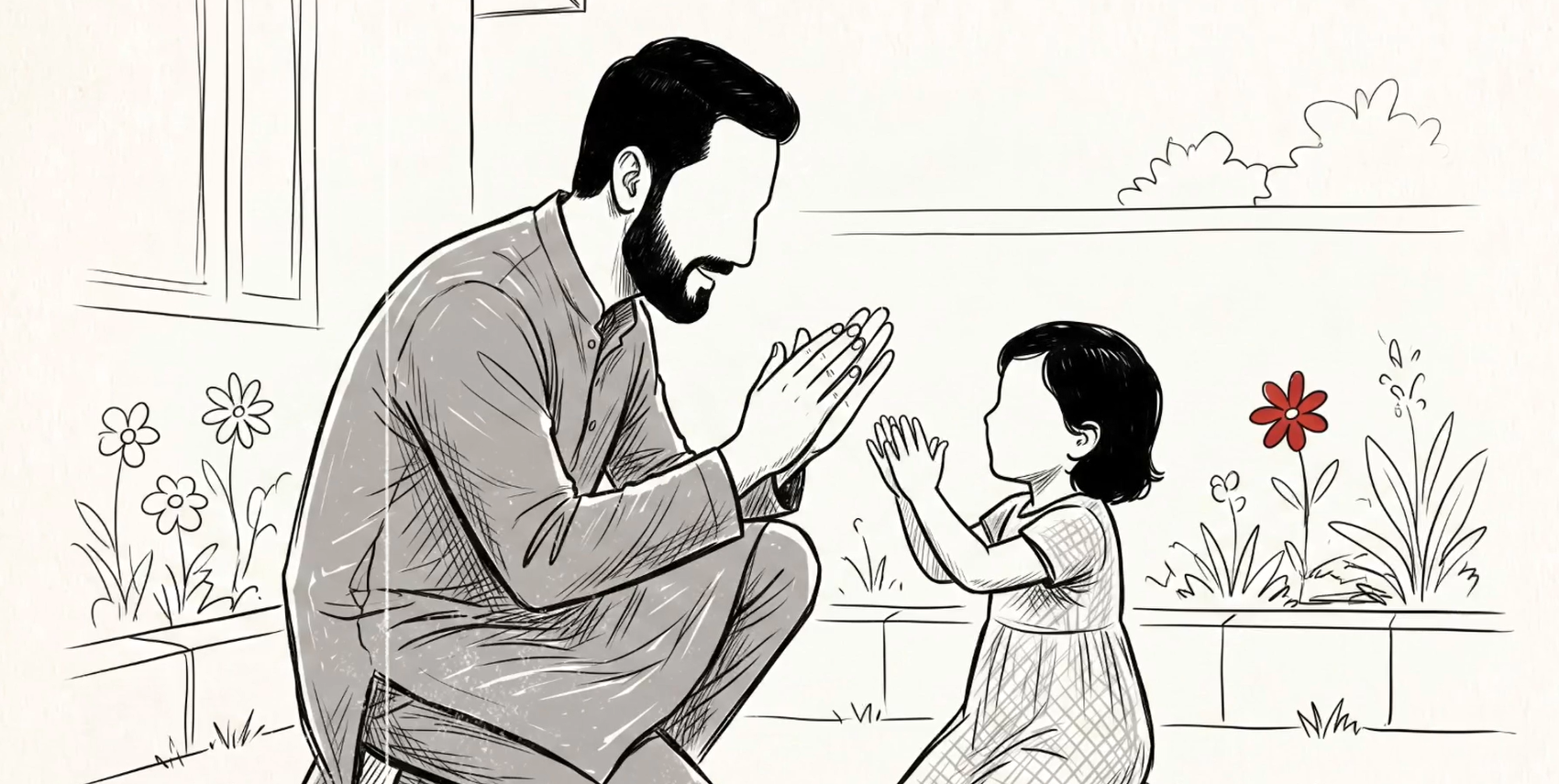
My father used to say, ‘If you can turn someone’s pain into laughter, if you can transform someone’s tears into happiness, you are doing a great deed.’ This has always stayed with me. That’s why I try to make people who are suffering smile and do good deeds. This makes me very happy.
Md Fareeduddin
Lay counsellor
Fareed’s father was an ambulance driver in the Kalyan Department in Hajipur, Bihar. Though he is no longer in this world, his teachings continue to guide his son’s path. He would tell young Fareed about how he would personally carry patients on stretchers to their hospital beds, sometimes asking families if they needed money, not because he had much to give, but because he wanted them to feel that someone cared. “He would say that just asking made them feel like someone was with them,” Fareed recalls, his voice filled with emotion.
This philosophy of service became the foundation of Fareed’s career when he joined Doctors Without Borders/Médecins Sans Frontières (MSF) in 2011.
The Beginning: Kala-azar in Vaishali (2011-2015)
Fareed’s journey with MSF began as a health promoter on the kala-azar project in Vaishali, Bihar, where he worked for approximately four years. It was here that he learned what it meant to reach marginalised communities, people whom society had pushed aside, where medical teams rarely ventured.
“I learned about people who are marginalised, whom society separates, where medical teams cannot reach. They are desperate for treatment and medicine. They want someone to come and help them,” Fareed explains.
During this project, he participated in an anthropological assessment involving 44 patients, working as a translator. The research aimed to understand why children refused to swallow tablets, why some feared injections, or wouldn’t drink certain medicines. The work was challenging but rewarding. When the anthropologist returned to Austria and the report gained recognition, Fareed felt a deep sense of pride that he had contributed to something meaningful.
One memory from this period involves the anthropologist, an international mobile staff visiting villages. “When she would go to the villages, people would surround her from all sides. I would be in a dilemma thinking, ‘I came here for this patient.’ Many people would stand on roofs, some even climbed tree branches,” he laughs. Finding a safe, private space to conduct interviews became an adventure in itself.
Into the Mountains: Tripura Malaria Response
When Fareed was selected for the malaria response project in Tripura, people tried to discourage him. “They said, ‘It’s a hilly area, there’s no drinking water, no electricity, wild animals live in the jungle,’” he remembers. But his response was simple: “People live there, don’t they? We’re going for people. How do they survive?”
The journey to Dhalai district, Tripura, was treacherous. After flying to Agartala and then travelling four hours to Manu, where the head office was located, Fareed was appointed as team leader for community awareness activities. The terrain was unforgiving, muddy roads where vehicles would lose balance, forcing the team to walk 10 to 15 kilometres through mountainous paths.
During one incident, their vehicle nearly toppled into a ravine. While others jumped out to save themselves, Fareed stayed with the driver. “I said, ‘Brother, we have to jump, but this is MSF’s vehicle too, our property.’ We supported the driver and somehow balanced the vehicle and saved it,” he recounts.
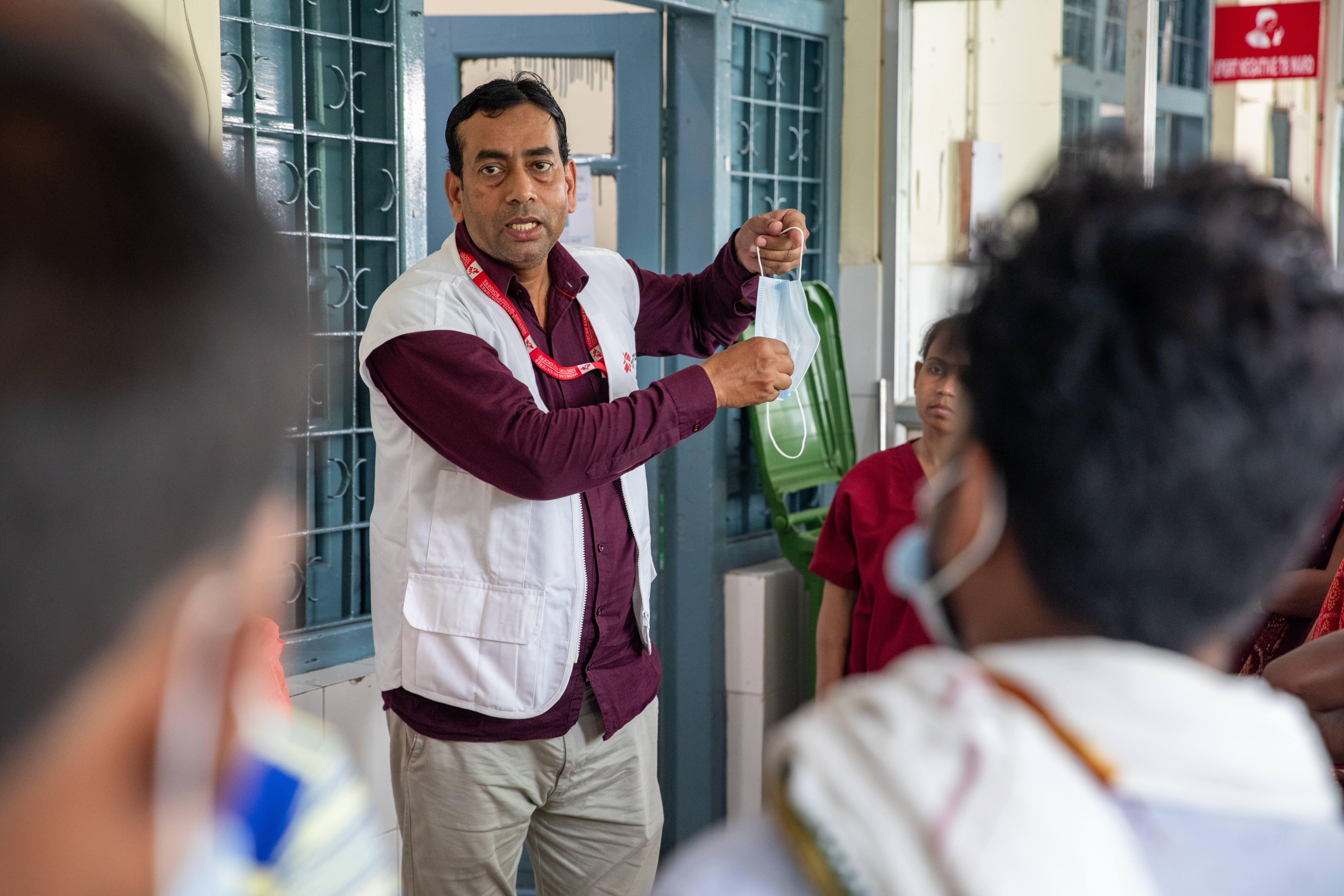
The challenges were constant. Paths would disappear due to landslides, forcing them to rely on porters who knew alternative routes. The heat was intense, and they would suck on lemons to quench their thirst during long walks. Yet what struck Fareed most was the hygiene practices of the tribal communities. “People live in the jungle, but their cleanliness methods impressed me. I told my team, ‘Look, we live in cities, go to bus stations, railway stations, people urinate wherever they want. But here in the jungle, they are better than us in hygiene.’”
He also noticed their deep trust in traditional herbal medicines over pharmaceutical drugs. “They are very innocent. Hill people believe more in herbs than medicines. They trust the natural remedies from plants and leaves more than the medicines we brought,” he observed, sharing this insight with his team to improve their approach.
Leeches were another constant companion. “When we would cross rivers in hilly areas, leeches would attach to our clothes or legs. Sometimes we wouldn’t feel it, but sometimes they would start to sting. When we reached our centre and checked, there would be big leeches, swollen like balloons from sucking blood.”
COVID-19 in Patna
MSF assigned Fareed to the COVID-19 centre in Patna when the pandemic was at its peak. “People ran away seeing COVID-19 patients, saying, ‘What if I get COVID-19 too?’” Fareed says.
He admits he was terrified too. “If we had to wash hands four times a day, I would wash them 10 times. I was that scared,” he confesses. But fear didn’t stop him from doing his work.
One day, a patient arrived by ambulance, so weak he couldn’t stand. His daughter was crying inconsolably on the stairs. “Seeing her cry, I started crying inside too. But I didn’t show it in front of her,” Fareed shares. In his emotional state, he forgot to check if his gloves and apron were properly secured and touched the patient, who was drenched in sweat. “That was my mistake. I think from that day, when I touched him without proper protection, I got infected.”
Within days, symptoms appeared – fever, loss of taste, exhaustion. His friend urged him to get tested, but Fareed resisted: “I said, ‘If we test, it will come positive, and they’ll admit me.’ But someone informed the authorities.” Dr Gaurav called: “Fareed, get ready to be admitted.” The test came back positive.
His wife broke down. “She cried so much, asking, ‘You have COVID-19. What will happen to the children?’” Fareed looked at his children and tears came to his eyes too. “COVID-19 was new. People were so scared. I was scared too, thinking, ‘What has happened to me?”
He tried to comfort his wife: “I said, ‘Don’t worry, we have to be brave. If all of us leave out of fear, who will help whom? Everyone is already running away. If I die, it’s my destiny. And if I die while helping someone, while serving, that’s a great thing.’”
He spent 17 days in isolation. His own team members would knock, leave food, and run away as if an earthquake was coming. “I thought, ‘When medical people behave like this, what will happen?’”
After a week, he felt he wouldn’t survive. “I became so weak. I had such severe loose motions that I couldn’t eat. I thought I should talk to my wife – I don’t know if I’ll see the next day. I’m telling you the truth.” He video called his family, and tears rolled down his cheeks. When his wife asked why he was crying, he lied: “I said, ‘I’m not crying. I just washed my face and brushed my teeth.’”
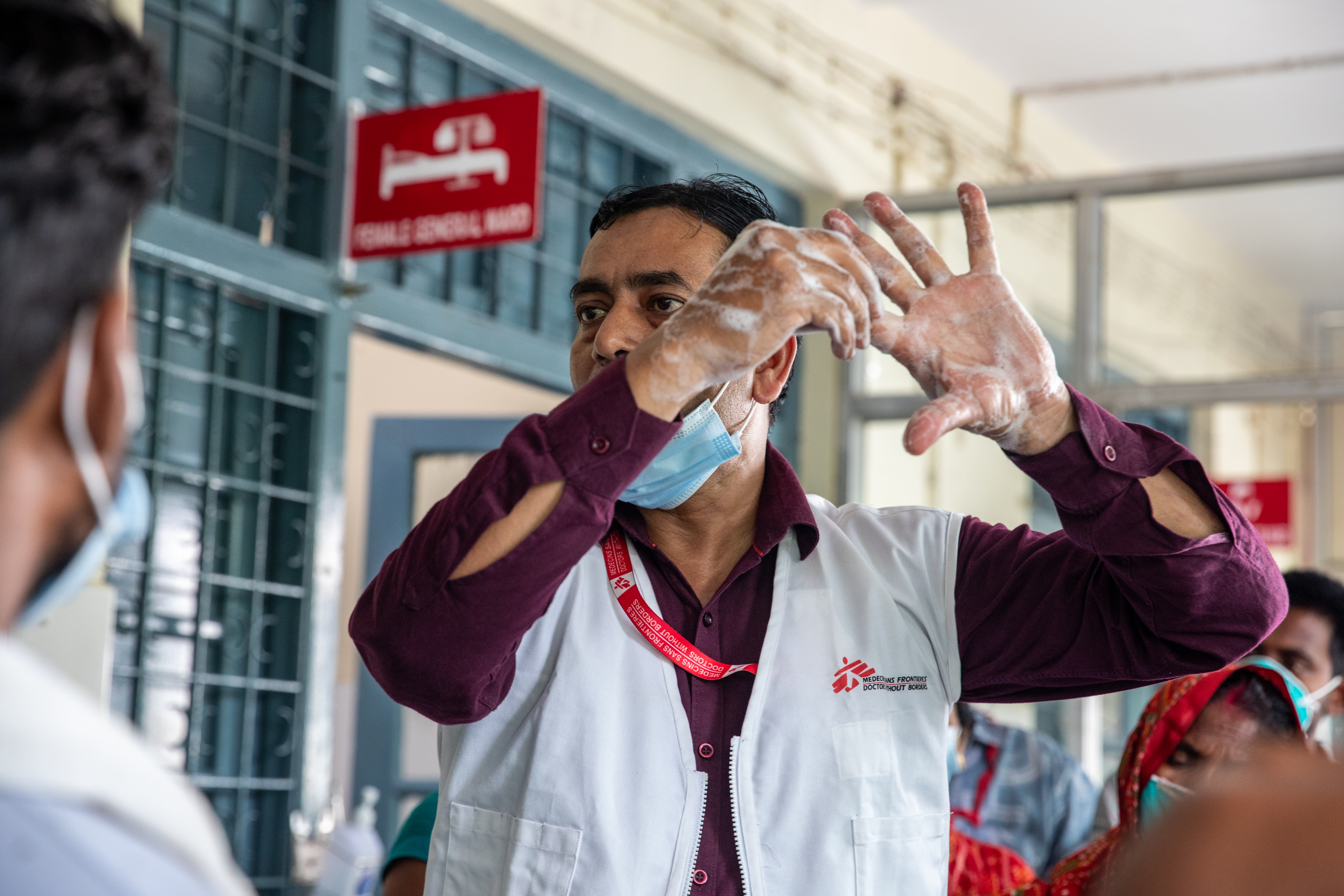
But Fareed gathered his courage. “I slowly, slowly encouraged myself. I kept trying, and good things happened. In 17 days, I was out of the ward.”
When offered to go home, he refused. “I said, ‘Absolutely not. I’ll join duty from here.’” He went straight back to duty. His senior, Pooja, asked, “Fareed, are you feeling better?” He replied, “Yes, I am feeling better. I am ready to do my job.”
His colleagues were amazed. “Everyone said, ‘You have so much courage, you stayed for 17 days and suddenly came back to duty.’ I said, ‘Yes, now I’ll go home after doing duty. If I go home sick, I’ll feel like something happened to me. But if I go after doing duty, I’ll feel like I did something good.’”
Current Work: HIV/AIDS Awareness
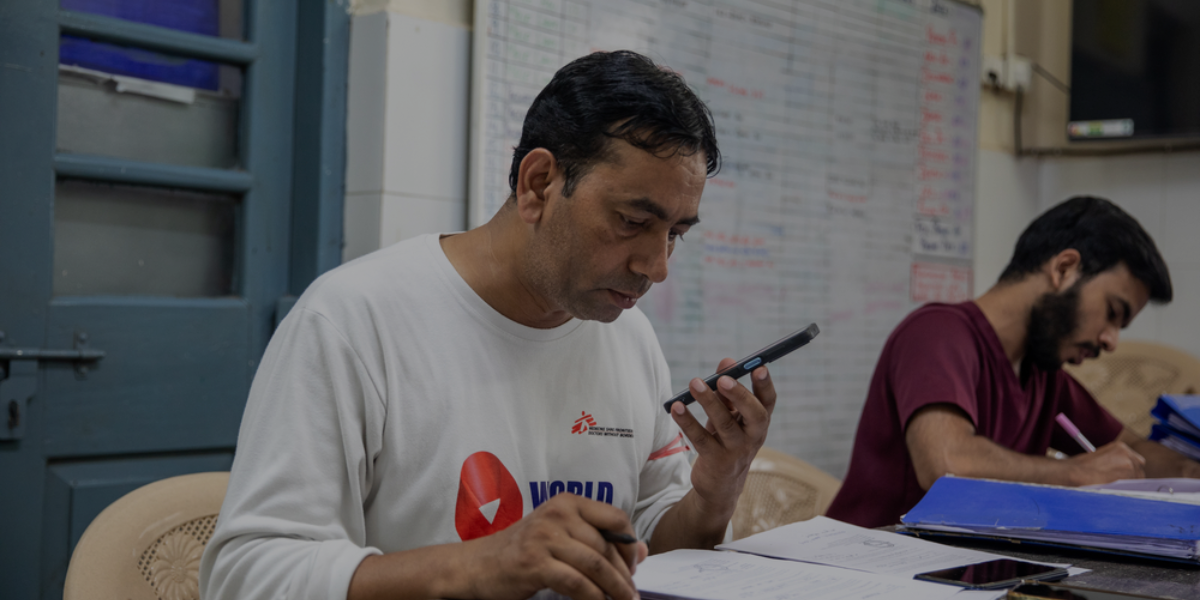
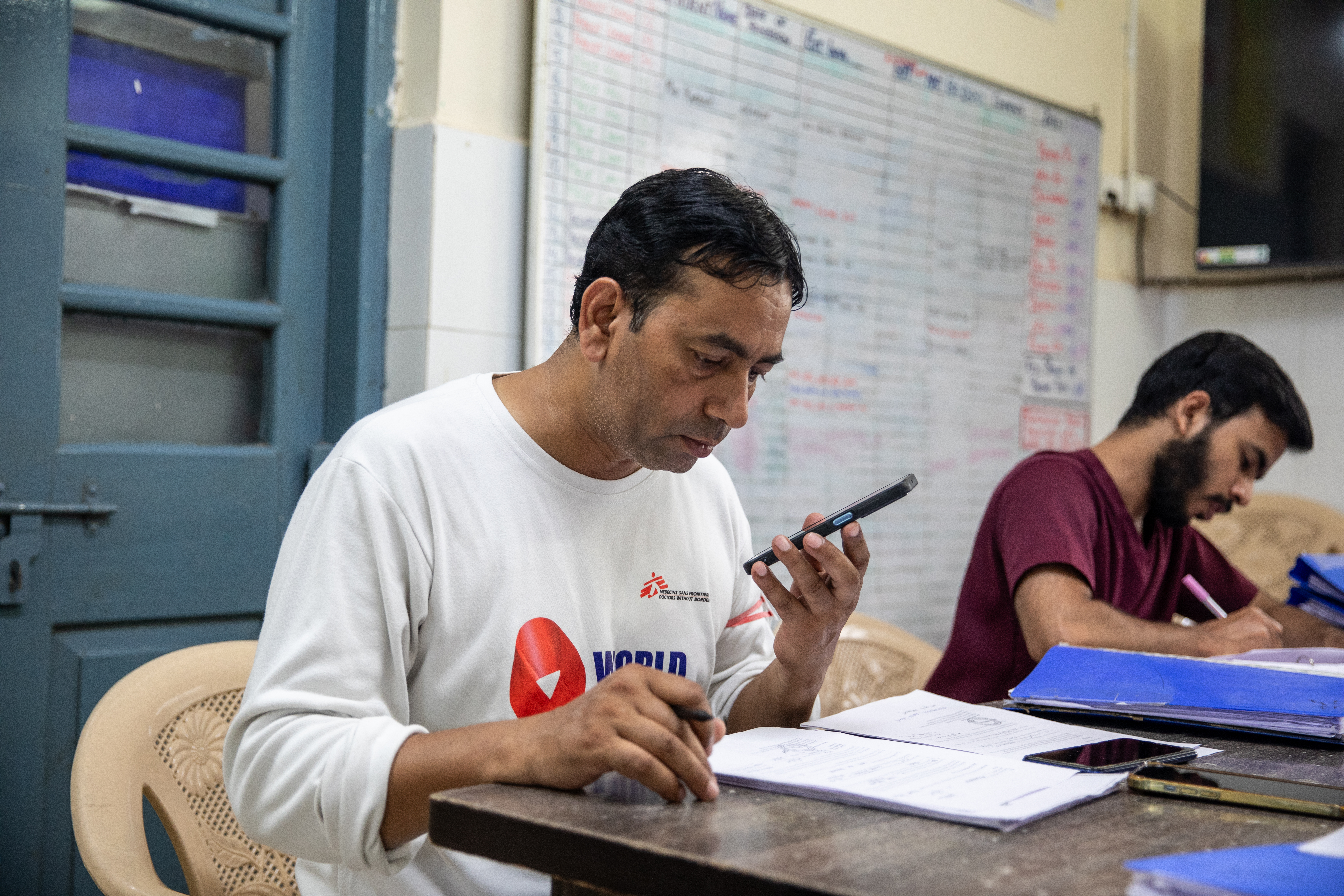
Today, Fareed works as a lay counsellor educator in MSF’s HIV/AIDS programme. He trains Accredited Social Health Activist (ASHA) workers at community health centres, sensitising them to identify suspected cases and inform authorities confidentially so families can be protected from stigma and discrimination. He also works to aware the patients and caregivers about HIV/AIDS.
The work is challenging because many people in villages are being cheated by quacks promising miracle cures. “They don’t have money to go to the right place for proper treatment. When we go, we give them complete information. Fareed’s approach is rooted in awareness. “There is no cure for this, and I can stop this transmission through awareness. As long as I’m here, my effort will be to prevent this disease from spreading and save people’s lives.”
The MSF Difference
Reflecting on his journey, Fareed is deeply grateful to MSF. “MSF has trained me so much that today I have the courage to go into any project. I feel like someone is standing with me. I am very thankful to MSF.”
He credits the organisation with teaching him everything from how to speak and interact with communities to basic safety measures. “I’ll even tell you this, I didn’t have the habit of wearing a seatbelt in vehicles. But when I joined MSF, I understood how important it is. MSF thinks about its employees’ security first, and also fully helps those who trust MSF for treatment.”
What motivates him to continue? “When I see that no one else is doing it, I do it, If my work brings a smile to their face, that’s a matter of great happiness for me.”
The people working in MSF are so sensitive and aware that they have such a feeling of helping others. They don’t think about themselves; they think about how to save these people. I feel proud that I am doing something for society, for such communities where people don’t prefer to go. By helping them, I feel very proud of myself.
Md Fareeduddin
Lay counsellor