By Ángel Sijé Blancarte Ochoa, in conversation with Sonia García, MSF Project Medical Referent in San Pedro Sula
Since 2025, Doctors Without Borders / Médecins Sans Frontières (MSF) has been running a project in San Pedro Sula, northern Honduras, focused on improving adolescents’ access to sexual and reproductive health services. Through clinics, mobile teams and activities in schools, MSF provides comprehensive sexual and reproductive healthcare, including medical and psychological support, social work assistance and health promotion, as well as urgent and comprehensive care for survivors of sexual violence, in a context where access to these services remains limited.
After a year of work, experience in the field has left important lessons on how to bring care closer to a population affected by stigma, misinformation and violence. Sonia García Corona, MSF Project Medical Referent, reflects on some of these lessons.
1. Comprehensive care: one team, one message
MSF’s approach combines medical care, mental health support, social work and health promotion under one strategy.
This integrated model allows teams to respond more effectively to adolescents’ needs, from access to contraceptive methods to psychological support and health guidance. Rather than isolated services, the project builds a care process that brings together different dimensions of well-being.
2. Building support networks: educating those who accompany adolescents
Working with adolescents cannot focus only on them. Barriers to healthcare also exist within their environment.
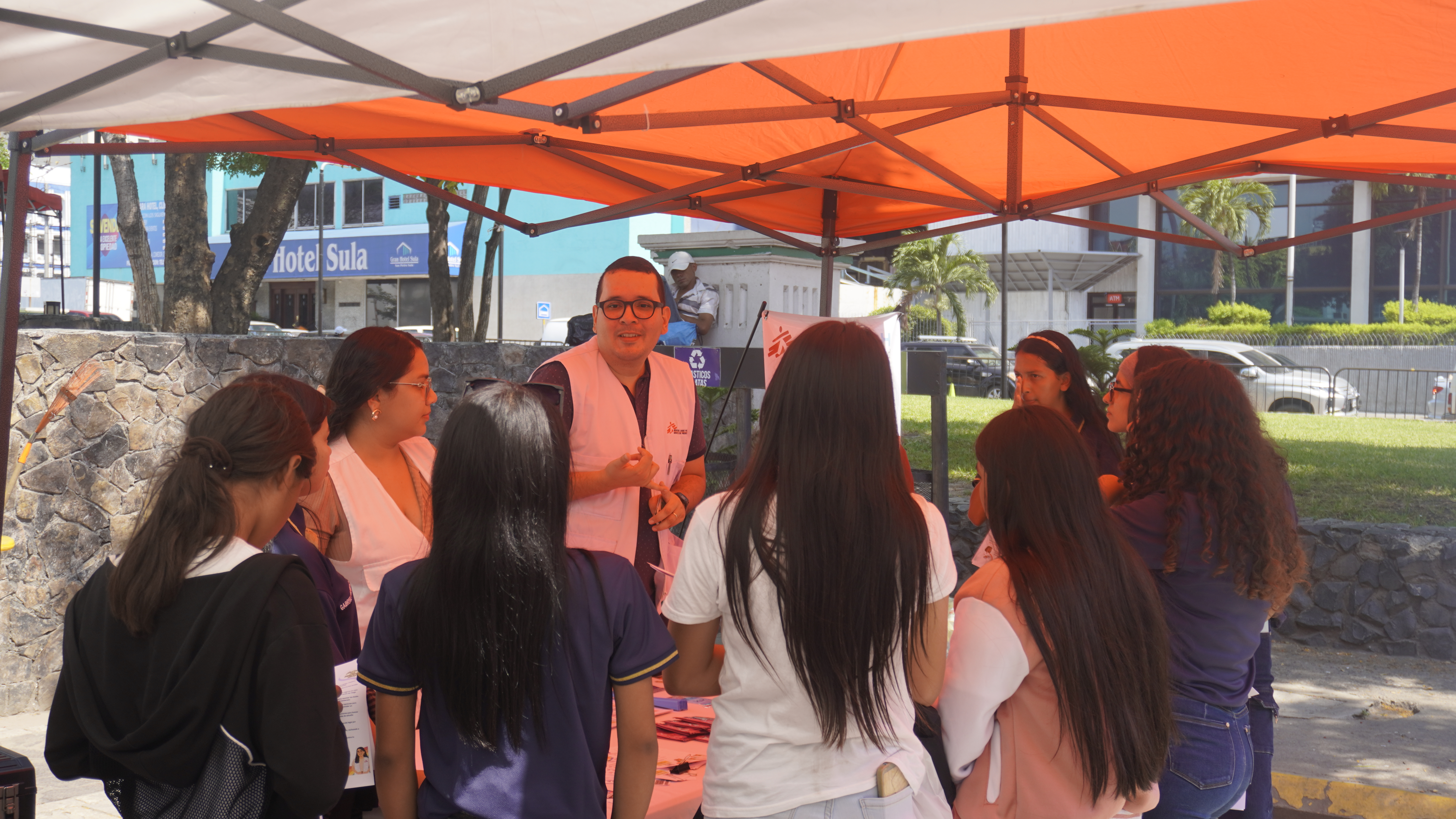
For this reason, MSF has developed tailored sessions for families, teachers and school communities to help create more informed and less stigmatizing environments. When adults have access to clear and reliable information, they can become a support network that facilitates access to care and reduces risks.
3. Trust as the entry point
In contexts where the relationship with healthcare services is limited or distant, trust becomes a key factor.
The continuous presence of MSF teams in the same spaces — such as schools and community areas — helps create familiarity and recognition. This allows adolescents to know who they can turn to when facing questions or risky situations.
That trust is especially important in cases of sexual violence, where seeking care depends not only on service availability, but also on the perception of safety and confidentiality.
4. Naming things is an act of care: information as a prevention tool
The first step in care does not happen during the consultation, but through information. In a setting where sexual and reproductive health continues to be shaped by stigma, speaking openly about the body, sexuality and related risks is a form of prevention.
The lack of access to clear and trustworthy information exposes adolescents to making decisions in situations of uncertainty, often relying on unsafe sources. Providing information without judgment helps build self-care tools and strengthens their ability to make informed decisions about their own health.
5. Expanding outreach: reaching those left behind
One of the main challenges is reaching adolescents outside the school system, including those in situations of mobility, those who work or those who have dropped out of school.
In areas such as Chamelecón, working closely with communities has helped create spaces where out-of-school youth can access informational activities and healthcare services. Although these efforts are still limited, they highlight the need to expand the model to other areas where access remains restricted.
From care to everyday change
The impact of this work is not always measured in numbers, but in everyday transformations: when an adolescent seeks information without fear for the first time; when a family chooses to support instead of judge; or when a community begins speaking openly about topics that were once silenced.
Beyond medical consultations, working with adolescents means building relationships, generating trust and creating spaces where comprehensive access to healthcare becomes possible.