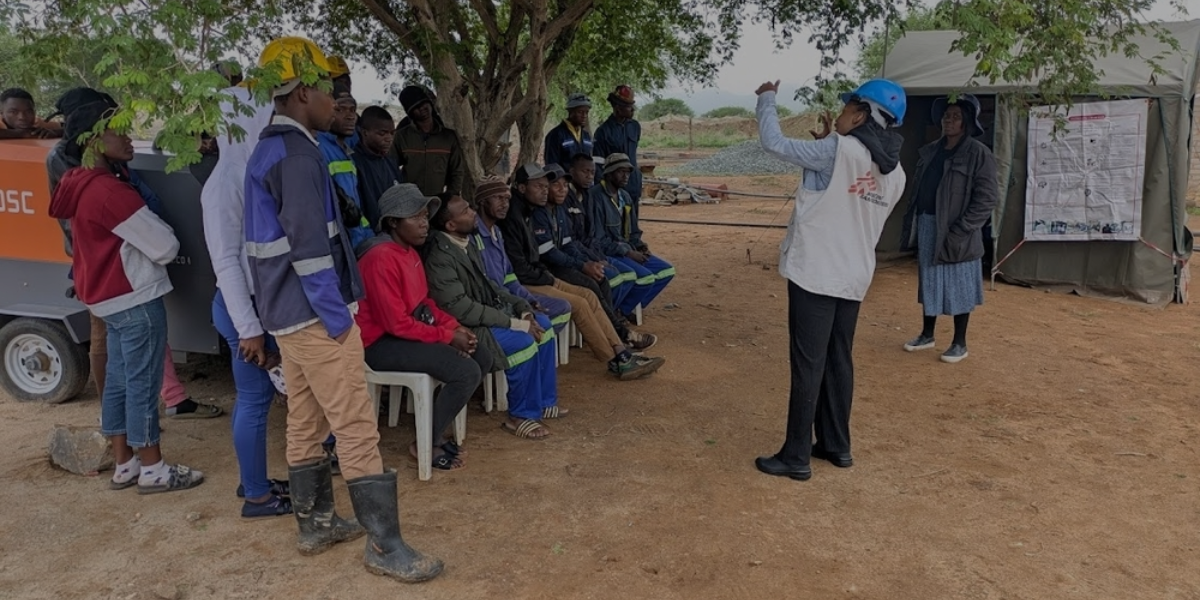
In Gwanda, artisanal miners often work in difficult conditions underground, exposed to dust and confined spaces that increase their vulnerability to respiratory diseases such as TB and silicosis. At the same time, distance, limited resources and poor access to health services can make it harder for miners and surrounding communities to get screened early. To strengthen TB screening and bring diagnostic services closer to communities, MSF Zimbabwe has introduced an important piece of innovation, the ultra-portable x-ray machine to its outreach activities in Gwanda.
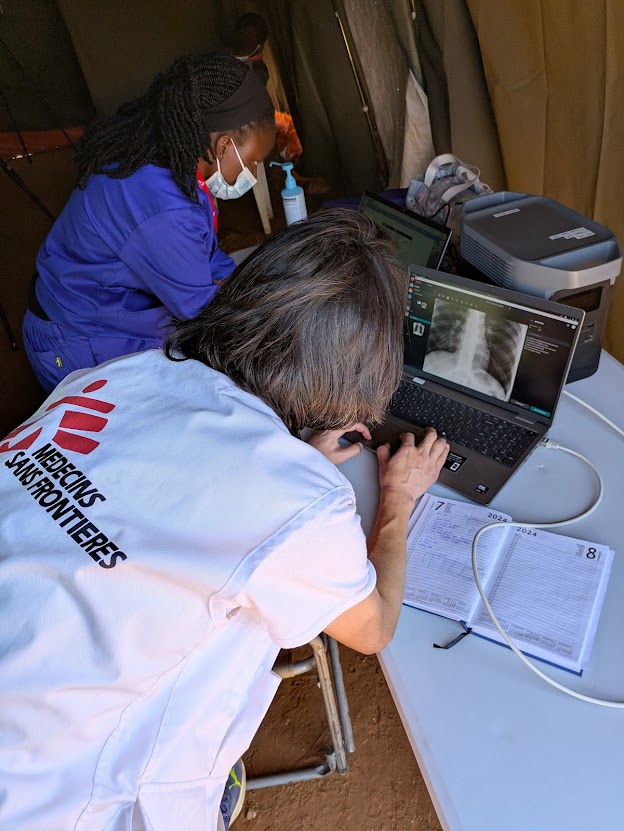
This ultra-portable X-ray machine is helping to overcome barriers and improving access to timely screening, diagnosis, and care for the artisanal miners and host community. It also integrates Computer-Aided Detection (CAD), an AI-based tool that supports image interpretation. This is particularly valuable in settings like Zimbabwe, where radiologists are scarce and access to expert reading is limited. CAD helps non-specialist healthcare workers identify suspected abnormalities with greater confidence.
Combined with on-the-spot review by trained staff, this technology significantly strengthens diagnostic capacity in remote settings, ensuring earlier detection and more timely care.
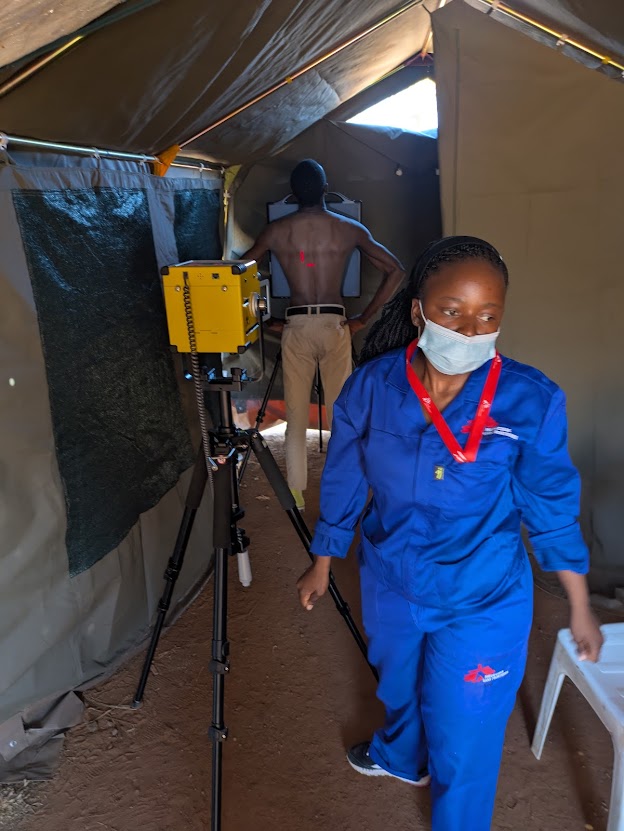
Here are 5 things you should know about the ultra-portable X-ray machine in Gwanda.
- It goes where patients are
The ultra-portable X-ray machine is lightweight and easy to transport, allowing MSF teams to reach artisanal miners and remote communities that may otherwise struggle to access diagnostic services. It can be transported at the back of a Land Cruiser and can also be carried in a backpack, much like a laptop, making it practical for outreach in hard-to-reach areas. - Quick to set up, easy to use
Designed for remote locations conditions, the ultra-portable X-ray machine is simple to set up and operate, enabling healthcare workers to begin screening patients within minutes. It can be set up almost anywhere, making it especially useful for outreach activities in remote and hard-to-reach areas where access to health services is limited. This flexibility allows MSF teams to take screening services closer to patients, helping ensure that more people can be reached early and linked to care on time. - Instant imaging for faster care
The device produces immediate X-ray images, allowing healthcare providers to quickly interpret results and make timely decisions about patient care. With no long waiting period for results, patients can be screened and assessed on the spot during outreach activities. The machine also uses Computer-Aided Detection (CAD) to support image analysis and assist healthcare workers in identifying potential abnormalities. A practitioner who is part of the outreach team can review and interpret the images immediately, helping to support faster decision-making, timely referrals and early linkage to care.
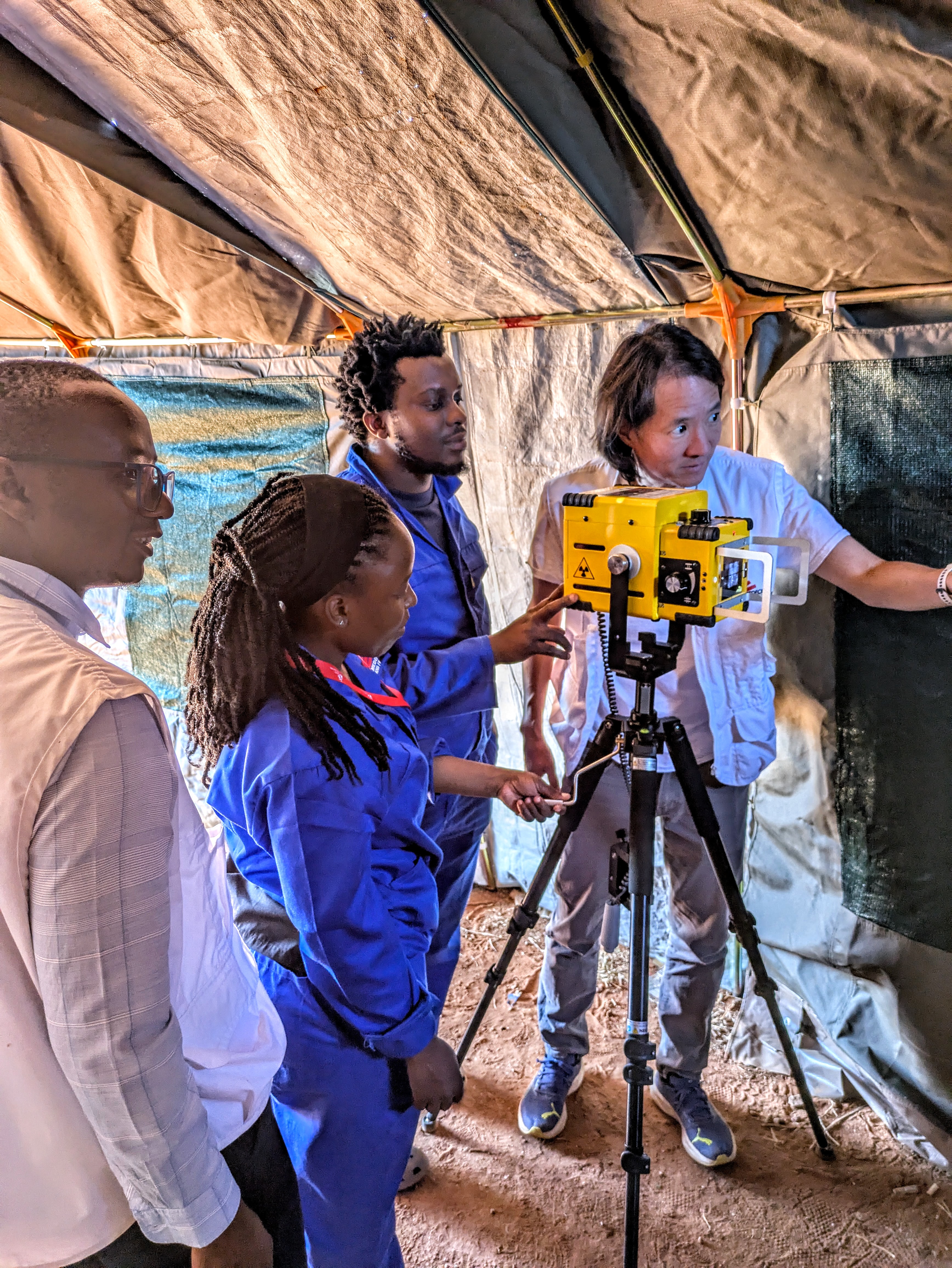
4. Energy-efficient and outreach-friendly
This device does not require a high-power electricity supply, as it can operate on battery power and allows for extra batteries to be carried when needed. This makes it especially practical for use in remote areas where electricity is limited or unreliable. Its ability to function in such settings makes it particularly valuable for communities where artisanal miners are mostly found. Using minimal battery power, it can perform up to around 70 X-rays on a single charge, making it ideal for outreach services.
5. Safer, low-radiation technology
With lower radiation levels than traditional X-ray systems, this machine helps make screening safer for both patients and healthcare workers. This is particularly valuable in community outreach settings, where many people may need to be screened in a short space of time. The technology reduces unnecessary exposure while still delivering clear images needed for timely diagnosis. As a result, it supports safer, more accessible screening services for remote and underserved communities.