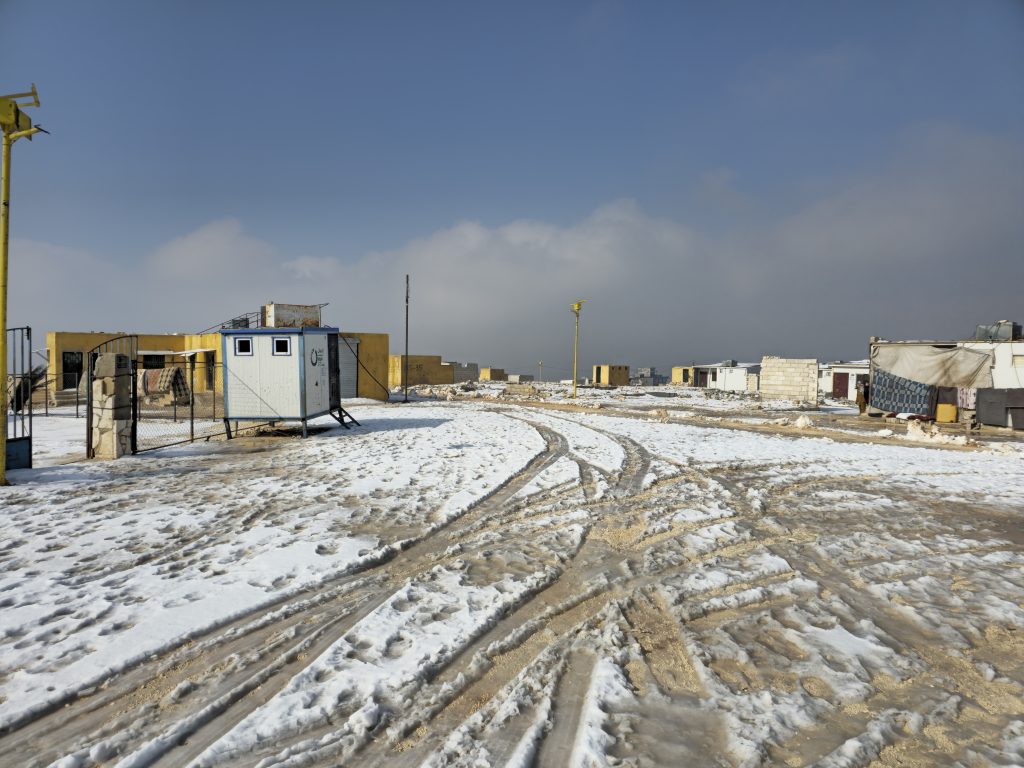
In Syria, despite the end of the war, people continue to live with the heavy legacy of fourteen years of brutal conflict. Years of aerial attacks and protracted hostilities, including in rural areas around Homs, Hama, Aleppo, and Idlib, have destroyed homes and essential infrastructure, left countless families with no choice but to flee. Many families sought shelters in the mountains, where harsh winters added to their daily struggle. What began as emergency displacement camps turned into a fragile, long-term living area.
If millions of people have been able to return home, many displaced families remain in camps as they often don’t have the financial capacity to rebuild their lives. Their houses in their hometowns have been completely destroyed; basic services are absent and livelihood opportunities are scarce, leaving people dependent on humanitarian assistance that has steadily declined over the past couple of years.
Despite huge needs remaining in Syria, the country has witnessed a decrease in humanitarian funding. MSF urges humanitarian organisations to step up their response, including for people who are still displaced and struggling to survive.
The winter months are particularly dangerous, and without sustained aid, people will continue to face life-threatening conditions.
I returned home after the shelling to find my house levelled to the ground. I did not grieve for my home as much as I grieved for my olive trees. I grew olives and oranges on my land, and everything was gone.
Um Ayman, 75
Syrian refuge who grieves the destruction of her olive farm
Across the Harim mountainsandaround the town ofSalqin in Idlib province, more than 50 displacement camps are still sheltering thousands of families, many living in makeshift homes made from salvaged materials or bricks. During winter storms, water seeps into tents, snow piles up between shelters, and families struggle to stay warm. When temperatures drop, heating becomes a necessity, not a comfort. Roofs are often unstable, offering little protection against snow, rain, and freezing cold.
Um Ali, a mother of three, lives in Al Fardan camp: “When the snow started falling, the plastic-sheet roof collapsed. We were unable to remove the snow because we live in a mountainous area.”
Initially, humanitarian organisations rushed to provide emergency support, but over time, the amount of aid provided has reduced. Today, many displaced families are largely left to manage on their own, with only limited assistance. Makeshift shelters deteriorate with each passing season, and families must gather whatever materials they can find to keep their homes standing.
Abu Musa, a resident of one of the camps, recalls: “It’s been one year and few months since we last received assistance from humanitarian organisations; after the liberation, no one provided any kind of support to people living in the camps here.”
Humanitarian needs are immense and growing. Families lack access to adequate food, healthcare, winter clothing, blankets, and medicines. Some camps have small clinics, but supplies are limited, and services are paid, putting essential care out of reach for many.
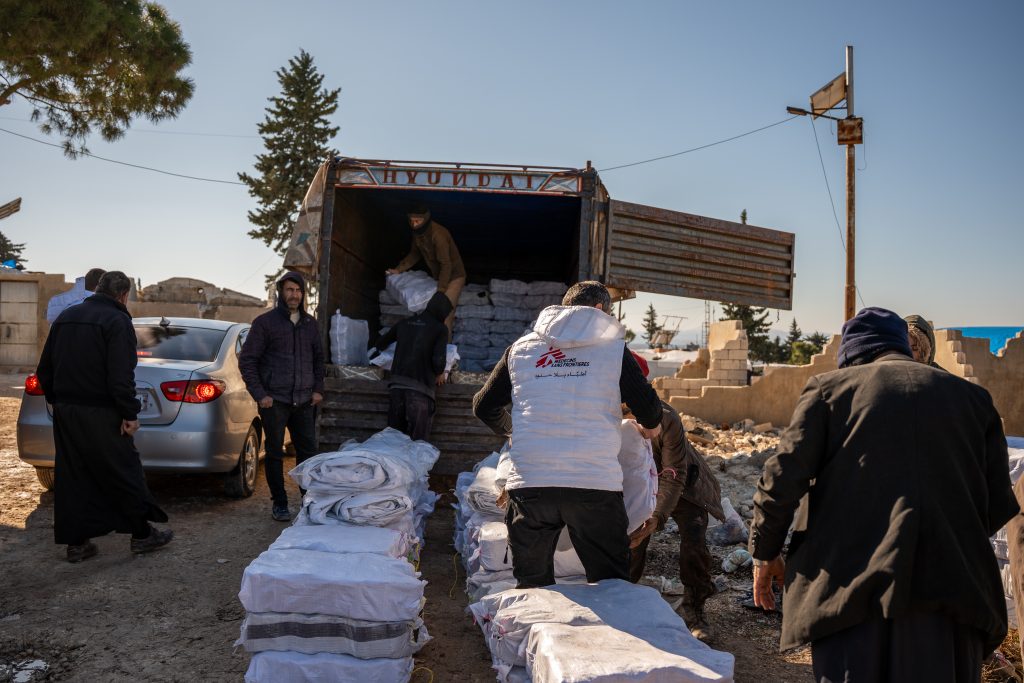
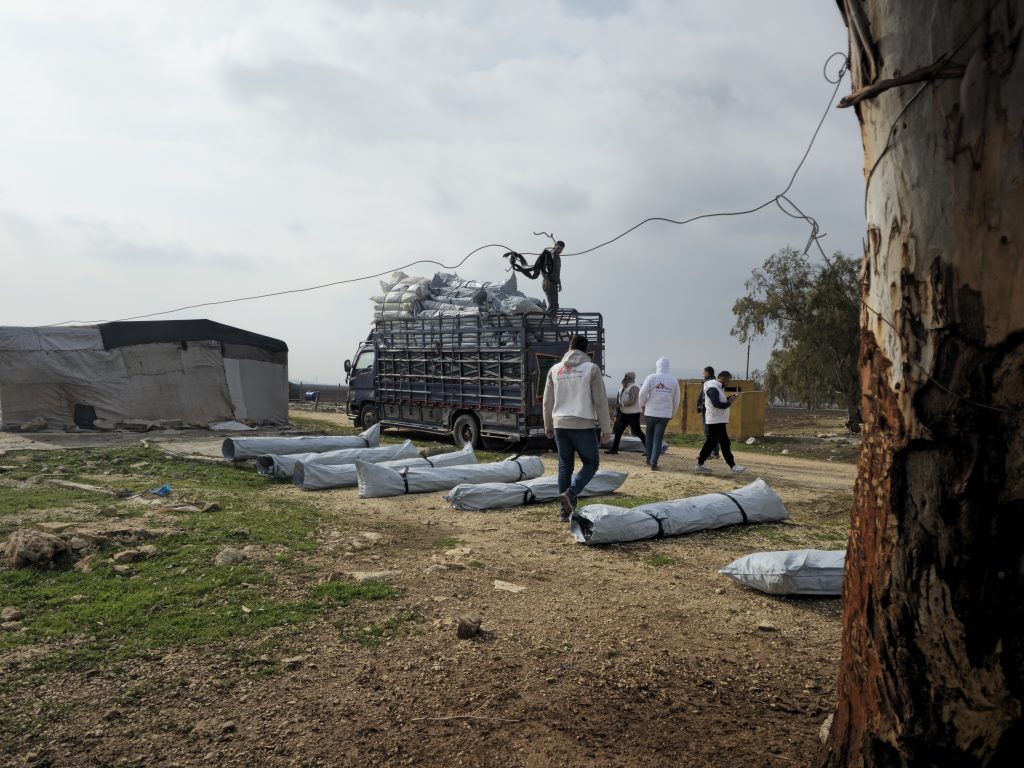
BetweenDecember and February, MSF teams have distributed heating materials (around 600tons of bering) and plastic sheets to 2,000 families across 21 camps. A further1,400 mattresses, 4,200 blankets, and hygiene and cooking kitshave been distributed to 700 families in camps nearSalqin and in the Harim mountains,and 150 familiesreceived tents in Armanaz, in rural Idlib. These distributions aim to help families endure the harsh winter months and reduce immediate risks linked to exposure to the cold.Yetthe gap between needs and assistanceremainsenormous.
People here are living in extremely fragile shelters. They are exposed to the cold, wind, and snow. Every winter, families struggle just to survive. We are trying to provide basic support, small but essential help to assist families get through the cold months.
In Daraa and Rural Damascus governorates, in southern Syria, MSF distributed around 3,000 heaters, plus mattresses and blankets, between November and February, to support displaced families who remain exposed to extreme weather, unsafe living conditions, and prolonged uncertainty. In Qamishli and Derik/Al-Malikiyah, northeast Syria, MSF responded to the needs of recently displaced people, who were forced to leave their homes in Tabqa, Raqqa and Al-Hassakeh under relentless rain and cold temperatures.
The story of Syria’s displaced people is a reminder that the war may have faded from headlines, but its human consequences remain urgent and unresolved.
Like many websites, MSF uses cookies to enhance your user experience. By continuing to navigate this site you are giving consent to the issue of these cookies. No, give me more info
This website uses cookies to improve your experience while you navigate through the website. Out of these cookies, the cookies that are categorized as necessary are stored on your browser as they are essential for the working of basic functionalities of the website. We also use third-party cookies that help us analyze and understand how you use this website. These cookies will be stored in your browser only with your consent. You also have the option to opt-out of these cookies. But opting out of some of these cookies may have an effect on your browsing experience.
Necessary cookies are absolutely essential for the website to function properly. This category only includes cookies that ensures basic functionalities and security features of the website. These cookies do not store any personal information.
Any cookies that may not be particularly necessary for the website to function and is used specifically to collect user personal data via analytics, ads, other embedded contents are termed as non-necessary cookies. It is mandatory to procure user consent prior to running these cookies on your website.