A hospital’s journey through three years of war in Khartoum
When fighting broke out between the Rapid Support Forces (RSF) and the Sudanese Armed Forces (SAF) in April 2023, Khartoum became one of the most dangerous cities in Sudan. Frontlines shifted rapidly, access routes were cut, hospitals were forced to close and entire neighbourhoods were exposed to repeated violence in Sudan´s capital.
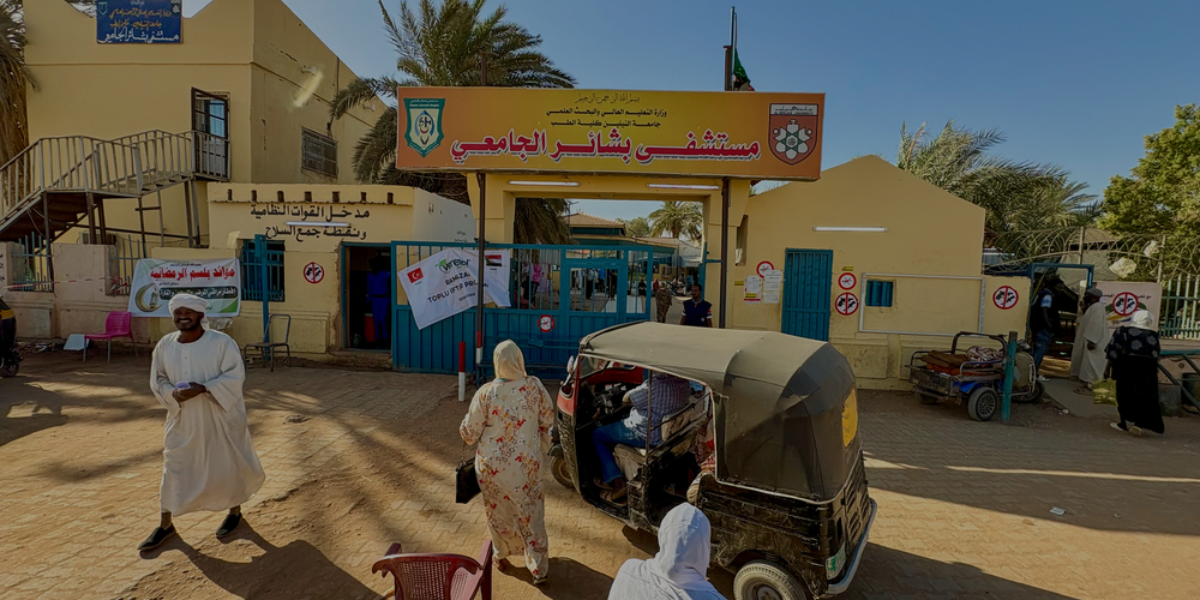
In this challenging environment, Bashair Teaching Hospital remained a place of care, despite everything. When it had to close at the start of the war, Sudanese medical staff and volunteers rapidly made the decision to return and reopen the facility, ensuring access to care at a critical time. They adapted, improvised, and continued to provide essential services under immense pressure.
A few weeks later, support from Doctors Without Borders/Médecins Sans Frontières (MSF) enabled the hospital to sustain its operations and expand specialised care. Together, teams treated patients whenever conditions allowed—adjusting activities, scaling down services when necessary, and gradually restarting and refocusing on priority areas of care.
This is the story of Bashair Hospital’s journey from April 2023 to early 2026.
Staying
In the first days of the fighting, during April 2023, uncertainty defined daily life in Khartoum. Ambulances struggled to move, supply routes were blocked, and the sounds of conflict were never far away. Surrounded by violence, Bashair Teaching Hospital had to close for a while before Sudanese volunteers and medical staff managed to restart activities.
Together with some colleagues, we decided to reopen Bashair Teaching Hospital in Khartoum. The idea was to bring together medical staff who lived near the hospital and, with the support of volunteers, restart basic services. We started with a very small team focusing on the surgical emergency department (trauma). Other cases had to be referred to Al-Turkish Hospital, which was fully operational but located in [an area that required crossing a frontline]. We opened from 8 a.m. to 4 p.m., and after that the doors were closed. Only on-duty staff stayed inside to monitor admitted patients.
Jamila*
Sudanese doctor
In early May 2023, MSF sent an emergency team to Khartoum to reinforce medical services and ensure that access to vital care remained available in this vulnerable neighbourhood. A surgical team joined them as soon as conditions allowed.
Activities continued whenever possible, with teams focusing on emergency and other essential care. Patients kept arriving. Staff reorganised spaces, redistributed responsibilities, and improvised solutions to cope with shortages and disruptions. Each day required new decisions, balancing medical needs with safety and access constraints.
The hospital remained open, not because conditions were stable, but thanks to the commitment of Sudanese healthcare professionals who stayed and ensured that care could continue despite everything, with the support of MSF.
Adapting
Over time, the situation around Bashair deteriorated further. As access to healthcare collapsed in Khartoum —with many health facilities destroyed, damaged or forced to close for extended periods—the pressure on Bashair intensified. Its role became even more critical.
Unfortunately, repeated security incidents, disrupted supply routes, and administrative restrictions reduced what could be safely delivered. Some services had to be scaled down. Others were suspended when essential materials were blocked from reaching the hospital and staff were exposed to very serious security threats.
“For transportation, I was assigned an ambulance from the Ministry of Health, dedicated only to the hospital. We used it mainly to bring medical supplies”, says Jamila. “Every time I went to collect supplies from the MSF warehouse, it was risky. It would be just me, the driver, and two or three volunteers. Even inside the hospital, the soldiers did not respect anyone.”
In October 2023, MSF had to withdraw its surgical team and suspend life-saving surgical activities after the organisation was blocked by military authorities from bringing essential surgical supplies to the hospital.
Throughout 2024, instability continued to shape every aspect of hospital life. For nine months, the hospital was supported remotely as international staff were unable to travel to the area, and highly committed Sudanese medical staff carried the responsibility of maintaining services.
Despite these constraints, the hospital sustained essential services whenever access permitted, focusing on urgent care, emergency response, and preserving a medical presence in one of Khartoum’s most volatile areas.
In early 2025, escalating insecurity incidents, particularly linked to armed men associated with the RSF, forced MSF to suspend all activities at Bashair Hospital.
Restarting
The situation shifted in March 2025, following the recapture of the area by SAF forces. Security conditions gradually improved, and MSF prepared to return. Activities resumed step –by-step, beginning with the Cholera Treatment Unit (CTU), the Emergency Room (ER), and the Outpatient Department (OPD). Rooms were reopened, equipment prepared, and staff returned to their posts.
Today, Bashair Teaching Hospital is operational again.
This restart marks a transition: from emergency response under extreme constraints toward the gradual handover of major activities back to the Ministry of Health. MSF is now refocusing its intervention on specific priorities, including maternity and neonatal care, where mortality among newborns has at times reached 25 percent, demanding urgent support and improvement.
A Hospital that Suffered, Stabilised and Recovered
The story of Bashair Teaching Hospital is not one of uninterrupted continuity. It is a story of care that endured—adjusted, reduced, suspended, and restarted—guided at every stage by what was possible and safe, in order to preserve a vital medical lifeline for the people of Khartoum.
“War affects not only infrastructure and institutions, but also the daily lives, safety, and dignity of civilians and health workers,” says Dr, Jamila. “Despite everything, with the support of
MSF, Sudanese health workers and volunteers continued to provide care and keep hospitals functioning under extremely dangerous circumstances.”
It is the story of a dedicated team who navigated conflict, shortages, and shifting access while continuing to serve their community. It is also an illustration of MSF’s ability to adapt rapidly to a changing environment, while remaining guided by medical and humanitarian needs.
As Bashair transitions from crisis response to more regular activities its journey stands as a reminder of what medical care can look like in an active conflict: fragile, adaptive, and essential.
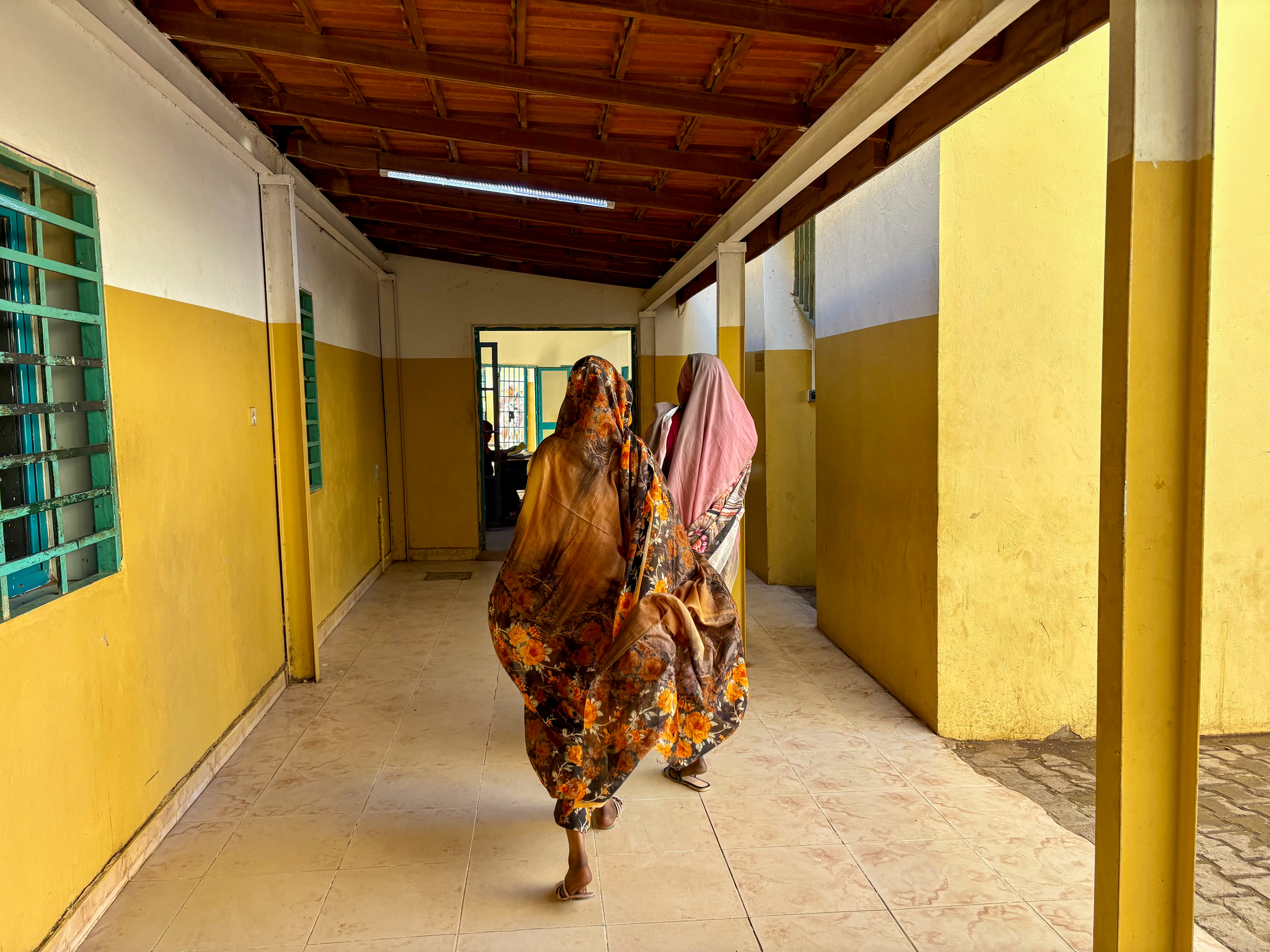
In Khartoum State, MSF continues to deliver essential medical services across 4 major hospitals and primary health centres. According to the UN migration agency, more than one million people have returned to Khartoum city since SAF regained control, yet services are far from meeting people’s needs. Many people live in areas heavily damaged by the fighting, with limited access to healthcare and water, and people also struggle to find or afford food. The international response in Khartoum is far from sufficient, with few organisations present and major gaps in both emergency aid and longer-term recovery efforts. Our teams support emergency and surgical care, maternal and paediatric services, treatment for infectious diseases and malnutrition, and epidemic response activities throughout Omdurman, Khartoum city, Bahri and Jabal Awliya. These combined efforts form a crucial medical lifeline for communities that have been cut off from functioning health services.