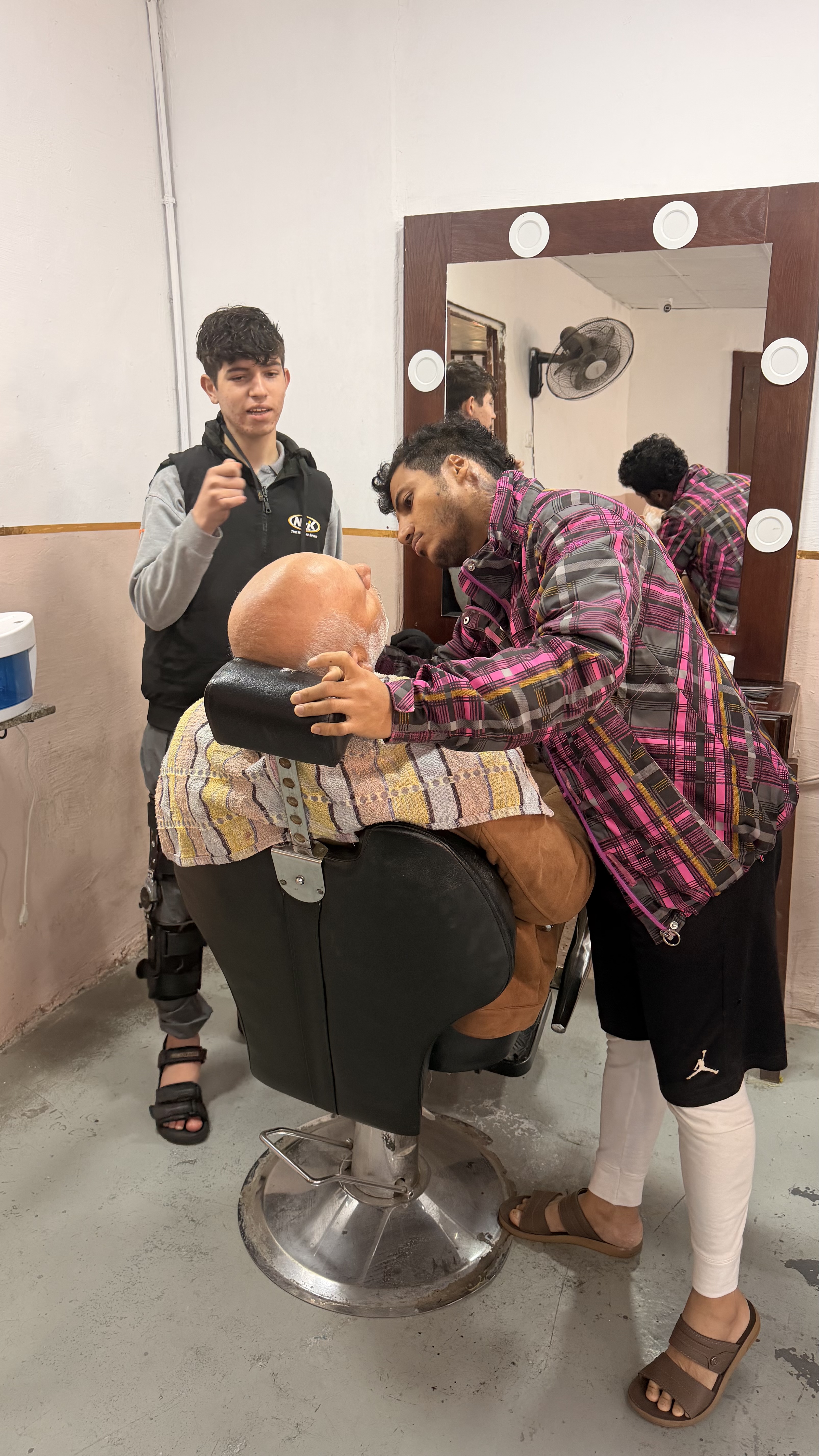
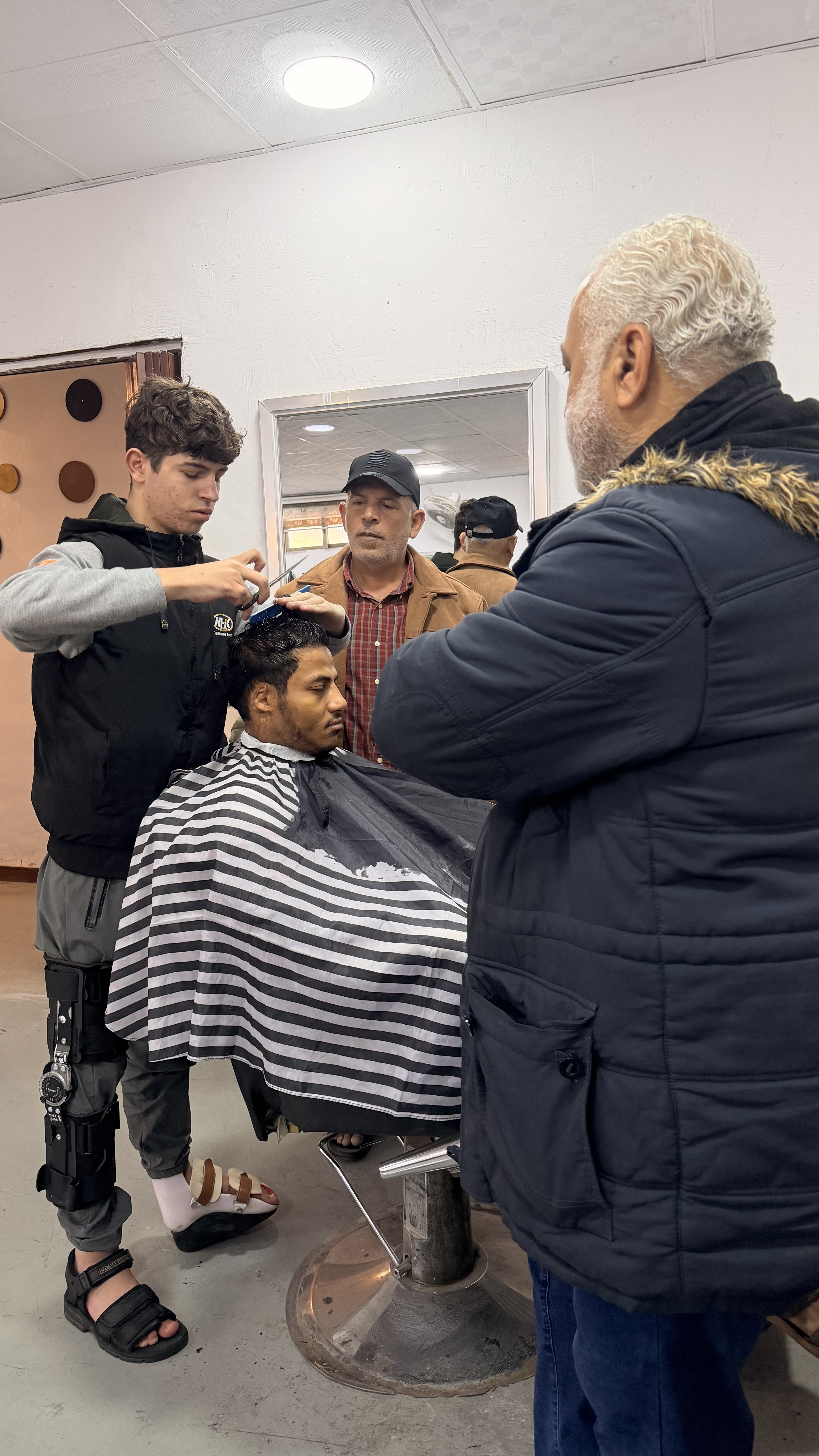
Mahmoud softly grips a head full of white hair in his two fingers, with scissors in the other hand he carefully cuts along the front hairline of an older man sat in the barber’s chair.
At first I didn’t know how to hold the machine and the scissors. But now I can hold them normally. The challenges are still there, but when I first arrived, I couldn’t walk at all. Now it has improved – it’s better than before.
Mahmoud
17 y/o patient from Gaza
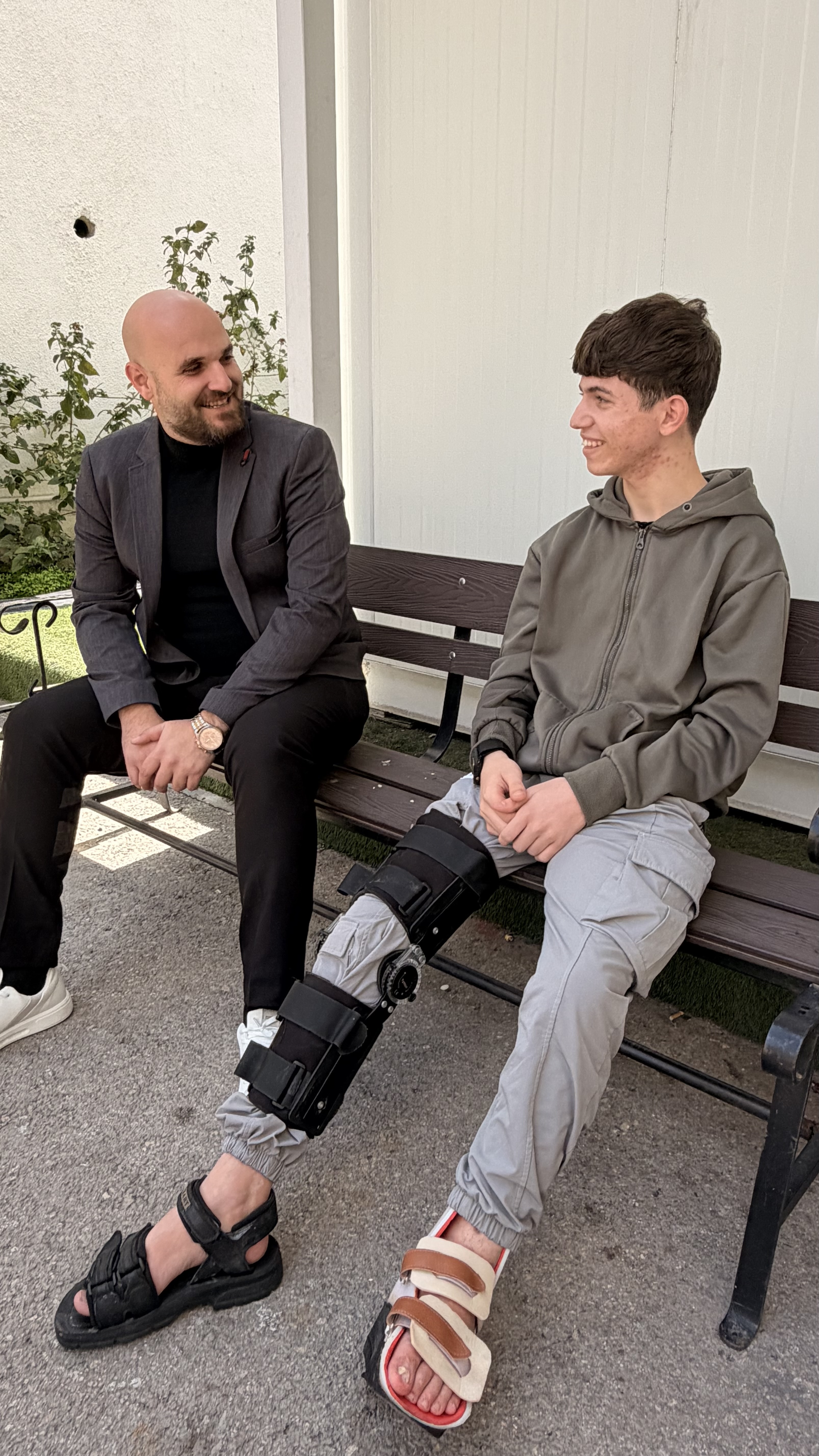
Mahmoud, a 17-year-old patient from Gaza, Palestine, arrived at the MSF Reconstructive Surgery Programme (RSP) in Amman, Jordan in July 2025. He was injured in an Israeli airstrike back in 2017 and is now finally getting the specialised health care that he needs to recover from his injuries.
At the heart of the RSP lies a holistic approach to healing. Originally created in 2006 to treat people severely injured in the Iraq War, the RSP has since expanded to treat conflict-related injuries from across the region, including Syria, Yemen, Palestine, Somalia and Sudan. Beyond just surgery, healing is a process; a physical and psychological journey wrought with massive challenges. Over years of responding to the consequences of conflict across the Middle East, the hospital has developed a comprehensive approach to rehabilitation, which integrates physical recovery, mental health support, and social reintegration.
Like Mahmoud, many patients at the RSP come from intense war zones in the region, including Iraq, Syria, Palestine and Yemen. Most have endured repeated displacement, the loss of loved ones, and the collapse of any sense of ‘normal life’. For them, the journey begins with regaining a sense of safety, purpose, and future.
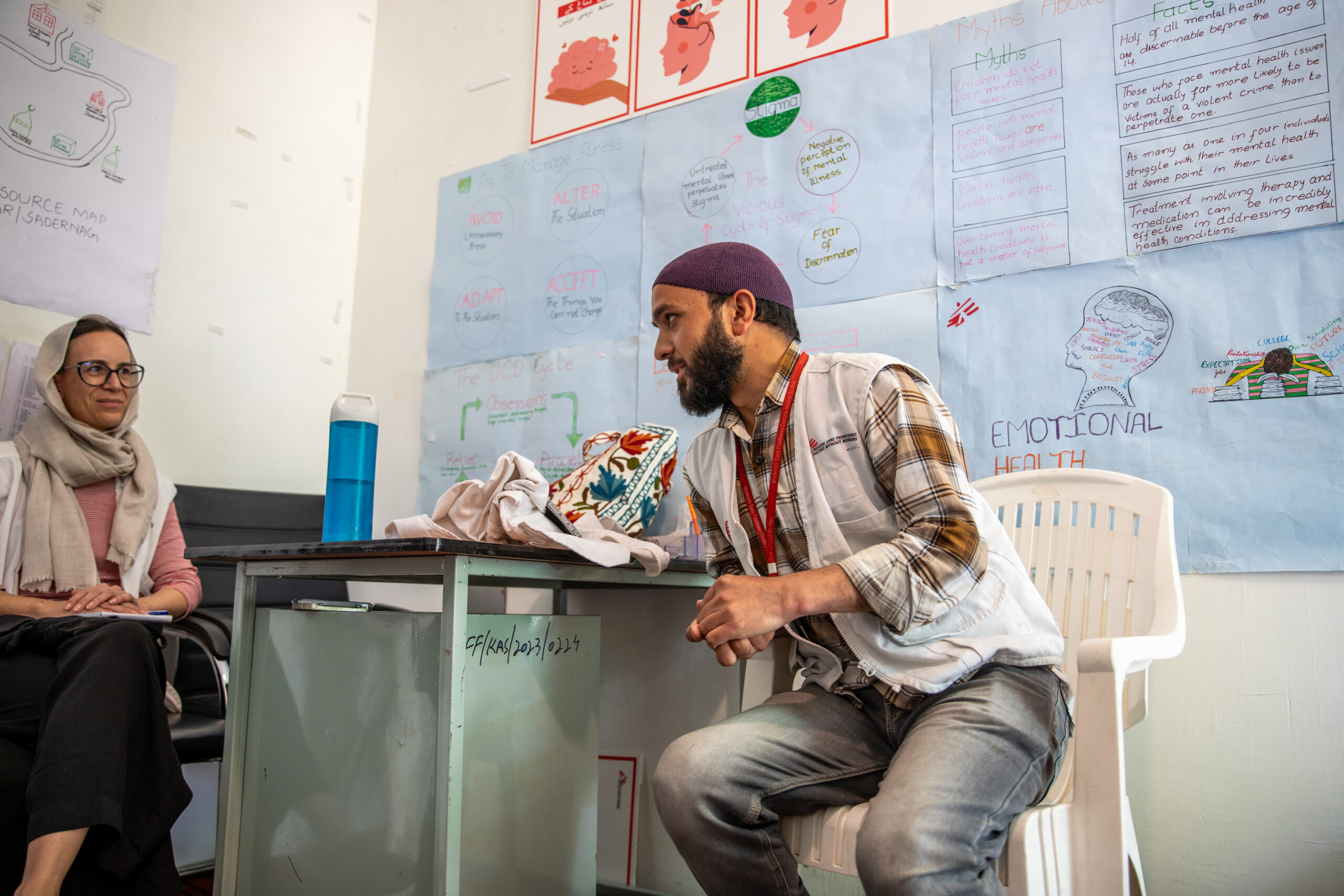
Mental health support plays a central role in addressing this. Psychologists work with patients individually and in groups, helping them process trauma and to slowly reconnect with others. Through these sessions, patients begin to rebuild trust, express emotions, and, gradually, step outside their isolation.
“I stayed in my room, I didn’t want to talk to anyone when I arrived,” says Mahmoud, who is taking part in the vocational training programme, which provides patients education in various trades while they receive treatment at the hospital. These programmes include training in barbery, tailoring, and makeup artistry, which, if completed, can support their integration into society and offer them economic opportunities when they leave the hospital.
“My goal is to get a degree, leave, and work abroad,” says Mahmoud. “Today, I feel better and I want to become a barber and work in Europe.”
Small steps mark profound progress.
War injuries often have lifelong consequences. Many patients can no longer return to their previous jobs. Physical limitations, combined with psychological trauma, make reintegration into daily life deeply challenging. Without support, this can lead to long-term dependency and loss of dignity.
Vocational training is a key part of this recovery journey, offering patients the opportunity to learn practical skills adapted to their abilities. Rooted in humanity, it creates a space where individuals are seen beyond their injuries; it helps them imagine a future again.
“Through this activity, patients and caretakers are not only engaging in practical learning, but are also regaining confidence and independence,” says Emran Alawar, the patient training officer at the RSP. “It structures their daily lives and reconnects them with a sense of purpose. The training allows them to envision life beyond the hospital.”
Mental health care helps patients process trauma, and vocational training bridges the gap between recovery and the future. Together, these elements form a continuum of care that goes beyond treatment. They create conditions for patients not only to heal, but to rebuild their lives.