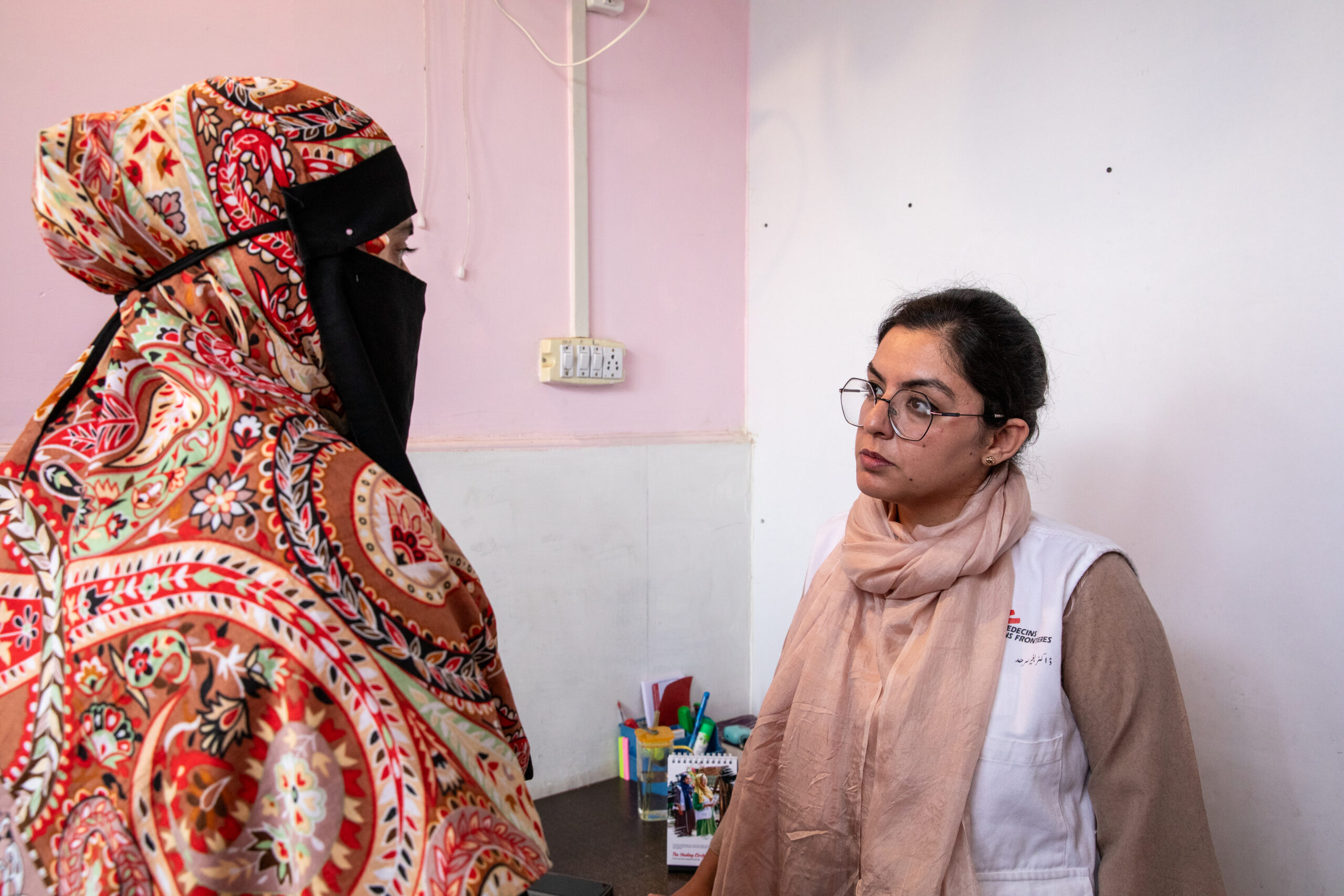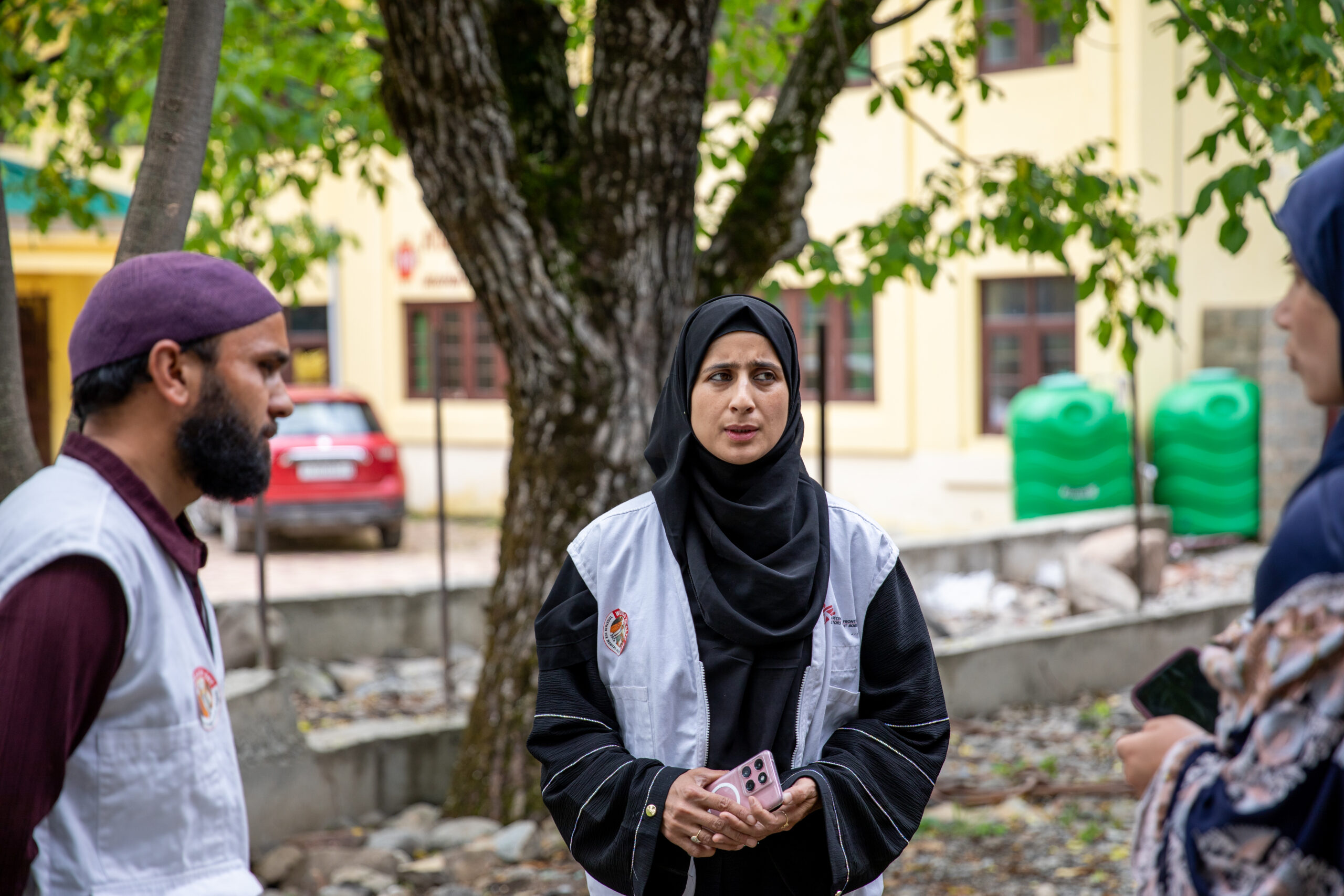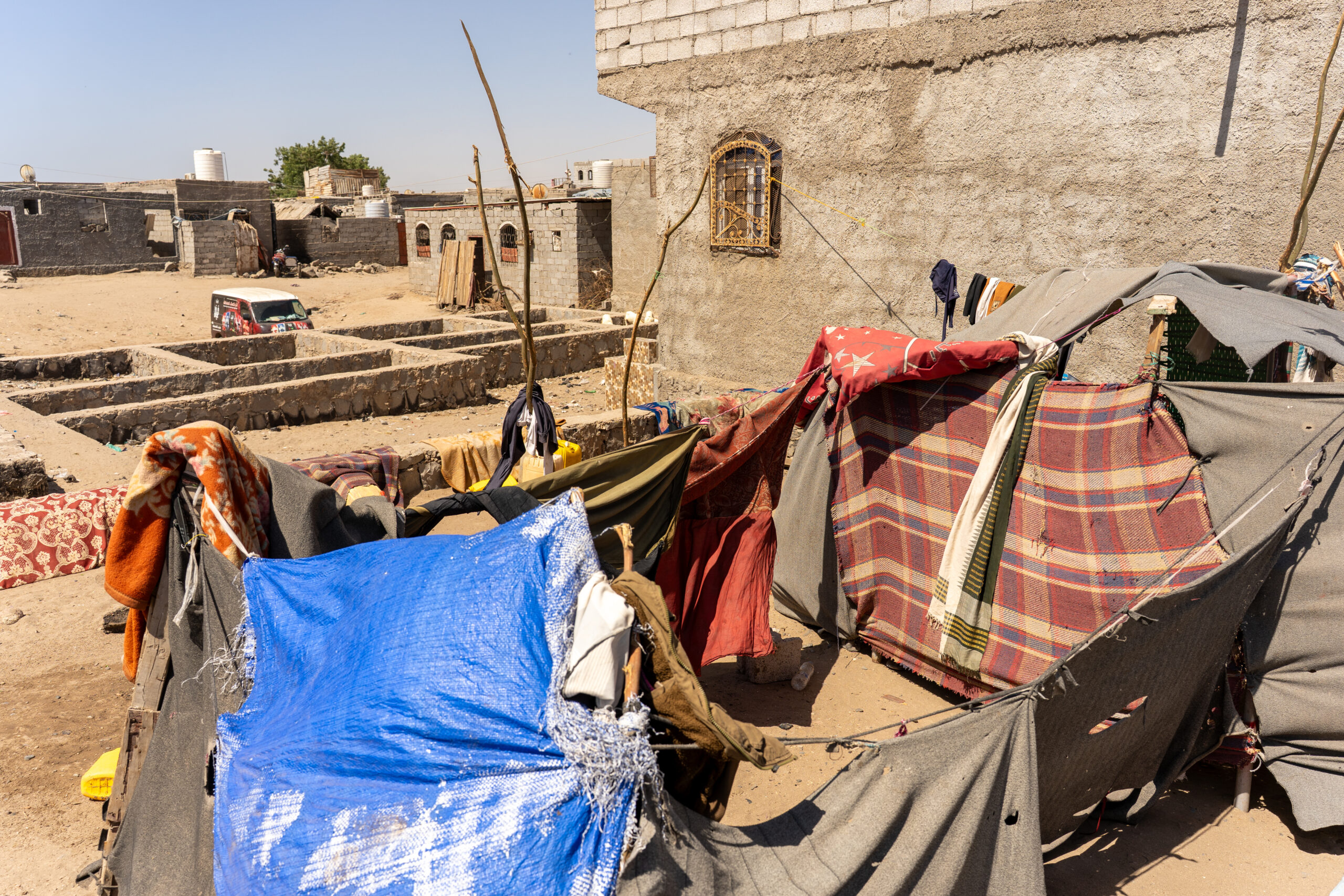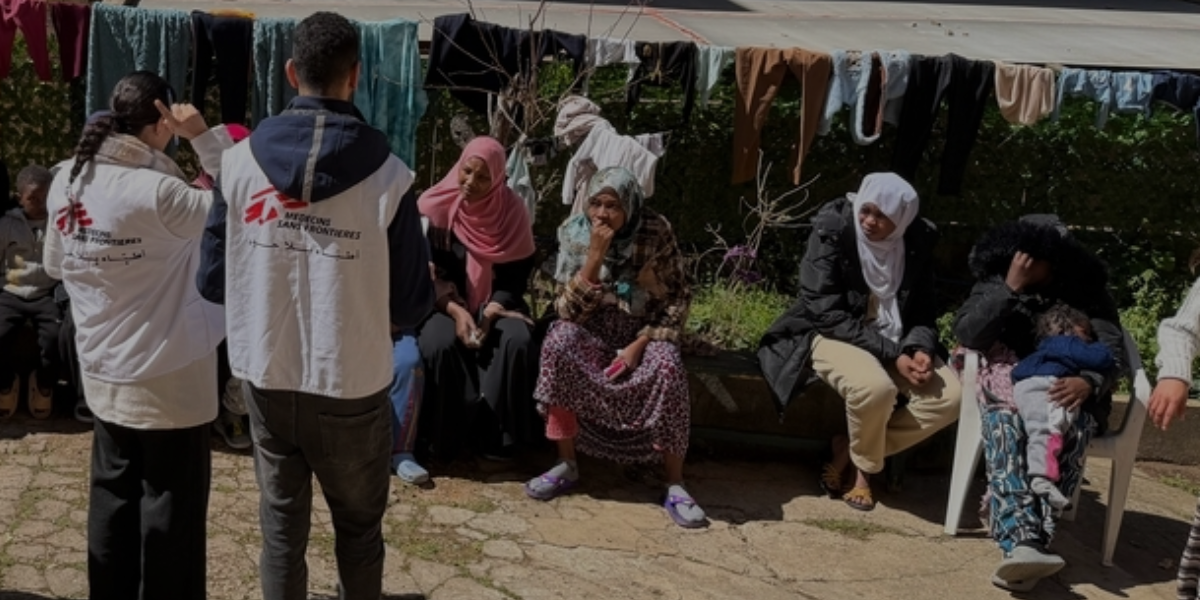
Written testimonies of displaced migrant workers in Ghosta, Mount Lebanon, unofficial shelter, where MSF provides medical care. 17/03/2026.
Ahmad
A Sudanese Palestinian migrant worker living in Lebanon, forcibly displaced by the current war
“I used to live in the south of Lebanon. We witnessed the first war in 2024. Now here we are again, living through a second one. We fled with nothing, just trying to survive, until we reached Tibnine hospital [south Lebanon]. I have my wife and my five children with me; we are all scared and exhausted.
No one is shedding light on our situation as Sudanese refugees and migrant workers. It feels like we truly do not exist. We are invisible. We face bullying and discrimination. As if the war itself wasn’t enough.
We are refugees, displaced refugees. Every bad thing that could happen has happened to us. We are among the most vulnerable, especially because we carry our families with us, our children, our wives, all who depend on us for safety we can’t find.
We don’t have a country to return to. We don’t have anywhere to go. And honestly, I don’t have any hope left. I’ve lost it along the way.
Sometimes, and this breaks my heart to say this, I regret having children. Not because I don’t love them, but because I cannot protect them from this life. I don’t want them to grow up in this misery, fear and uncertainty. They have nothing. No stability, no future waiting for them.
Where do we go? My children have no roots, no country to belong to. Are we meant to end up in the streets?
I always thank God for everything, I try to hold on to faith, but deep inside, I carry this pain, this regret, because there is no country, safety or stability.”
Salam
A migrant worker displaced by the current war in Lebanon, shared her story
“I was living in Dahiyeh when the bombardment started. Everything happened so suddenly. There was no electricity. No way to watch the news or understand what was happening and where the strikes were hitting. We were in the dark, completely cut off. All we could hear were the sounds of explosions, one after the other, getting closer.
We didn’t wait. We couldn’t. We fled that same night, not knowing where to go, just running from fear.
We ended up on the road, searching for shelter, knocking on doors that wouldn’t open, asking for help that never came. There was nowhere for us. No space. No safety. Just the road beneath us.
We stayed like that for three days. Three days of moving, waiting and hoping. Three days of sleeping on the ground, out in the open, with nothing to protect us. I didn’t eat during that time. I couldn’t. I was only thinking about my child. I kept breastfeeding her so she wouldn’t feel the hunger I was feeling, so she wouldn’t cry from emptiness.”
Adeela
22, Sudanese refugee.
“My life is a struggle. It always has been. I fled Morneh in Darfur, Sudan, to Shareq al-Nil, trying to escape the war. We thought we would be safe there, far from the violence, but there was nothing for us. No food. I remember eating tree leaves just to survive. That is my life story.
I was born into war. I grew up in war. I have never known anything else.
I left Sudan for Lebanon thinking maybe, finally, I would find safety. But before that, I passed through Syria. A few years ago, I was there, and then I was smuggled into Lebanon two years ago. We walked for three days in the mountains between Syria and Lebanon. Three days of fear, hunger and exhaustion. Even now, I don’t feel safe. During my 22 years, there has been nothing but running from one war to another.
Last year, we fled the Beirut suburbs, Ghobeiry, and stayed in downtown Beirut. This year, it happened again. We fled once more from the suburbs back to downtown. A Sudanese woman guided me to this shelter in Ghosta, in Mount Lebanon, after we tried to find refuge in a church in Achrafieh, but there was no space for us there.
When we first arrived here, we had nothing, not even mattresses to sleep on. We slept on the ground until some were finally brought for us. It is very cold here. There is no heating. My child and I both got sick from the cold.
I am truly afraid of the future. My whole life has been war after war after war. I even have problems with my eyesight, but there is no space in my life to take care of myself. Survival is all I know.
My husband used to work as a concierge in the Beirut suburbs, but the entire building was evacuated. I came here with my one-year-old daughter, and he stayed behind in Beirut, hoping to find another job. So now, I’m here alone with my baby, carrying the weight of everything on my own.
I have not lived a single day of safety in my entire life. Not one. Only war. I hate wars. I thought Lebanon would be different. I thought it would be safe. But it’s not. And now my child is living the same life I lived: fear, instability, insecurity.
I don’t want this for her.
I just want to live in a place where I feel safe. No war. No bombardment. I don’t want to hear those sounds ever again. I don’t want to run anymore.
Here, we are ten families in one room. Each family has three or four children. It is overcrowded, suffocating. At night, we feel the cold in our bones, and there is nothing to warm us.
This is my life. A life that has never known peace.”
Roufayda Jaber
A 35-year-old Sudanese mother of two
“Our struggle didn’t start with me. It started with my parents. They fled Sudan to Iraq, searching for a better life. But after a few years, there were no opportunities, no future there either, so we moved again: this time to Syria.
Then the war in Syria began and we lived through all of it. Every moment, every fear, every atrocity. We saw things no one should ever see. It changed us. It broke parts of us. And in the end, we had to flee again, because staying was no longer possible.
We came to Lebanon hoping it would finally be the place where we could stop running. In 2024, during the war, we were in an area that was, somehow, still relatively safe. This year it’s different. We were living in a highly affected area in Mcharafiyeh when the airstrikes and bombardments started.
When the bombing began, I felt disconnected from everything. My mind froze. I didn’t know what to do, how to react, except to hold my children tightly in my arms. There was a moment, during one of the bombings, when I was certain that this was it: that my children and I were going to die. So we fled again.
We struggled so much just to reach this community housing. I don’t even know exactly where we are. It feels very far, very isolated, but at least, here, my children are safer than before.
We are in need of so many basic things. The water cuts frequently, and we have children so we need running water. It’s very cold and we fled with almost nothing, no proper clothes. We are forced to exchange clothes between the children just so they have something to wear. There are fifteen families living in the same room. Fifteen families… all sharing one space, one life of uncertainty. Last year, we tried to go to an official shelter, hoping for help, for dignity, but no one welcomed us.
I am also struggling with my own health. I have Crohn’s disease. A few years ago, I had surgery and part of my stomach was removed. Since then, I was supposed to follow a strict diet, to go for checkups every six months, to take medication regularly. I also have problems absorbing iron, so I need IV iron treatments at the hospital every few months… otherwise, I become extremely weak. But it has been almost two and a half years since I last had any checkup or treatment. I simply cannot afford it.
I have lost a lot of weight in recent months. I feel tired all the time. Even standing for a short while is exhausting. But I have no choice, I have to keep going for my children.
If I could wish for one thing, it would be that my children are not marginalized like us. That they have a future that is brighter than ours. That their lives are not defined by war, displacement, and suffering. I just want them to have a chance at a different story.”