Efforts respected traditional practices to improve medical care within the territory.
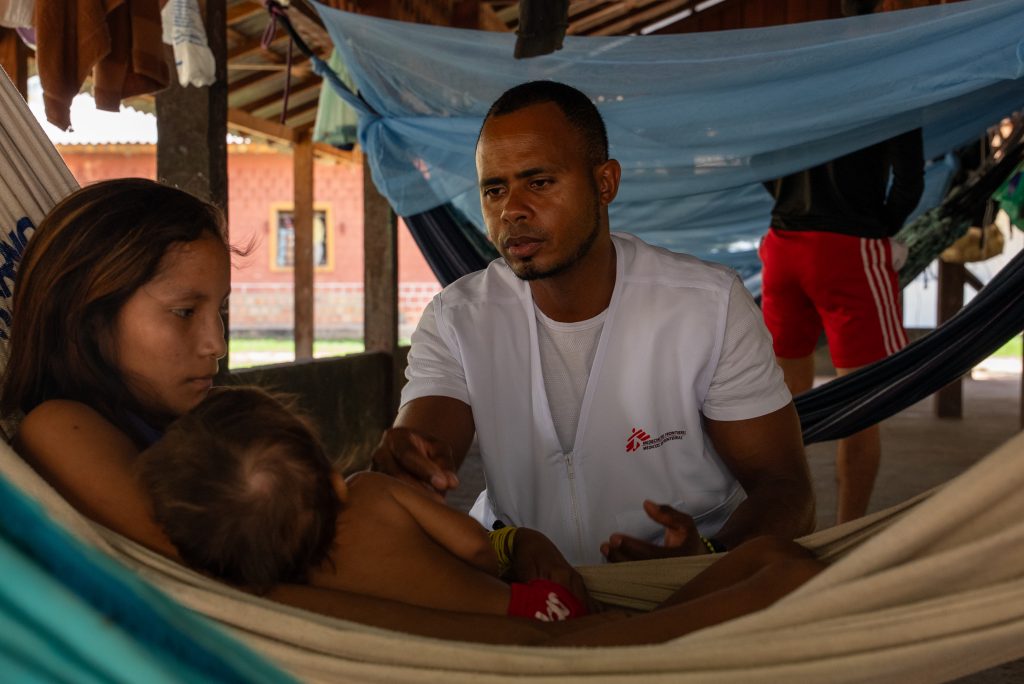
Instead of hospital beds, hammocks serve as resting places for patients treated at the Auaris health center in the Yanomami Indigenous Land (YIL), in the Brazilian Amazon. Anyone walking around the site – which was renovated and expanded through a partnership between Médecins Sans Frontières/Doctors Without Borders (MSF) and the indigenous health authorities working in the territory – will also notice that the signs around the facilities are written in the Sänoma and Ye’kwana languages, in addition to Portuguese.
Respect for the culture and habits of indigenous people is demonstrated not only in this physical structure, but also in the medical practices adopted: instead of just handing out a prescription, healthcare providers take the opportunity to listen and learn.
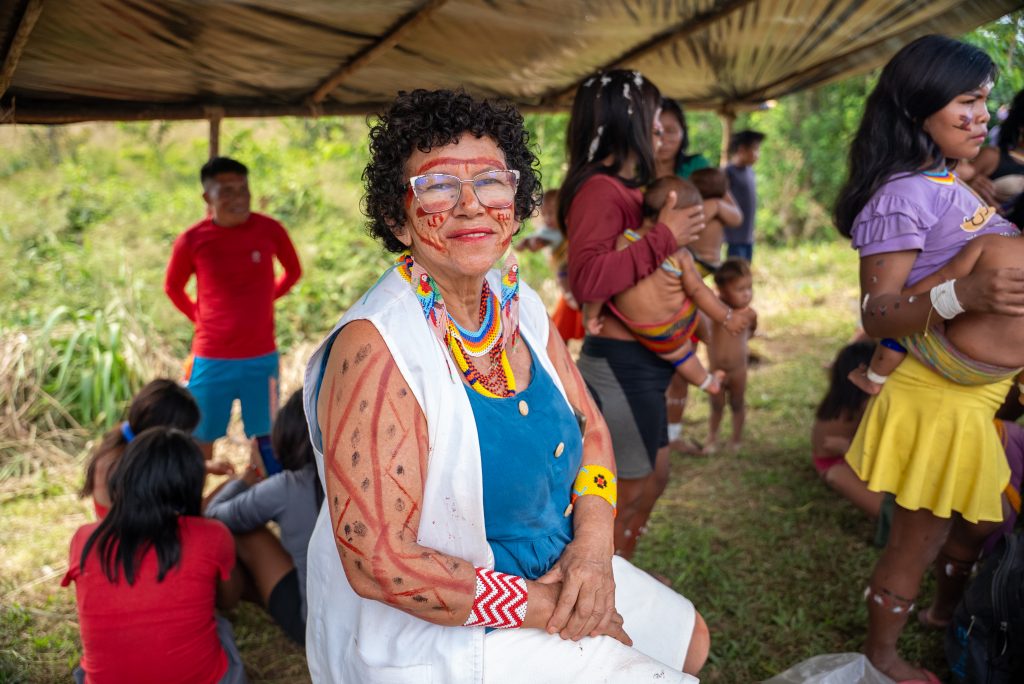
Now healthcare is integrated, Sanöma and serenapi (non-indigenous) people working together. Shaman and doctor together. If a person becomes very ill, first they perform xapori [healing ritual], then take them to the health centre. Serenapi and Sanöma working together.
Miro Sanöma
A resident of the Kululu community
YIL is the largest indigenous territory in Brazil, with a population of just over 30,000 people spread across an area larger than Portugal. The Auaris health centre is located in its most densely populated region, mostly home to the Sanöma and Ye’kwana peoples. The renovation of health units is one of the legacies left by MSF as it wraps up its support activities for indigenous health in the region after nearly three years of work.
Today’s situation contrasts with the very difficult scenario encountered when MSF began working in the region in May 2023, just a few months after the government declared a health emergency. MSF teams provided general healthcare, focusing on malaria diagnosis and treatment, as well as mental health care, besides implementing environmental health solutions and infrastructure improvements. Although many challenges remain, local care capacity has been strengthened, which is expected to help communities continue receiving higher-quality assistance.
“I have been here for two years now, and when I arrived there was an average of one severely ill patient per day, due to severe malnutrition, advanced-stage malaria, dehydration, or snakebite accidents,” reports Carlos Camacho, an MSF doctor who has worked in YIL since early 2024. “As prevention efforts improved, mainly due to health promotion activities in the communities, we noticed a decrease in severe cases. Today, I hardly ever see severe patients here in Auaris.”
Dr Camacho’s observation aligns with official numbers released by the Ministry of Health in the latest report on the Yanomami emergency[1]. Comparing detected malaria cases, there was a 20.7% drop in the first half of 2025 compared to the same period in 2024, from 17,952 to 14,233. The data indicate that transmission remains high in the YIL , but there has been a marked improvement in diagnoses and a significant reduction in severe cases and deaths. Between January and June 2023, there were ten deaths, with a slight drop to nine in 2024, and then down to three in the first six months of this year.
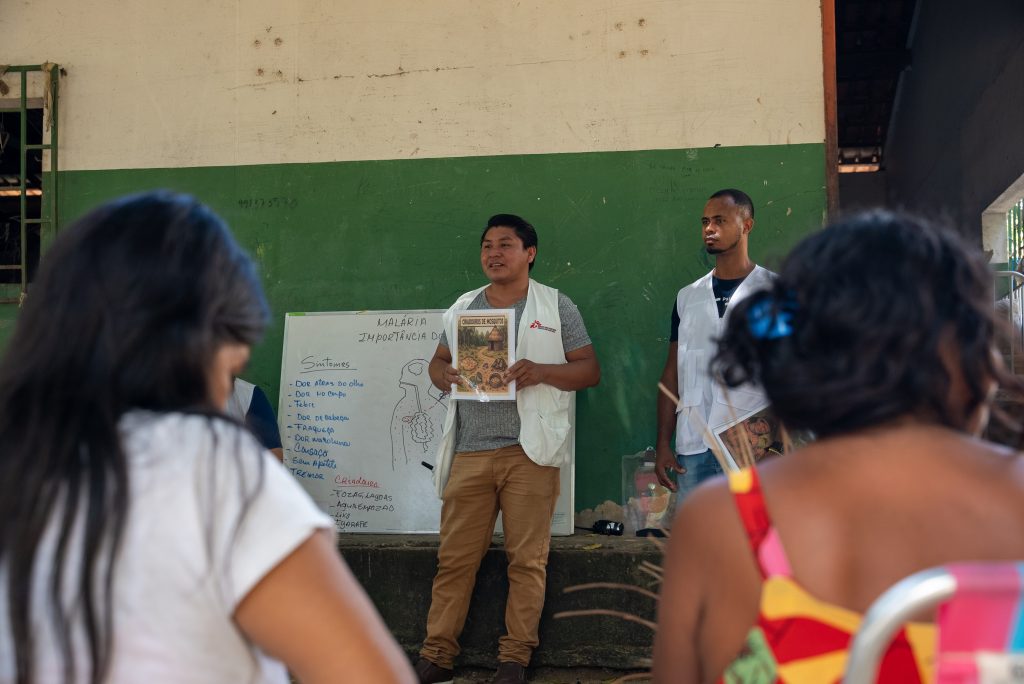
MSF also provided support at the Yanomami and Ye’Kwana Indigenous Health Support Centre (CASAI–YY) in Boa Vista, where patients needing care not available in the territory are taken in. Services included medical and mental health care, health promotion activities, and improvements to sanitation infrastructure. The health promotion team was responsible for monitoring health in the malocas (large communal dwellings) of each ethnicity, as well as offering educational sessions on waste management, nutrition, and malaria. These efforts helped strengthen the capacity to provide healthcare to Yanomami and Ye’kwana communities arriving in Boa Vista.
A key feature of MSF’s work with indigenous peoples has been the adaptation of medical approaches, valuing and respecting the traditional knowledge of those who protect Brazil’s forests and biodiversity. To ensure smooth interaction within the YIL, efforts included support from anthropologists and intercultural mediators. This openness was key to developing awareness activities and providing clear information, allowing the community to understand malaria treatment and prevention. Once they were more aware, people began seeking care at the early stages of illness, which resulted in a reduction in mortality rates.
In addition to malaria, the mental health of young people has become a growing concern in indigenous communities, partly because breaking with traditions often causes silent suffering. Faced with this scenario, MSF sought to listen, welcome, and work side by side with communities, offering psychosocial support and building culturally sensitive responses.
With nearly three years of activities, the mental health work included group and individual psychoeducation, community awareness and mobilization, Psychological First Aid, psychosocial activities, and support groups, reaching 5,582 participants. In total, the mental health team conducted 523 individual consultations, a significant portion with female patients (70%) and young adults (51%). MSF also worked to raise awareness among workers of the Yanomami and Ye’kwana Special Indigenous Sanitary District (DSEI YY), providing training on the subject and holding regular meetings with the agency’s mental health team.
The work in YIL and CASAI-YY was the most recent chapter in MSF’s long history of supporting indigenous health in the Amazon. The organization’s first project in Brazil was in response to a cholera outbreak in the early 1990s. A few years later, MSF worked in the state of Roraima during a malaria outbreak and, more recently, supported indigenous communities during the COVID-19 pandemic. This engagement reflects the organization’s historic commitment to expanding healthcare access for indigenous peoples in Brazil.
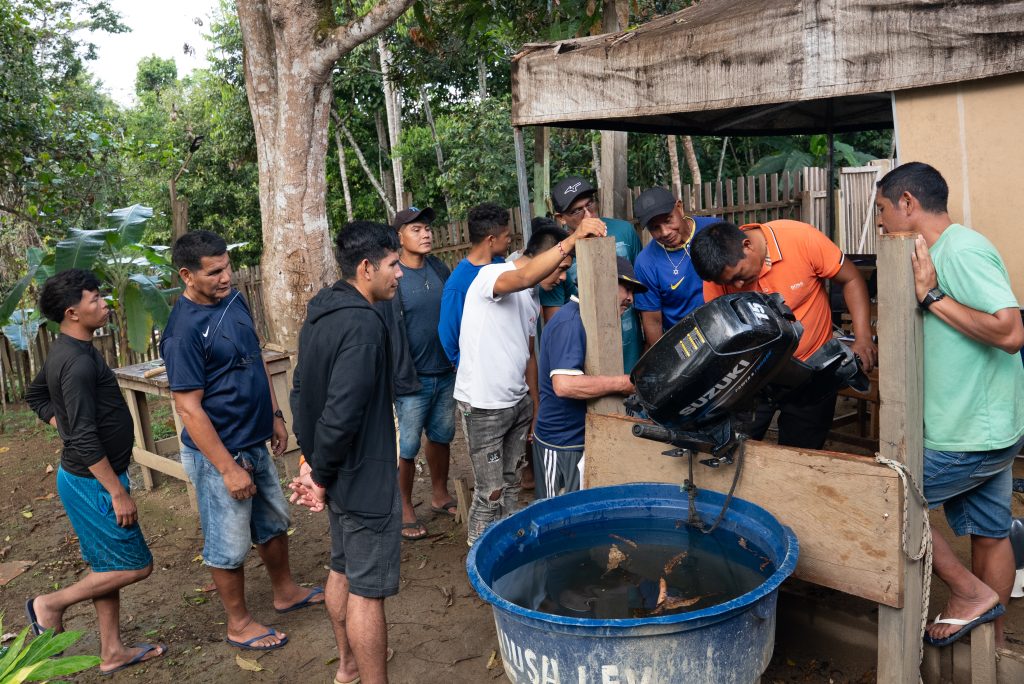
As activities in Roraima drew to an end, efforts focused on ensuring a responsible and sustainable transition. MSF provided training for health professionals and community members to support a smooth handover of medical and operational responsibilities.
“The transition process is an opportunity to ensure that the progress of recent years can continue to benefit indigenous communities here in the future,” added Damaris Giuliana, MSF project coordinator in Roraima. “We arrived with knowledge about diseases and treatments in non-indigenous contexts and learned about spiritual illnesses and the cures performed by shamans. We remain committed to sharing the knowledge gained in Roraima so that future initiatives – within and outside MSF – can build on this experience.”
About MSF in Brazil
MSF has been working in Brazil since the early 1990s, responding to epidemics, supporting emergency medical needs, and strengthening health systems in partnership with local communities and institutions.
Like many websites, MSF uses cookies to enhance your user experience. By continuing to navigate this site you are giving consent to the issue of these cookies. No, give me more info
This website uses cookies to improve your experience while you navigate through the website. Out of these cookies, the cookies that are categorized as necessary are stored on your browser as they are essential for the working of basic functionalities of the website. We also use third-party cookies that help us analyze and understand how you use this website. These cookies will be stored in your browser only with your consent. You also have the option to opt-out of these cookies. But opting out of some of these cookies may have an effect on your browsing experience.
Necessary cookies are absolutely essential for the website to function properly. This category only includes cookies that ensures basic functionalities and security features of the website. These cookies do not store any personal information.
Any cookies that may not be particularly necessary for the website to function and is used specifically to collect user personal data via analytics, ads, other embedded contents are termed as non-necessary cookies. It is mandatory to procure user consent prior to running these cookies on your website.