This was an urgent response to the surge in measles cases in El Geneina. In the period leading up to the vaccination campaign, we received around 130 cases per week in the measles isolation ward at El Geneina Teaching Hospital. From November 2025 to the end of January 2026, we treated a total of 778 measles cases.
Dr Ali Daoud
MSF's deputy medical coordinator
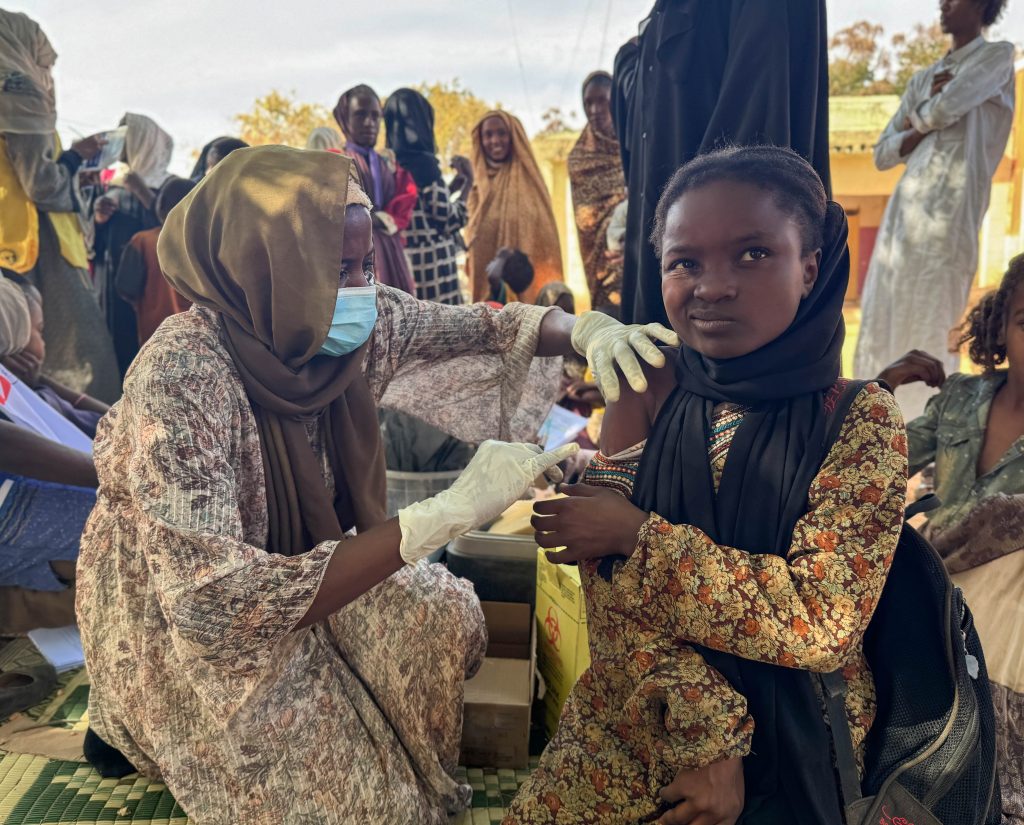
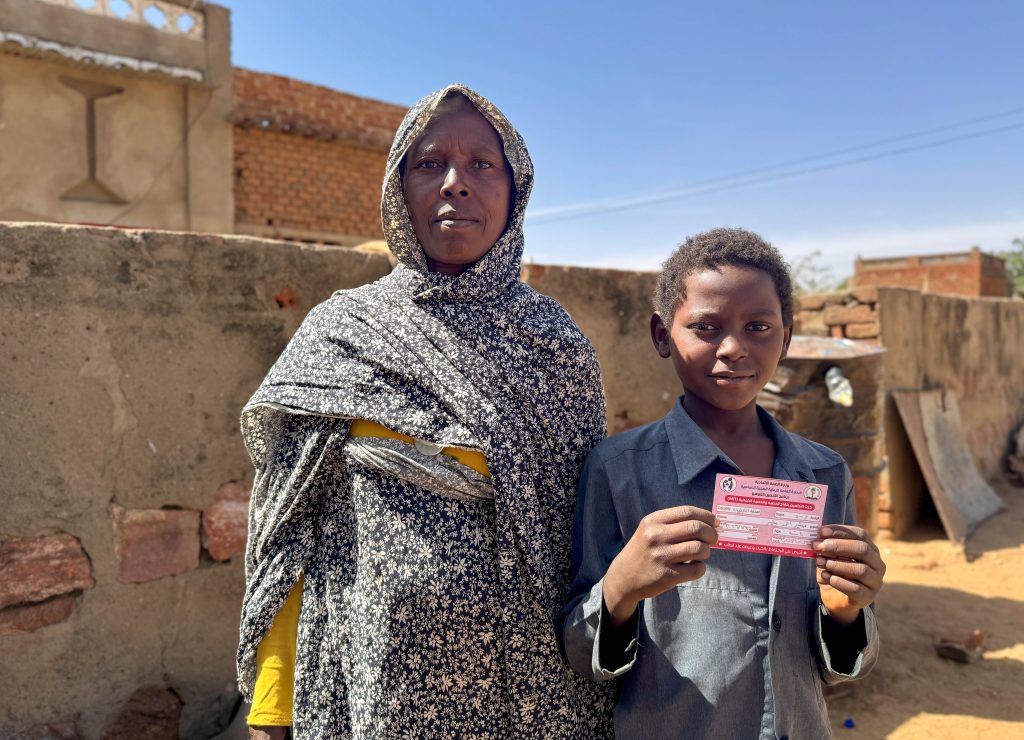
On the final day of the measles vaccination campaign in El Geneina, the capital of West Darfur state. The campaign, carried out in close coordination with the Ministry of Health and other health partners, ran from January 25 to 30. During these six days, more than 174,000 children between the ages of 9 months and 15 years were vaccinated, making up 94% of those targeted.
This marked the first measles vaccination campaign in El Geneina locality since 2021. Measles disease is highly contagious and can be fatal if not prevented or treated early, so sustained access to routine immunization is crucial.
“It’s important for other children to get the vaccine to protect themselves from the disease. The injection does not hurt. Afterwards, I can go home, pray, and study. Measles can be deadly, especially for children,” says Khalid, 14, who encouraged his cousin to join him and his siblings at one of the vaccination sites.
Community mobilization at the heart of the campaign
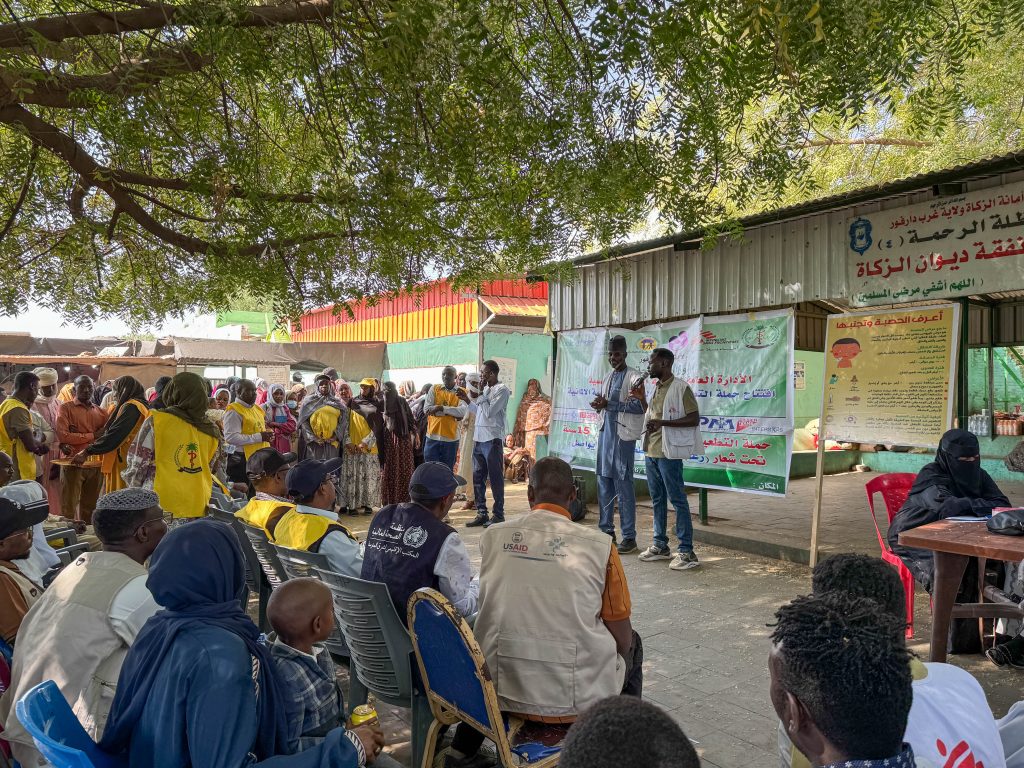
Community engagement played a central role in achieving high coverage. Over 1,400 community volunteers were mobilized, trained, and deployed by MSF throughout the campaign to support with the activities at over 200 vaccination sites in El Geneina. Mobile teams and vehicle-mounted public address systems were used to raise awareness: sharing vaccination schedules and encouraging families to bring their children in for vaccination.
“Delivering this vital campaign required strong community engagement as well as significant logistical support and coordination,” said Abdalhalim Ishag, MSF logistics base at El Geneina Teaching Hospital. “To reach over 200 vaccination sites in El Geneina, we mobilized resources to cover remote and hard-to-reach areas.”
“I first felt scared, but the injection didn’t hurt. I have not seen anyone with measles before, but I know you can’t play if you get sick. The vaccine will protect me and my family,” Ten-year-old Mawa attended a vaccination site with her four brothers said.
This is not the first time that our teams have supported the state Ministry of Health in responding to an increase in measles cases in West Darfur state. In mid-2025, a mass coverage campaign was conducted in Foro Baranga locality, which is a rural area in the south of this state.
For many people, survival is not only about escaping violence. It is also about surviving diseases such as measles, whose spread is driven by multiple factors, including displacement, overcrowding, limited access to healthcare, gaps in routine vaccination, and fragile disease surveillance systems.
“Moving forward, MSF continues to call on the Ministry of Health and health actors to strengthen the availability and accessibility of routine vaccination services across Darfur,” says Dr. Ali.
“Sustained vaccination services are essential to prevent recurrent of measles cases and protecting children, not only in West Darfur but also in all of Sudan.”
Like many websites, MSF uses cookies to enhance your user experience. By continuing to navigate this site you are giving consent to the issue of these cookies. No, give me more info
This website uses cookies to improve your experience while you navigate through the website. Out of these cookies, the cookies that are categorized as necessary are stored on your browser as they are essential for the working of basic functionalities of the website. We also use third-party cookies that help us analyze and understand how you use this website. These cookies will be stored in your browser only with your consent. You also have the option to opt-out of these cookies. But opting out of some of these cookies may have an effect on your browsing experience.
Necessary cookies are absolutely essential for the website to function properly. This category only includes cookies that ensures basic functionalities and security features of the website. These cookies do not store any personal information.
Any cookies that may not be particularly necessary for the website to function and is used specifically to collect user personal data via analytics, ads, other embedded contents are termed as non-necessary cookies. It is mandatory to procure user consent prior to running these cookies on your website.