Aamina’s Story: “This is the first hospital I’ve ever been in”
60 years old | Patient at MSF-supported Bay Regional Hospital, Baidoa
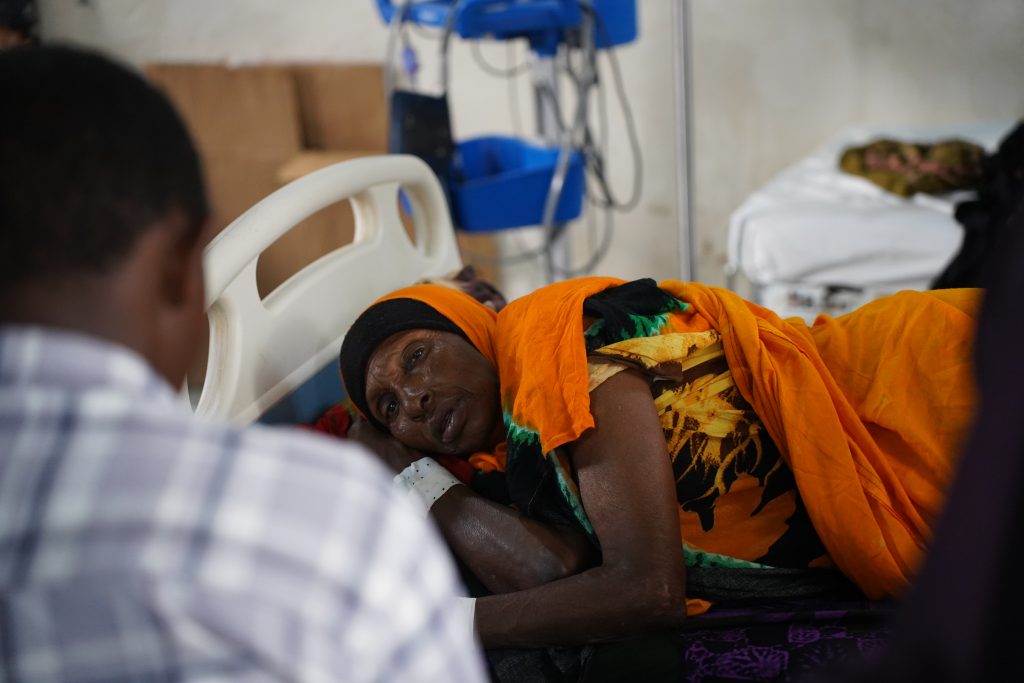
When Aamina Cabdi arrived at Bay Regional Hospital, she was too weak to stand. Wrapped loosely in her orange scarf, she lay quietly as nurses checked her blood pressure and oxygen levels. “I never thought I would end up in a hospital,” she said softly. Aamina has lived through repeated displacement over the past five years. Each time she moved, she lost what little she had—food, shelter, and access to health care. “We just tried to survive,” she said. “There were no clinics near us. Going to a hospital was something people didn’t even talk about.” Weeks before her arrival, Aamina began feeling unusually tired. She could no longer eat much or complete simple daily tasks. When she became too weak to sit up, her relatives decided to bring her to Baidoa. At the hospital, she was diagnosed with severe anemia linked to long-term undernutrition and exhaustion.
At MSF-supported Bay Regional Hospital, the medical team provided iron supplements, therapeutic food, and supportive care. Over the next few days, her condition began to stabilize. “They gave me medicine and food and told me to rest,” she said. “Now I can speak again. I feel my strength slowly returning.”
Anemia is a common condition among displaced people in southern Somalia, particularly older women, due to chronic food insecurity and limited access to healthcare services.
“No one ever thought to bring me to a hospital before,” Aamina reflected. “Maybe they thought old women like me don’t need treatment. But we do.
Faduma’s Story: “I didn’t know how serious it was until I couldn’t stand anymore”
34 years old | Pregnant patient at MSF-supported Bay Regional Hospital, Baidoa
Faduma travelled more than 300 kilometres to reach Bay Regional Hospital in Baidoa. She made most of the 10-hour journey lying in the back of a truck, too weak to sit up. She was 34 years old, pregnant, and severely anemic.
She had received no antenatal care during this pregnancy. There was no health facility near her village in southern Somalia, and even if there had been, her family could not afford the cost of transport. “I was just tired all the time,” she said. “Then I started feeling dizzy and my heart was racing. But we stayed at home. We thought it would pass.”
When Faduma collapsed at home, her family made the decision to travel to Baidoa. “We have other kids. Money is tight,” she said. “But I couldn’t walk anymore.”
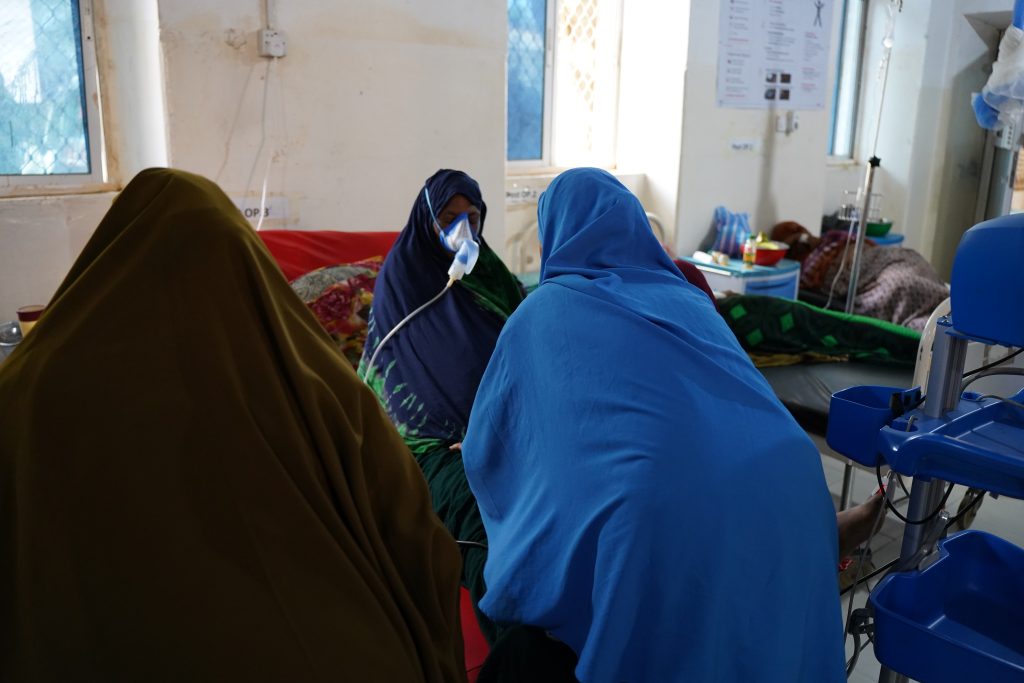
On arrival at the maternity ward, MSF staff assessed her immediately. Her hemoglobin levels were critically low and she showed signs of malnutrition. She was started on oxygen and received IV treatment for stabilization. “I don’t remember much,” she said. “Just voices, and someone saying I was very sick.”
Over the following days, her condition stabilized. She delivered a healthy baby girl and is now recovering. “I can sit up. I can eat,” she said. “But I don’t know what would have happened if we had waited one more day.”
Faduma’s case reflects a broader pattern seen at Bay Regional Hospital. Many pregnant women in rural parts of Bay and Bakool regions present late, often in critical condition, after delays caused by distance, cost, and the absence of nearby health services. Severe anemia in pregnancy significantly increases the risk of complications during delivery, including hemorrhage and maternal death.
“I waited too long,” Faduma said. “We didn’t know. There was nowhere to go.”
Like many websites, MSF uses cookies to enhance your user experience. By continuing to navigate this site you are giving consent to the issue of these cookies. No, give me more info
This website uses cookies to improve your experience while you navigate through the website. Out of these cookies, the cookies that are categorized as necessary are stored on your browser as they are essential for the working of basic functionalities of the website. We also use third-party cookies that help us analyze and understand how you use this website. These cookies will be stored in your browser only with your consent. You also have the option to opt-out of these cookies. But opting out of some of these cookies may have an effect on your browsing experience.
Necessary cookies are absolutely essential for the website to function properly. This category only includes cookies that ensures basic functionalities and security features of the website. These cookies do not store any personal information.
Any cookies that may not be particularly necessary for the website to function and is used specifically to collect user personal data via analytics, ads, other embedded contents are termed as non-necessary cookies. It is mandatory to procure user consent prior to running these cookies on your website.