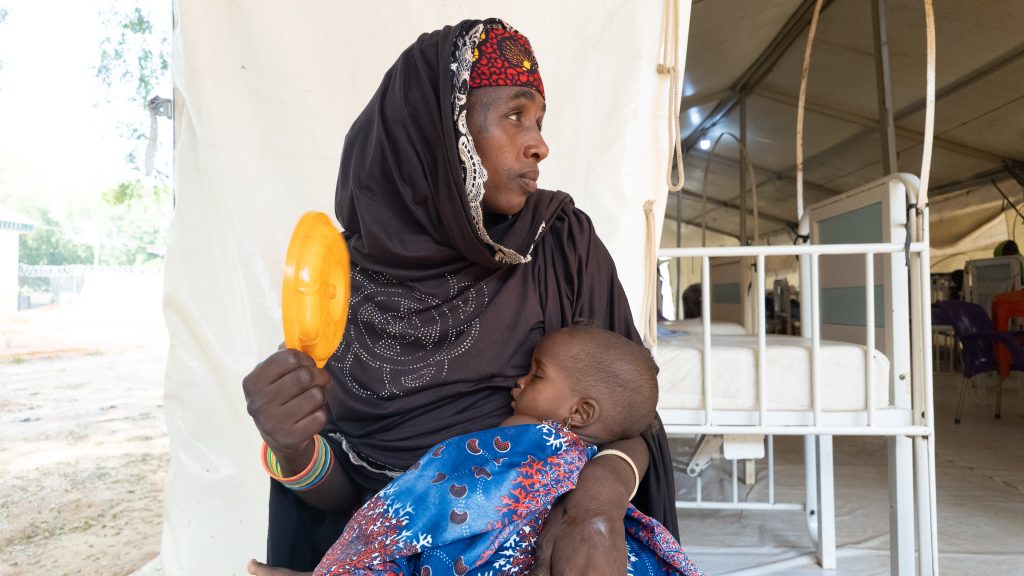
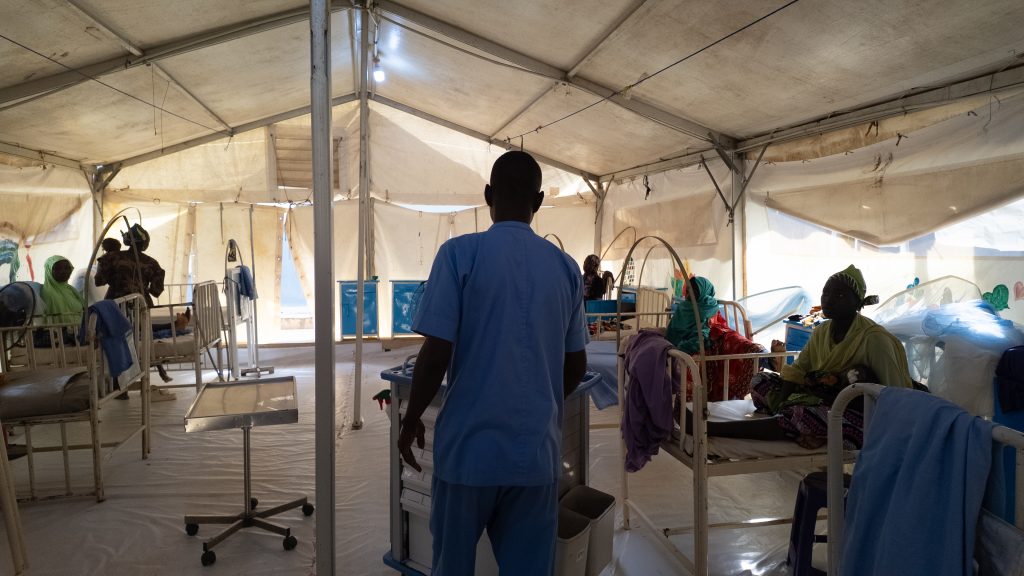
The wards of the Doctors Without Borders/Médecins Sans Frontières (MSF)-supported hospital in Gummi, Nigeria, are rarely quiet during the rainy season. Mothers sit close to metal beds, watching over children facing fevers, convulsions and exhaustion. Outside, the rain brings relief from the heat. But inside the hospital’s walls, it brings with it a surge of complicated malaria cases that push families and health workers to their limits.
During the rainy season, we experience the highest influx of malaria cases in our project. The numbers have increased year after year. Many children arrive very late and very sick, but when they reach us in time, malaria is treatable. Early diagnosis and immediate care make the difference between life and death.
Dr Balarabe Tirmizi
MSF doctor in Gummi
Gummi, in northwestern Nigeria, lies within the Sahel savannah malaria belt, which extends across several countries in the region, where malaria is endemic and remains one of the leading causes of illness. Malaria occurs year-round but peaks during the rainy season, between June and October. Stagnant water from rainfall, farming activities and water stored around homes create ideal conditions for mosquitoes to breed. Children under five and pregnant women are the most affected.
Although a preventable and treatable disease, delayed care can turn malaria into a life-threatening emergency.
Poverty and limited access to health services mean that many families first turn to herbal or traditional remedies, hoping symptoms will pass. By the time they seek medical care, children are often already very sick or in critical condition.
Our teams at the MSF-supported facility in Gummi see the consequences of these delays every day. Rafaatu Abubakar brought her son Misbahu to the hospital after malaria led to severe anemia. “They admitted us and gave him blood,” she says. “They also gave us food and took care of everything we needed.” She pauses before adding, “If we had stayed at home longer, I do not know what would have happened.”
Another mother, Ummul Khairi brought two of her children to the MSF supported hospital after weeks of worry. Her daughter, Maryam, was suffering from malaria and severe malnutrition, her small body weakened by illness and hunger.
“We came here to seek care, and we are happy for the care we received,” says Ummul. “The doctors worked hard for my children. There was food, water, and no discrimination.
After nearly three weeks in the hospital, the family was able to return home. “My children are getting better, and I will return home with courage and happiness,” Ummul tells us.
Cases like Misbahu’s and Maryam’s highlight how malaria often intersects with other health problems. Many children admitted for malnutrition are also infected with malaria, worsening their condition and making recovery more difficult. Health workers must treat multiple illnesses at once, often under intense pressure during peak months.
Amid these challenges, access to free, quality care is essential to save lives. During peak season, the number of malaria patients at the MSF-supported Gummi hospital regularly exceeds available space, forcing the team to expand capacity. What was once a small malaria ward has grown rapidly to meet rising needs, with additional beds, improved triage, and strengthened laboratory services. Three outpatient departments dedicated to malaria testing and treatment have also been opened to reduce congestion and ensure faster care.
MSF teams work alongside local health staff to ensure that patients are treated quickly and with dignity. Trust between the community and the hospital remains central to this effort, encouraging families to seek care earlier.
Beyond treatment, malaria prevention remains critical. Simple measures like sleeping under mosquito nets every night, keeping surroundings free of stagnant water and participating in seasonal malaria chemoprevention campaigns can significantly reduce risk. Early testing at nearby health facilities also prevents mild illness from becoming severe.
In Gummi, malaria continues to place a heavy burden on families and health services. Changing rainfall patterns and longer transmission seasons mean the challenge is growing. Yet every child who recovers, every mother who returns home relieved instead of in mourning, is a reminder of what timely care can achieve.
MSF teams remain committed to providing free, lifesaving malaria treatment and strengthening prevention efforts. In a place where malaria is still a daily threat, access to care is not just a service. It is a lifeline.
Like many websites, MSF uses cookies to enhance your user experience. By continuing to navigate this site you are giving consent to the issue of these cookies. No, give me more info
This website uses cookies to improve your experience while you navigate through the website. Out of these cookies, the cookies that are categorized as necessary are stored on your browser as they are essential for the working of basic functionalities of the website. We also use third-party cookies that help us analyze and understand how you use this website. These cookies will be stored in your browser only with your consent. You also have the option to opt-out of these cookies. But opting out of some of these cookies may have an effect on your browsing experience.
Necessary cookies are absolutely essential for the website to function properly. This category only includes cookies that ensures basic functionalities and security features of the website. These cookies do not store any personal information.
Any cookies that may not be particularly necessary for the website to function and is used specifically to collect user personal data via analytics, ads, other embedded contents are termed as non-necessary cookies. It is mandatory to procure user consent prior to running these cookies on your website.