Imagine a child desperately searching for safety amid unrelenting trauma from sexual- and gender-based violence (SGBV). In the last 10 months, at our clinic in Penang, among 37 female survivors of SGBV aged 10 to 17, eight young girls have faced the harsh and devastating reality of rape. This is likely to be an underrepresentation as it only accounts for those who can access our services.
So much so that, before even beginning their journey, many women anticipate the risk of rape. In the past, our teams in Malaysia have observed women and girls preparing themselves with contraceptives in Myanmar, foreseeing the abuse they expect to face on the journey to Malaysia. On the journey, they suffer horrifying abuses at the hands of traffickers – some being gang-raped multiple times, some endure it daily, until a family member can pay their ransom. Some women even die from the brutality inflicted upon them, while those that survive are left with deep psychological scars. Children that witness their mother or sister being raped are haunted by memories that are too painful to forget.
Our clinical work with Rohingya refugees reveals a heartbreaking truth: some young girls, pregnant before they even understand what motherhood means, tell us they are happy because finally, they have someone to play with. These children live the lives of mothers, yet they remain children at heart, caught in a cycle of exploitation and neglect.
You might wonder, why make this dangerous journey at all, then? The truth is life in Myanmar is extremely hard – on top of the constant violence, including SGBV, one patient shared that her family survived on only one meal every two to three days. Many fall into the traps of traffickers who promise a better life in Malaysia, only to face the harsh reality of living on the margins of society as undocumented refugees. Just days ago, according to local Rakhine media reports, hundreds of Rohingya fleeing unbearable violence and persecution in their homeland have been intercepted by the Myanmar navy and arbitrarily detained in prisons and detention centers in Sittwe, where their conditions remain unknown.
The trauma endured during the journey manifests in various ways.
Patients, including children, struggle with overwhelming flashbacks, helplessness, and intrusive thoughts. The simple sounds of fireworks can send them spiraling into fear, reliving moments of gunfire and violence. We have seen children in therapy struggle to play in a sandbox because the sand reminds them of war zones left behind.
Despite this decades of violence, Rohingya women and girls continue to show remarkable resilience and generosity. Rohingya community members sacrifice their scarce resources to help one another. Yet, their suffering is often ignored or misunderstood by outsiders, overshadowed by stigmatization and misinformation.
Supporting Rohingya refugees requires more than offering mental health services or emergency aid. It demands confronting the brutal reality of sexual violence – which both men and women endure – acknowledging its devastating consequences and advocating for the dignity and safety these survivors deserve.
At the end of the day, no single entity can solve all the problems the Rohingya community is burdened with. As a humanitarian healthcare aid provider, we offer the support that we can – ranging from counseling, medication to coping strategies. However, these are merely stopgaps; the wider barriers that remain will first require empathy from all of us.
As Malaysia has handed over its ASEAN chairmanship to the Philippines, this transition presents a crucial path for continuity in the region – and to unite in compassion and action. Only through shared responsibility can we hope to transform stopgaps into lasting change.
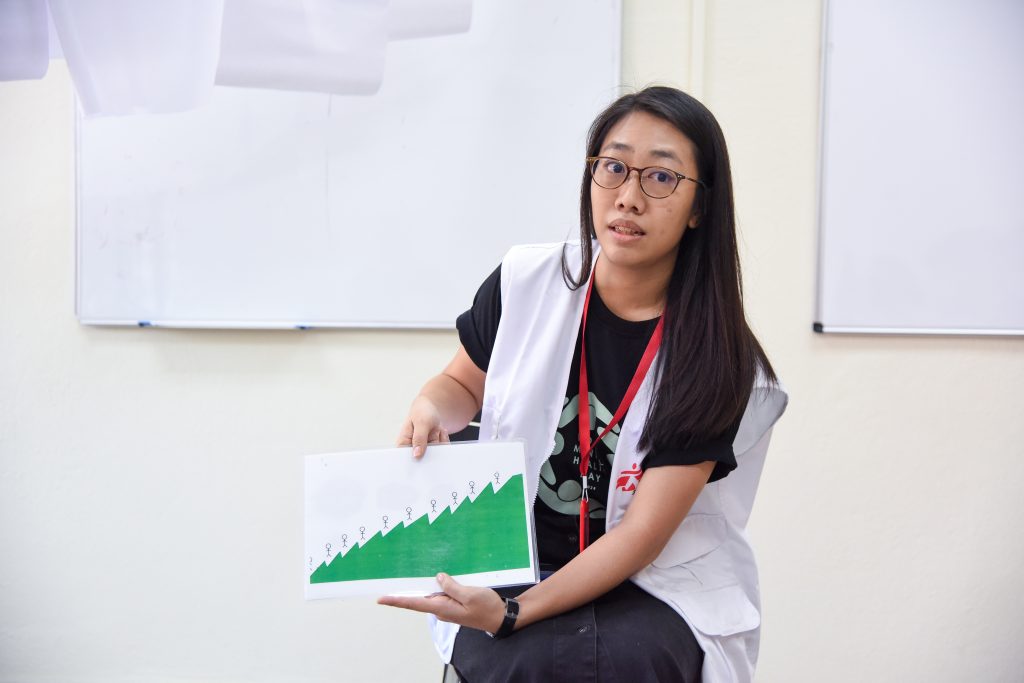
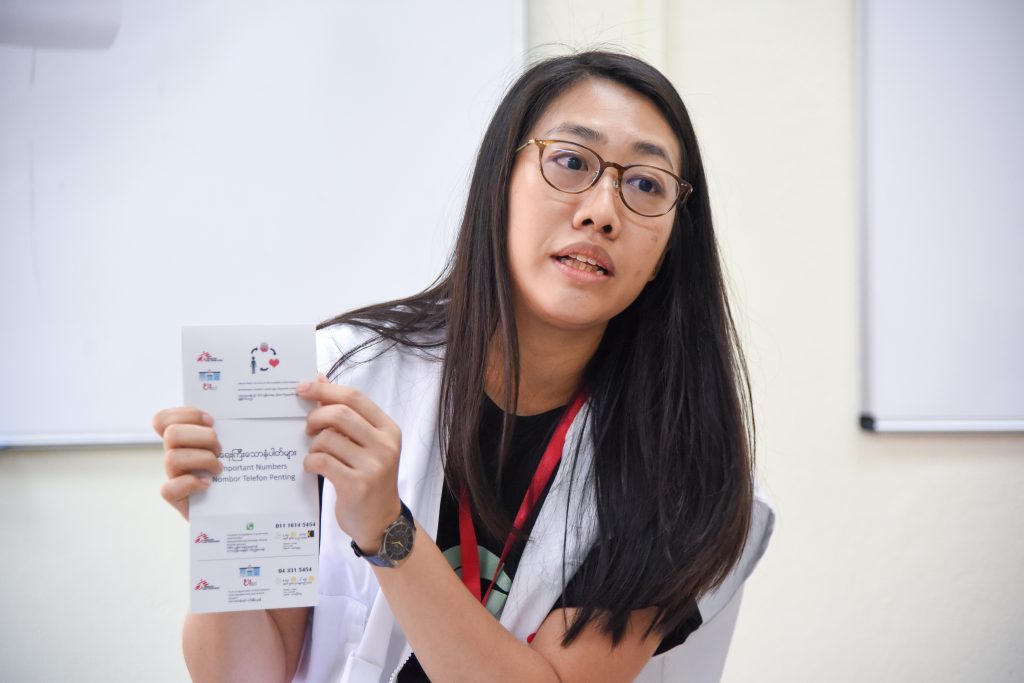
Chew Ching Hoay is a Clinical Psychologist and Mental Health Supervisor at the Médecins Sans Frontières (MSF) / Doctors Without Borders clinic in Butterworth, Penang. Since 2018, the clinic has offered primary healthcare services to refugees, asylum seekers, and undocumented migrants.
Like many websites, MSF uses cookies to enhance your user experience. By continuing to navigate this site you are giving consent to the issue of these cookies. No, give me more info
This website uses cookies to improve your experience while you navigate through the website. Out of these cookies, the cookies that are categorized as necessary are stored on your browser as they are essential for the working of basic functionalities of the website. We also use third-party cookies that help us analyze and understand how you use this website. These cookies will be stored in your browser only with your consent. You also have the option to opt-out of these cookies. But opting out of some of these cookies may have an effect on your browsing experience.
Necessary cookies are absolutely essential for the website to function properly. This category only includes cookies that ensures basic functionalities and security features of the website. These cookies do not store any personal information.
Any cookies that may not be particularly necessary for the website to function and is used specifically to collect user personal data via analytics, ads, other embedded contents are termed as non-necessary cookies. It is mandatory to procure user consent prior to running these cookies on your website.