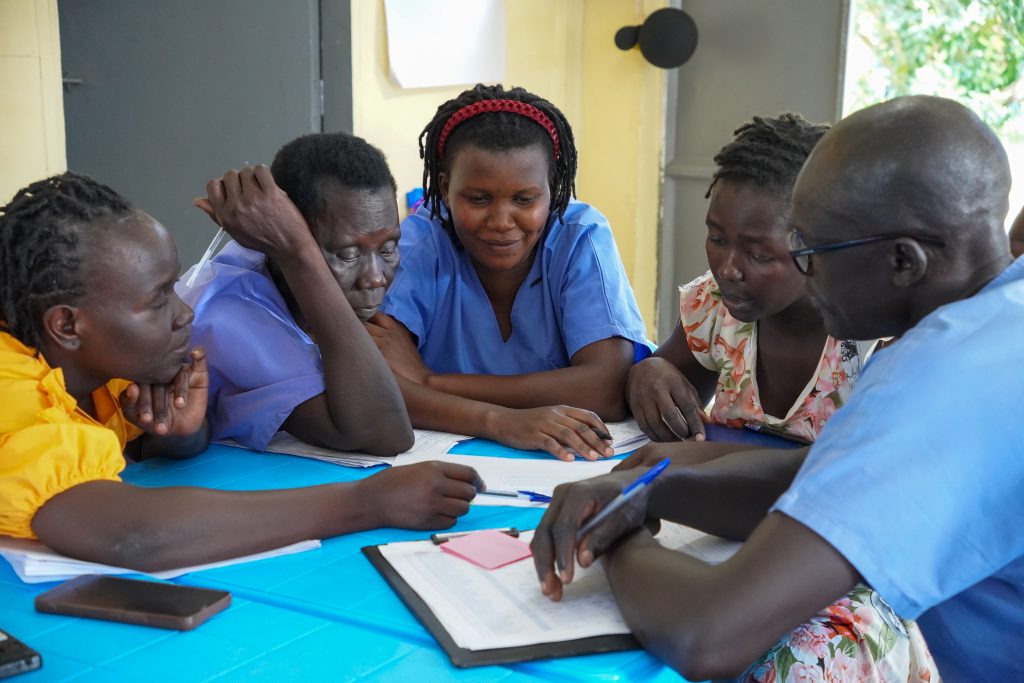
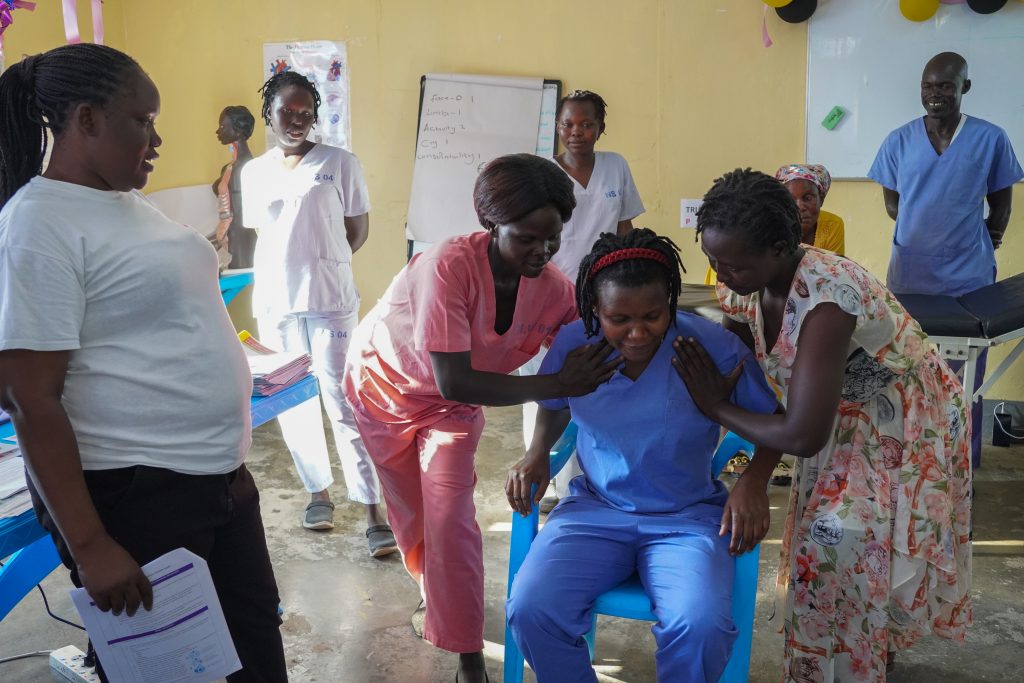
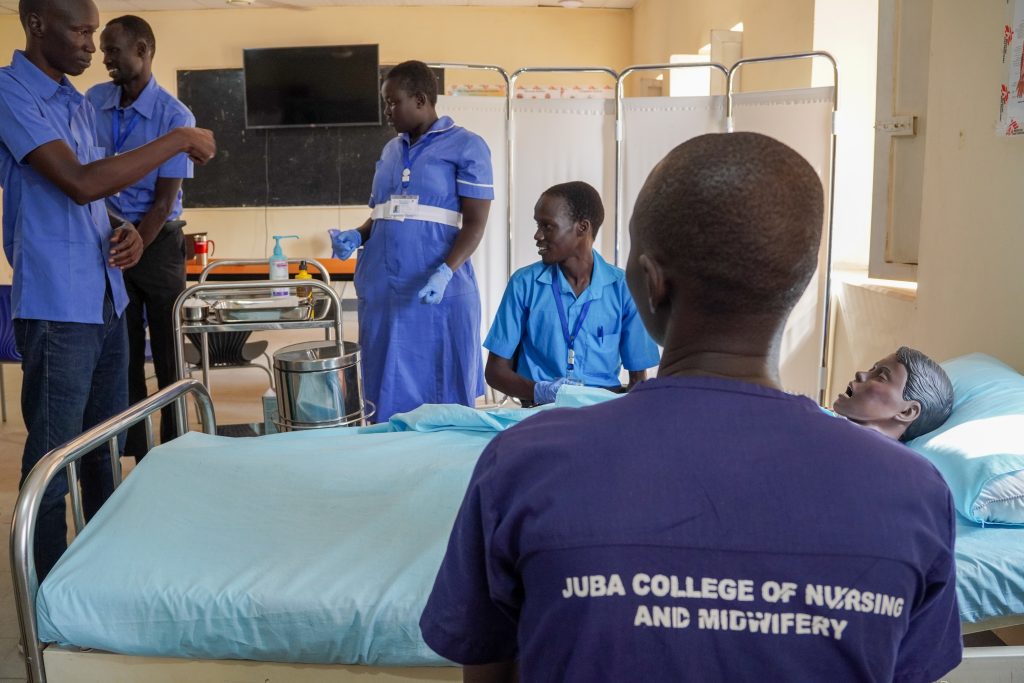
As conflict and crisis unfold, wards overflow, and resources are stretched, healthcare workers in Médecins Sans Frontières’ (MSF) projects are still finding the time and motivation to learn. For them, continuous education is not only about professional growth but also a way of caring better for their patients. What keeps them going through all of it?
Frontline healthcare workers share what motivates them to complete long-term training programmes, and how they find ways to keep learning, even in the most difficult circumstances. They participated in different learning programmes developed by the MSF Academy for Healthcare, designed to meet MSF’s needs and to help healthcare staff in demanding humanitarian contexts strengthen their skills, improve patient care, and support local health systems.
Kimbere Kisuba
Doctor, Democratic Republic of the Congo
“In the Democratic Republic of the Congo, in Masisi, the town where I live, the security situation was very difficult at the moment when I was in training. There were times we had to take refuge in the hospital to escape the fighting. Despite this, I never gave up. What kept me motivated most was my sense of responsibility, I wanted to do well at my job. I downloaded lessons I couldn’t attend live so I could review them later at home, and I made use of a quiet space provided by the MSF Academy whenever possible. Even with gunfire outside, I stayed focused, and the solidarity of colleagues in the same situation kept me going.
One day, I was working in the maternity ward assisting a woman in labour when a gunfight broke out. Bullets entered the room where we were. It was a terrifying moment. Later on, on the wall where one of the bullets had ended up, you could see the hole was exactly at the height of my head. Sharing this moment with colleagues through the training group, and receiving their support, helped me continue. Unfortunately, situations like this are not uncommon. It’s our daily reality.
The mentors of the training were always available, rescheduling sessions when needed and providing guidance. Thanks to their support and a positive learning environment, I completed the training successfully.
In the end, learning transformed my practice and I’m a better professional now. My advice to others is perseverance, clear goals, and surrounding yourself with the right support.”
Kimbere participated in the Antimicrobial Resistance Learning programme of the MSF Academy for Healthcare.
“As I grew into new roles within the organisation and took on more responsibility, I wanted to do my job as well as possible. The programme was very practical: you learn and apply at the same time. Professional skills matter, but above all, our work has a direct impact on the people we care for. I wanted the right tools to provide the quality of care people deserve and to respond properly to those who need us.
Throughout the programme, I felt very supported. My tutor, who had extensive experience in my role, guided me not only through the course but also through work-related questions. The connection with other participants, working in difficult contexts across the world, supporting one another throughout the learning process, was also key. It was exhausting with the workload, and on top of that I was pregnant and caring for a baby. But what motivated me was feeling that I was learning so much. I kept telling myself, “I can do this. I can do this.”
Sometimes the fatigue made me feel like I wasn’t learning at all, that I couldn’t even read properly. Still, I kept going, meeting the deadlines. What mattered to me wasn’t the grade, but being sure that I truly understood the concepts and could do the activities better each time.
In the humanitarian sector, with volatile contexts and frequent travel, you also learn to manage stress. My grandmother likes to say that even before I began studying medicine, I already knew I wanted to work with MSF, to go where the needs are greatest and help people. Looking back, I feel that what I have received in return is far more than what I have given.”
María Laura participated in the Postgraduate Diploma in Medical Humanitarian Leadership of the MSF Academy for Healthcare.
“In 2024, while I was participating in a training on antimicrobial resistance, conflict broke out again in Syria. Hearing airplanes and bombs brought back memories of the war, and it was very difficult to focus and learn. At the same time, the workload at the hospital was very high. Still, I wanted to continue. This specialised knowledge is urgently needed in Syria, where we face many challenges related to antibiotic use.
I studied at night, caught up with the online content when I could, and contacted my mentors whenever I needed support. They were very flexible, sometimes replying even in the evenings. I wanted to complete the programme and obtain the certificate, but more than that, I believe that in medicine you never stop learning. As doctors, improving our practices means caring better for patients.
During the 2011 war, I witnessed countless injuries and deaths. I lost my home in Aleppo, was forced to move, and continued working in public hospitals with very limited means. I chose to stay because I wanted to help people who could not afford care. That experience is also why continuing to learn, even in difficult conditions, remains so important to me.”
Mohammad participated in the Antimicrobial Resistance Learning programme of the MSF Academy for Healthcare.
Through the MSF Academy for Healthcare, MSF has trained over 1500 frontline healthcare workers with learning programmes designed specifically to respond to MSF’s needs in the projects. Participants follow the training while on the job, improving their competencies and applying what they learn with the individual support from a mentor. The aim is to have a lasting impact on the quality of care provided to patients where it matters most.
Like many websites, MSF uses cookies to enhance your user experience. By continuing to navigate this site you are giving consent to the issue of these cookies. No, give me more info
This website uses cookies to improve your experience while you navigate through the website. Out of these cookies, the cookies that are categorized as necessary are stored on your browser as they are essential for the working of basic functionalities of the website. We also use third-party cookies that help us analyze and understand how you use this website. These cookies will be stored in your browser only with your consent. You also have the option to opt-out of these cookies. But opting out of some of these cookies may have an effect on your browsing experience.
Necessary cookies are absolutely essential for the website to function properly. This category only includes cookies that ensures basic functionalities and security features of the website. These cookies do not store any personal information.
Any cookies that may not be particularly necessary for the website to function and is used specifically to collect user personal data via analytics, ads, other embedded contents are termed as non-necessary cookies. It is mandatory to procure user consent prior to running these cookies on your website.