After eight weeks of emergency intervention by Médecins Sans Frontières (MSF) in Sangé in the province of South Kivu, in the eastern Democratic Republic of Congo (DRC), the number of cholera cases haves fallen by 90%. The epidemic – the most serious in the area in five years – is driven by limited access to water collection points and a fragile health system. It has also been exacerbated by the mass displacements of people fleeing the ongoing clashes between the Congolese army, allied with the Wazalendo, and the AFC/M23.
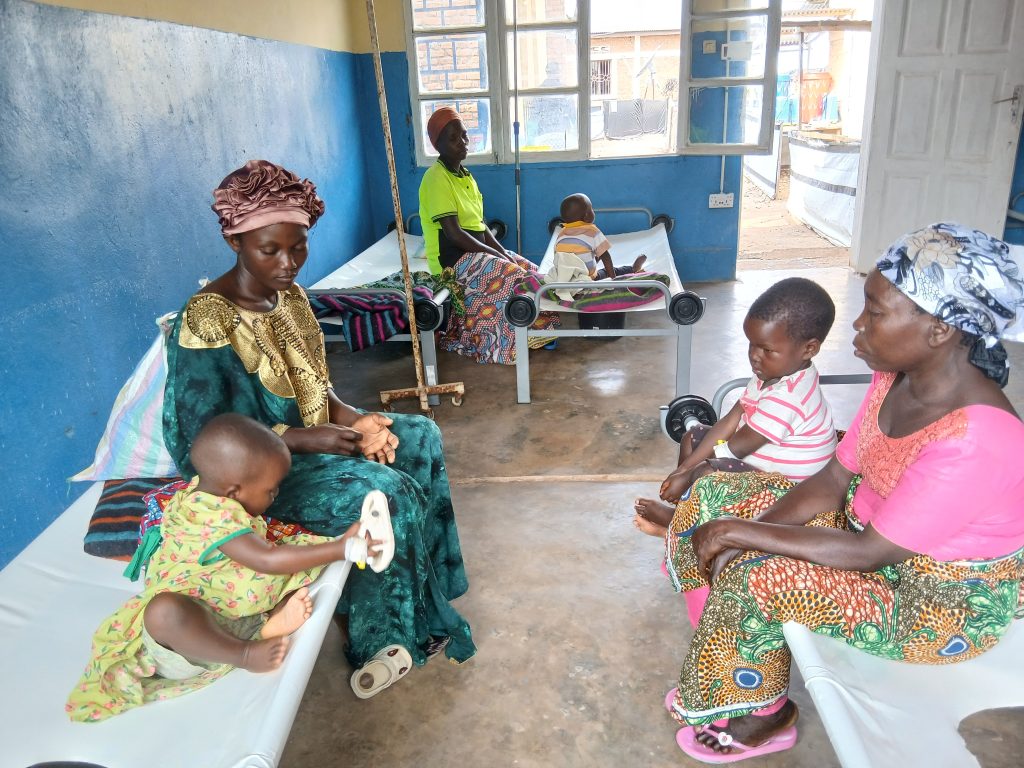
“In the middle of the night, I had excruciating stomach pains followed by vomiting and diarrhoea. When I saw that my condition was getting worse, I alerted my neighbours, who helped me pay for a motorcycle to take me here to the hospital,” says Tanishaka, a 48-year-old farmer, and one of over 800 people infected with cholera and being treated by MSF in Sangé.
Difficulties accessing drinking water collection points
In this town, households have been without drinking water for several months. This is because the two main water collection points are not functioning properly and have become inaccessible. “Due to the presence of armed groups, it was impossible for people to access water collection points, whose filtration systems were clogged with sand and dirt. People were deprived of safe drinking water,” explains Mamadu Diallo, MSF medical team leader.
Most residents were left with no other choice than to drink unsafe water from the river or irrigation canal, as explained by Busime, the mother of three-year-old Gisele, who is suffering from cholera and being treated at Sangé General Hospital. “It’s dirty water that hasn’t been treated, but because of the water shortage, we drink it because we have no other choice. My daughter became completely dehydrated. She stayed in bed and couldn’t even get up after going to the toilet,” she says.
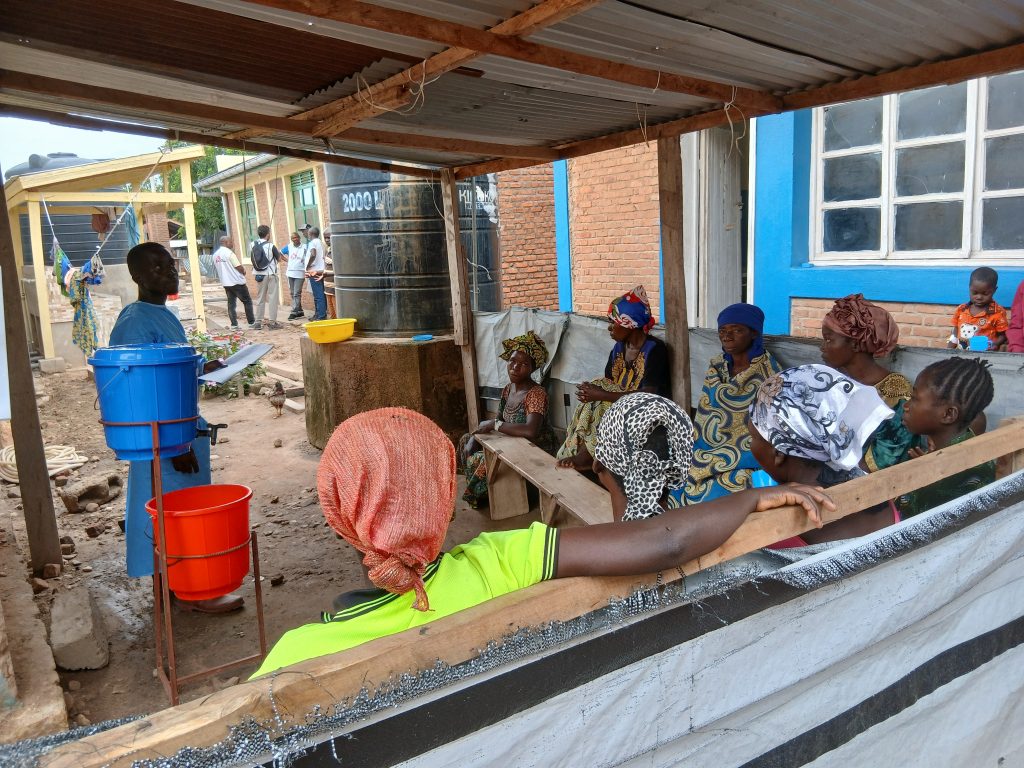
In response to the epidemic, MSF is supporting the cholera treatment centre at Sangé General Hospital and the Ndunda Health Centre on the outskirts of the city. In total, MSF has set up more than 50 water chlorination points in the Ruzizi health zone.
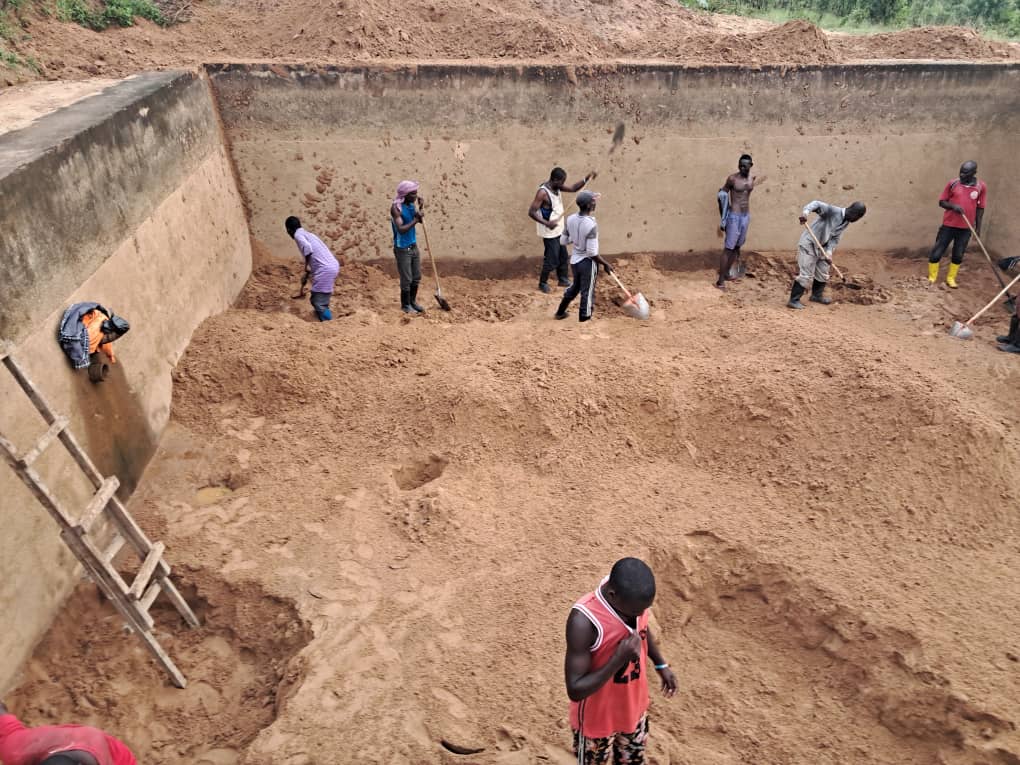
MSF is working with the community to help clean up water collection points. Eventually, the water will be filtered and chlorinated again. “Free access to drinking water collection points is the major problem in the area, and this is what needs to be addressed as a priority,” explains Edwige Baluga, MSF medical coordinator.
After eight weeks of MSF teams responding to the emergency, the number of cholera cases have fallen by 90% and the epidemic is under control.
The constant displacement of people caused by the conflict is bringing people into the area who have never been educated about cholera prevention measures.
Elisé Wilondja
MSF health promotion supervisor
To anticipate as much as possible any resurgence of the disease in this cholera-endemic area, MSF is raising awareness among community leaders to apply preventive hygiene measures and identify signs of the disease. People are also being trained to properly wash water containers that may be contaminated.
The most serious cholera epidemic in five years
With more than 800 people receiving treatment, this is the most serious cholera epidemic in five years in the Ruzizi health zone.
The epidemic has been exacerbated by the constant displacements of people fleeing regular clashes between the Congolese army (FARDC), their Wazalendo allies, and the AFC/M23 armed group. Busimé, alongside her sick daughter Gisele, says. “I fled the war in the village of Kigurwe and returned to Sangé a month ago because my children couldn’t adapt.”
In Sangé General Hospital, Nakitula, a 25-year-old farmer suffering from cholera, tells the same story. “I fled to Kahungwe, in the Health Zone of Lemera. But as I had no fields to cultivate and no means of subsistence there, I returned, as living conditions were becoming increasingly difficult. To survive at the moment, I do day-to-day work so that I can eat.” These continued displacements of people are contributing to the spread of the epidemic with people being forced to live in crowded and sometimes unsanitary conditions in host families, without access to drinking water.
At the end of January, after an explosion in the city, killing several people and injuring a dozen others, the MSF emergency team had to evacuate Sangé for security reasons. However, it continues to carry out its activities remotely until mid-February.
Like many websites, MSF uses cookies to enhance your user experience. By continuing to navigate this site you are giving consent to the issue of these cookies. No, give me more info
This website uses cookies to improve your experience while you navigate through the website. Out of these cookies, the cookies that are categorized as necessary are stored on your browser as they are essential for the working of basic functionalities of the website. We also use third-party cookies that help us analyze and understand how you use this website. These cookies will be stored in your browser only with your consent. You also have the option to opt-out of these cookies. But opting out of some of these cookies may have an effect on your browsing experience.
Necessary cookies are absolutely essential for the website to function properly. This category only includes cookies that ensures basic functionalities and security features of the website. These cookies do not store any personal information.
Any cookies that may not be particularly necessary for the website to function and is used specifically to collect user personal data via analytics, ads, other embedded contents are termed as non-necessary cookies. It is mandatory to procure user consent prior to running these cookies on your website.