Warsaw – As legislators in Poland draft a new law aimed at combatting human trafficking, Médecins Sans Frontières (MSF) urges that any measures inscribed in the legislation must not harm children. Children who are migrants are currently exposed to unreliable and inappropriate medical screening methods to determine their age. MSF calls on law makers to reject these methods as part of the law, and to ensure that ethical, comprehensive, and holistic means of assessing a child’s age are included.

A new MSF report, Age as a verdict, written with partners Save the Children and We Are Monitoring, looks at how age‑assessment procedures currently used in Poland are at risk of being formalised in the new law as part of the victim‑identification process. However, these procedures – including dental and radiological methods – are not scientifically reliable and are unethical for use in this context, in addition to carrying significant risks for children. Using these procedures to determine a minor’s legal age leads to harmful consequences; they can be unlawfully denied entry into Poland, and therefore protection and safety.

In the past, we were notified about young people who, shortly after undergoing an age‑assessment test, had been pushed back to Belarus directly from hospitals, still wearing casts and bandages. No-one should be denied care or pushed back from a hospital because of a medical test that was never designed to determine a person’s legal status.
Dr Alice Silvestro
MSF medical coordinator in Poland

The proposed law, “National Action Plan Against Trafficking in Human Beings”, is planned to enter into force no later than 2027. It comes as the government suspended the right for people to seek asylum in Poland in March 2025, and was supposed to be temporary – exceptionally introduced in response to an influx of people along the Polish-Belarusian border – yet it remains in force today. The suspension for seeking asylum does not apply, however, to some groups of vulnerable people, including unaccompanied minors. But there is no effective mechanism for identifying people belonging to those vulnerable groups, including children.

Over the past years, MSF teams providing medical support to asylum seekers in Poland have repeatedly observed the ineffectiveness of age assessment procedures, particularly on unaccompanied minors at the border with Belarus.

“We’ve seen children having to undergo harmful methods of age assessment to prove that they are not adults, to avoid being sent back to Belarus,” says Dr Silvestro. “These procedures have included using ionising radiation, which is not only scientifically unreliable, but it also goes against the fundamental principle of acting in the child’s best medical interest.”

In the case of minors, the initial need to recognise them as individuals under the age of 18 poses a significant challenge when someone does not hold a travel document, such as a passport. This lies within the discretion of officers when they apprehend someone at the border; and is particularly challenging in situations where this occurs in forests, without witnesses, under stress, and with language barriers.

Since March 2025, border guards in Poland have exercised even greater authority over determining a person’s path. They are the ones who decide whether someone is allowed to undergo the full age assessment procedure and apply for asylum. But we know these procedures are flawed; children must be protected rather than exposed to additional harm.
Uriel Mazzoli
MSF project coordinator in Poland

The Act on Combatting Trafficking may offer an opportunity to address these flaws and ensure that any future procedures prioritise child protection, scientific validity, and medical ethics.

“We call on paediatric radiology and endocrinology societies in Poland to take a position on age‑assessment practices and their scientific limitations,” says Dr Silvestro. “Standardised reporting guidelines and a clear affirmation of doctors’ right to refuse participation, without legal or professional repercussions, are essential to ensure ethical and effective methods, and safeguard children’s rights.”

Yemen: MSF hands over the mother and child hospital in Taiz Houban after a decade of lifesaving care

Taiz Houban, Yemen- Since 2015, Doctors Without Borders/Médecins Sans Frontières (MSF) has operated the mother and child hospital in Al-Houban, Taiz governorate — one of the few facilities providing free, high-quality healthcare in a region deeply affected by more than a decade-long conflict. At the end of July 2025, after 10 years of service, MSF officially handed over the hospital to the Ministry of Health (MoH). Just before the handover, patients and the hospital equipment were moved to the new premises, jointly built by MSF and the MoH.

After offering various medical services for over a million patients in our mother and child hospital in Taiz Houban over the past 10 years, we are handing over this facility to the Ministry of Health, fully staffed by well-trained professionals and equipped. At the same time, I find it very emotional to leave, after spending three years in this beautiful and challenging country with its incredible people.
Tila Muhammad
MSF country director, based in Sanaa

Although the handover decision comes amid a challenging humanitarian landscape, including recent reductions in global aid, suspension of USAID funding and regional tensions – which have all further strained the health systems in Yemen – the handover was envisioned years ago. Namely, the transition itself started when MSF decided to work in co-management with the MoH.

When MSF started the intervention in Taiz Houban, in 2015, the area was identified as one of the most underserved in Taiz.

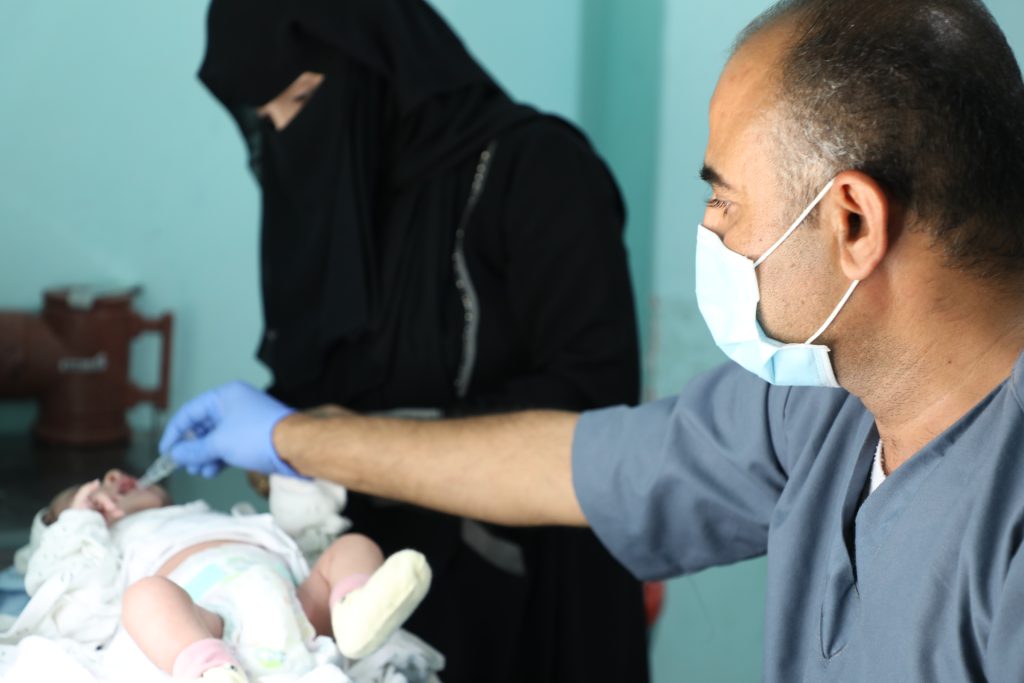
Nurse Abdulgagliel Al-Maktery vaccinates a baby at MSF’s Mother and Child hospital in Houban. ©️Nuha Haider/MSF
Since the opening we have been providing essential healthcare, emergency services for children under five, comprehensive maternity care including C-sections, treatment for malnutrition and more. We have also responded to outbreaks, supported complicated pregnancies and offered lifesaving referrals, as well as trauma care due to the conflict. Over the years, the 168-bed hospital evolved into a full-scale general hospital offering critical care to the local population.
Allan Silver Emuna
MSF Hospital Director

The impact of MSF’s intervention in Taiz Houban over the past decade is significant: MSF treated some 185,000 children under five years old in our ambulances, while over 200,000 were admitted to the emergency room. MSF staff assisted 67,000 deliveries and offered post-natal care for 133,000 patients. We treated 13,846 children and babies for malnutrition, performed over 10,000 surgical interventions, while admitting 32,165 children to pediatric and neonatal wards. In total, over a million patients received treatment in Taiz Houban hospital over the past 10 years.

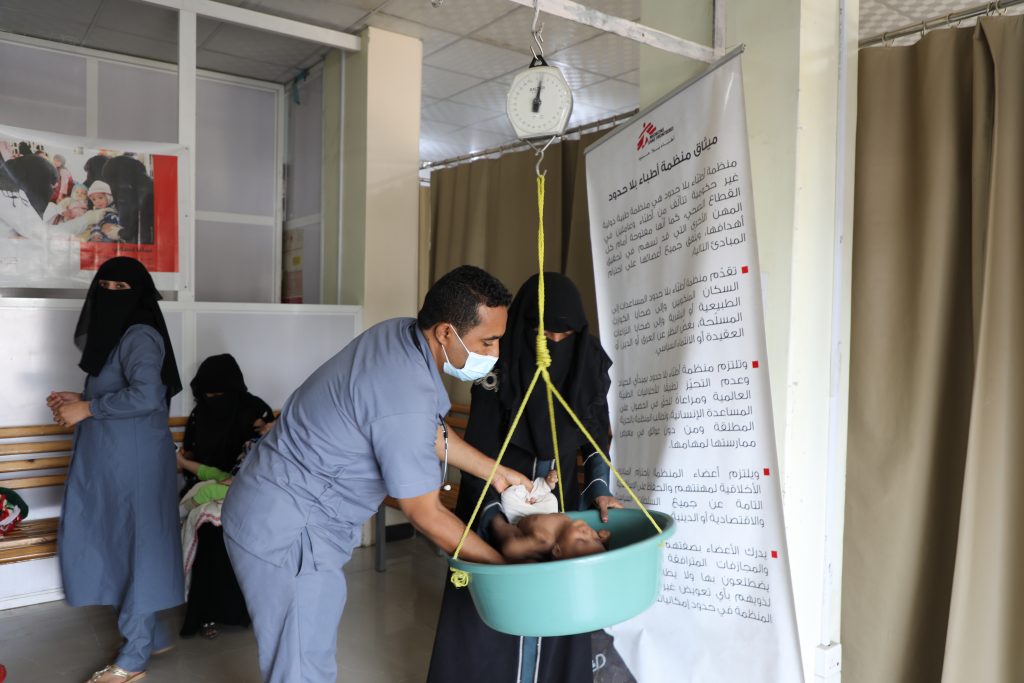
Patients wait in the triage area at MSF’s Mother and Child hospital in Houban, September 2021. ©️Nuha Haider/MSF

With a population of around 940,000 people in Taiz City and surrounding areas, patients often travelled long distances to reach the hospital as, for many of them, it was the only place they could access healthcare.

“Overall, the community has a great respect and appreciation towards the hospital, as it is the only facility providing free of charge services, related to mother and child health care, although, sometimes there is also frustration within the community, as it doesn't cover all the health needs of the local community. In private hospitals in Taiz Houban, a basic c-section can cost up to 1,000 USD, which is ten times the average monthly salary, if you have a job.
Abrar Mohammed
MSF health promotion supervisor
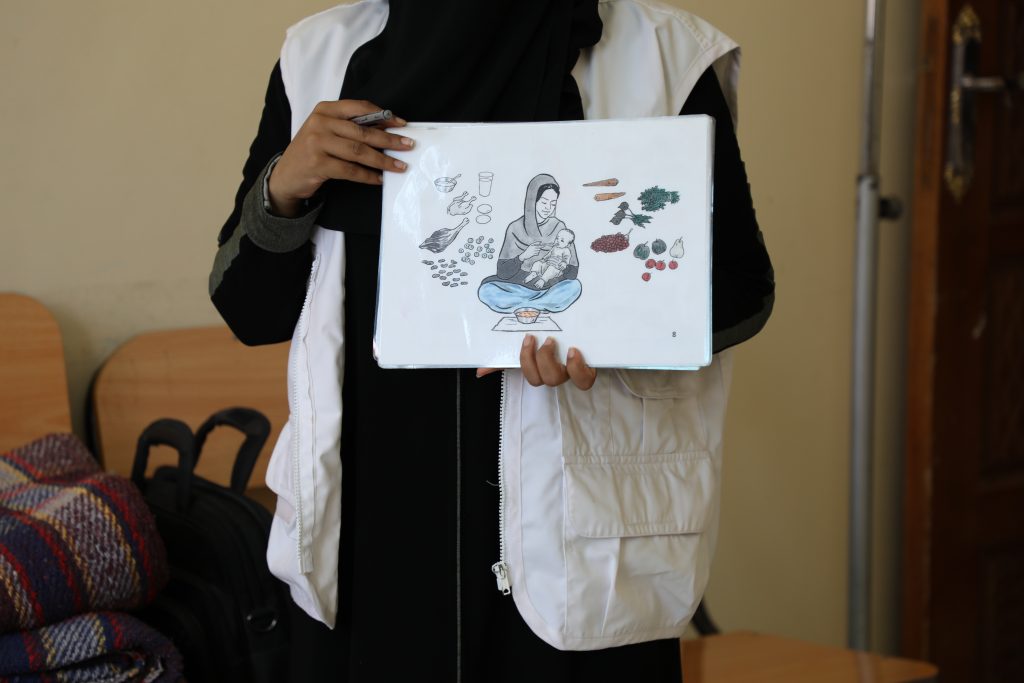
Health educator Sarah Abdo talks to women in MSF’s Mother and Child hospital in Houban about the importance of breastfeeding, to encourage mothers to breastfeed and to help reduce malnutrition in infants. ©️Nuha Haider/MSF

In addition to co-building the new hospital, MSF will support the authorities with incentives for the hospital staff, medicines and other relevant goods and supplies necessary for the normal operation of the Taiz Houban hospital for the next six months. This will ensure a proper handover and continuation of services for the local community.

MSF is not leaving Yemen or its people. MSF remains present in the country and offers healthcare services to the people in ten out of 22 governorates.

MSF has been working in Yemen since 1986 and has maintained a continuous presence in the country since 2007. Years of conflict have decimated Yemen’s public infrastructure, while millions of people lack access to clean water, food and medical care. MSF’s work in Yemen and around the world is guided solely by medical needs and carried out without influence from political, religious, or economic agendas. This is made possible by our independent funding — over 95 per cent of which comes from private donors, allowing us to assess needs freely, access communities and directly deliver the assistance we provide.


Show Buttons
Share On Facebook
Share On Twitter
Share On Linkedin
Contact us
Hide Buttons