“I didn’t leave my apartment all winter because I live on the 11th floor,” recalls Hanna, a 97 years old woman confined in her apartment, on the 11th floor of a residential building in Kyiv. “It was very cold at home and I was constantly shaking. I really want to stay sane after all this.”
Since February 2026, Médecins Sans Frontières (MSF) teams have been launching a project in Kyiv after repeated shelling of Ukraine’s energy infrastructure by Russian forces. Prolonged power outages combined with harsh winter temperatures, dropping to as low as –20°C at night, have left many residents struggling to cope with the cold and darkness.
The situation has been particularly difficult for elderly people, families caring for people with disabilities, children, and people living alone. In many high-rise buildings across Kyiv, elevators frequently stop working during blackouts or due to unstable electricity supply. For people with limited mobility, descending several floors without an elevator is often impossible, leaving many trapped in cold apartments without reliable heating or electricity.
The temperature in my apartment was +4°C throughout January and February. I slept in a winter jacket and a hood, under an old down blanket that I wrapped around myself like a sleeping bag.
Inna Litvinova
80-year-old resident of Kyiv
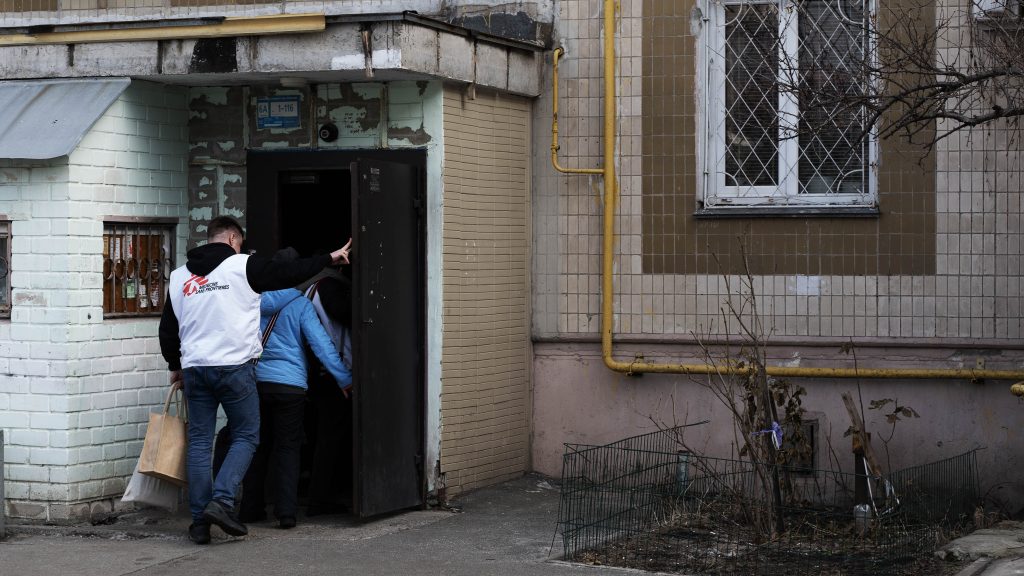
To support those most affected, MSF outreach teams are conducting door-to-door visits together with Kyiv’s state social services and local volunteers in order to meet with vulnerable residents, assess their needs, and provide basic kits designed to help them manage daily life during outages.
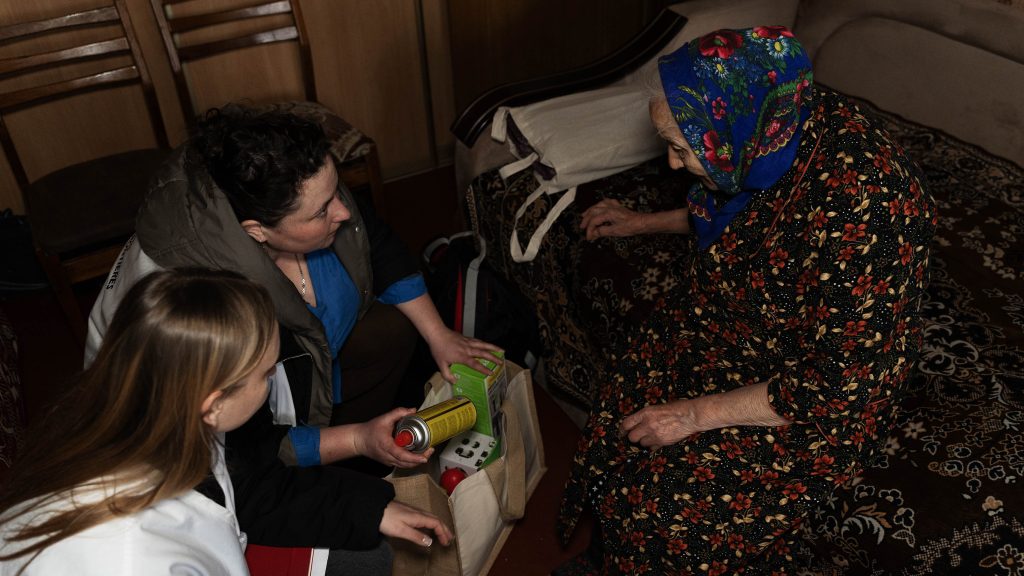
The first visit is usually introductory and includes the distribution of a basic kit, while also helping the team better understand people’s needs so assistance can be provided. “The kit includes a warm blanket, reusable thermal heating pads (which can even be kept in pockets), a power bank, a thermos, a large flashlight, as well as tea, instant soup, and biscuits,” explains Olha Osmukha, project medical referent of MSF in Kyiv. “We also call this package a ‘warmth kit,’”
“A headlamp is my salvation, because the apartment is always dark, recalls Inna Litvinova. I had fallen several times before, and it’s very dangerous. Now I put the lamp on my forehead, my hands are free and there is light around me. In the morning I use the thermos to make hot tea or herbs, then a power bank, later a flashlight, and towards the evening I rely on heating pads and a warm blanket.”
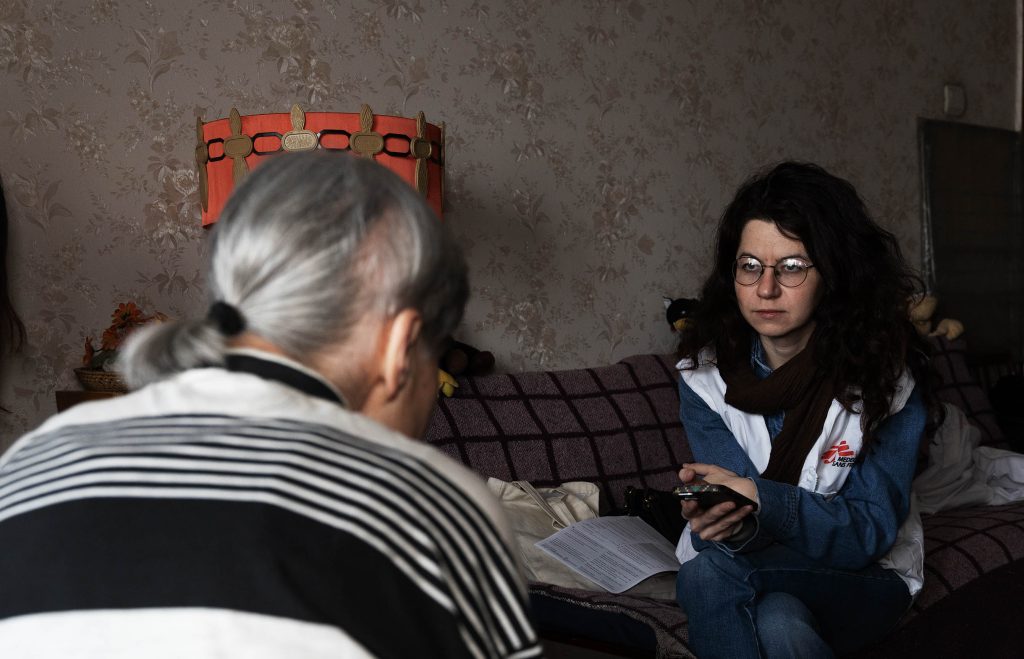
During visits, MSF teams also carry out basic health checks as many of the people visited live with multiple chronic conditions such as cardiovascular diseases, diabetes, arthritis, Parkinson’s disease, or the aftermath of stroke. Nurses measure blood pressure, body temperature, oxygen saturation, and blood glucose levels.
“I have a severe form of psoriasis, and I can barely see out of one eye, share Inna Litvinova. Of course, when you are under constant stress, chronic illnesses become worse. And how can you not be nervous? A missile struck the neighboring entrance of my building. There were cracks in the ceiling and walls of my apartment, and the balcony windows are still covered with plastic film. That morning I woke up and my entire apartment was covered in glass. But I keep going. We have to live.”
Although spring has arrived and temperatures are gradually rising, many residents in Kyiv continue to face unstable electricity supply and hours-long power cuts each day. MSF teams continue to visit vulnerable residents and provide support to help them cope with the ongoing impact of the war
Like many websites, MSF uses cookies to enhance your user experience. By continuing to navigate this site you are giving consent to the issue of these cookies. No, give me more info
This website uses cookies to improve your experience while you navigate through the website. Out of these cookies, the cookies that are categorized as necessary are stored on your browser as they are essential for the working of basic functionalities of the website. We also use third-party cookies that help us analyze and understand how you use this website. These cookies will be stored in your browser only with your consent. You also have the option to opt-out of these cookies. But opting out of some of these cookies may have an effect on your browsing experience.
Necessary cookies are absolutely essential for the website to function properly. This category only includes cookies that ensures basic functionalities and security features of the website. These cookies do not store any personal information.
Any cookies that may not be particularly necessary for the website to function and is used specifically to collect user personal data via analytics, ads, other embedded contents are termed as non-necessary cookies. It is mandatory to procure user consent prior to running these cookies on your website.