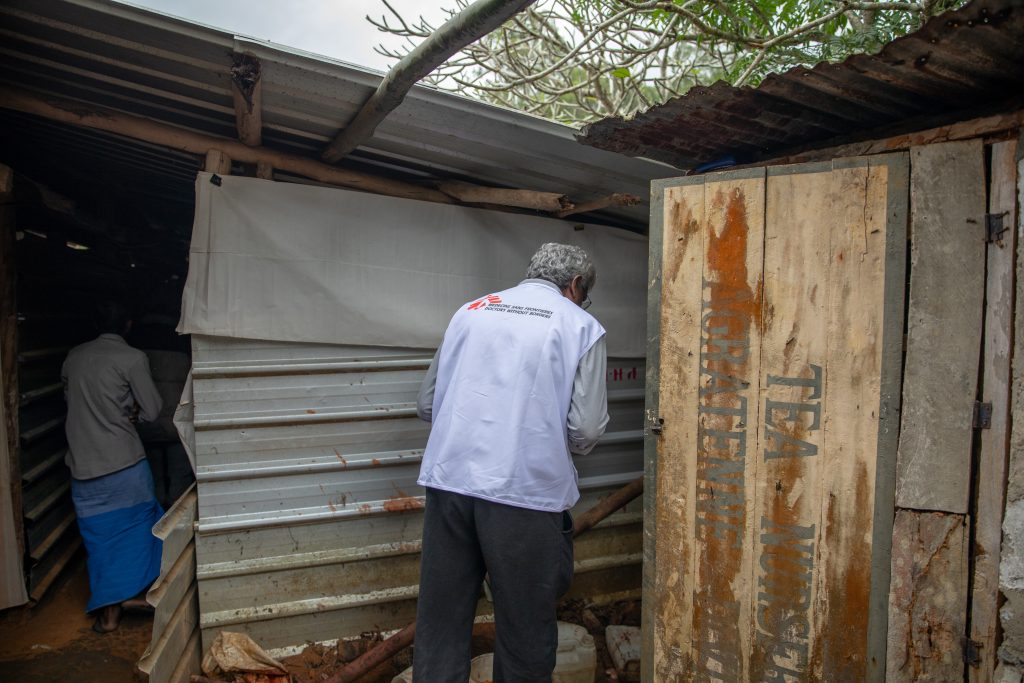
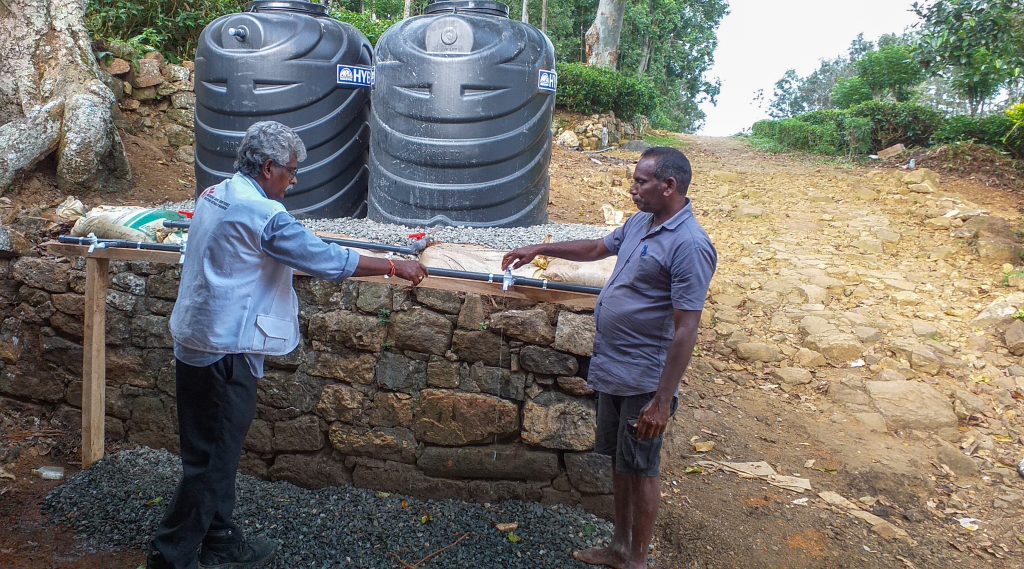
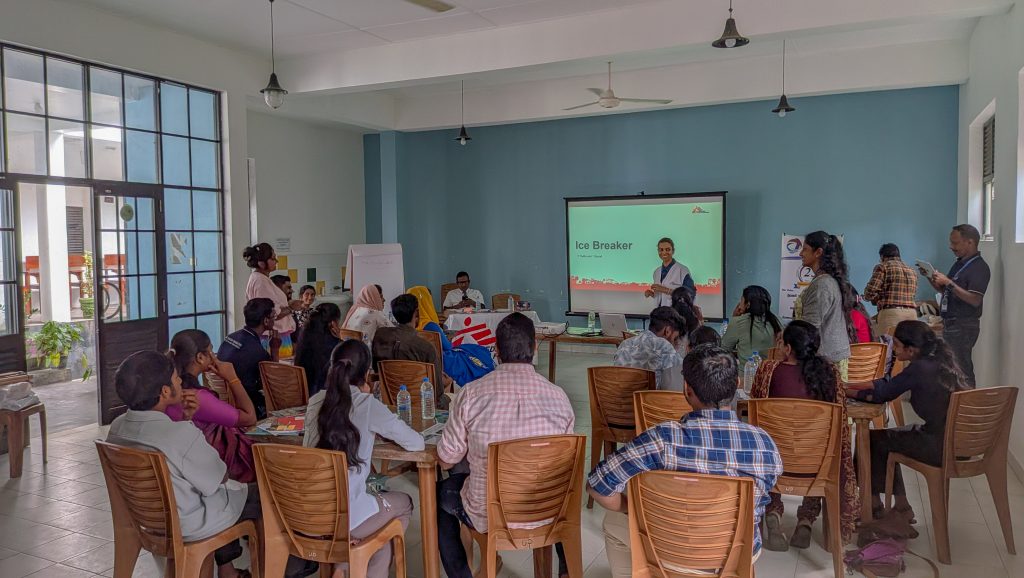
Médecins Sans Frontières (MSF) has completed its emergency response to the floods and landslides caused by Cyclone Ditwah in Sri Lanka. The worst natural disaster to hit Sri Lanka in two decades caused widespread flooding and landslides across all districts, severely affecting both urban and rural communities. Since December 2025, MSF has worked alongside local partners and authorities to address urgent and ongoing needs in affected communities in the central highlands of Sri Lanka.
Key outcomes
Over 4,000 vulnerable people reached with essential relief items, including maternity and dignity kits, warm clothing and blankets, helping to maintain hygiene, dignity and comfort during displacement.
Restored water supply in eight locations, ensuring nearly 600 families had access to safe water for drinking, cooking and hygiene.
Sanitation improvements and hygiene material distribution in 13 displacement centers, ensuring dignity and helping reduce the risk of disease outbreaks.
Displaced people received psychosocial support through the efforts of over 80 trained community volunteers, who are empowered to continue supporting mental health needs in their communities.
Nearly two months after Cyclone Ditwah made landfall, many people have begun returning home and resuming their daily lives. However, thousands whose homes were destroyed or are located in high-risk areas remain displaced.
Individuals living in temporary and transitional shelters will require ongoing assistance over the medium- to long-term. Additionally, marginalized communities, particularly those working on tea plantations in the central highlands, were disproportionately affected and continue to face significant barriers in accessing relief services and information in Tamil language.
During the initial emergency phase, MSF focused on addressing immediate needs and supporting and strengthening local response capacity. As MSF transitions out of direct emergency operations, ongoing support will be needed for people affected by this disaster and for building preparedness for future climate-related emergencies.
Like many websites, MSF uses cookies to enhance your user experience. By continuing to navigate this site you are giving consent to the issue of these cookies. No, give me more info
This website uses cookies to improve your experience while you navigate through the website. Out of these cookies, the cookies that are categorized as necessary are stored on your browser as they are essential for the working of basic functionalities of the website. We also use third-party cookies that help us analyze and understand how you use this website. These cookies will be stored in your browser only with your consent. You also have the option to opt-out of these cookies. But opting out of some of these cookies may have an effect on your browsing experience.
Necessary cookies are absolutely essential for the website to function properly. This category only includes cookies that ensures basic functionalities and security features of the website. These cookies do not store any personal information.
Any cookies that may not be particularly necessary for the website to function and is used specifically to collect user personal data via analytics, ads, other embedded contents are termed as non-necessary cookies. It is mandatory to procure user consent prior to running these cookies on your website.