

It was in the middle of a cold November night when a knock sounded at the door. “My wife is giving birth. Could you take her to the hospital? We can’t go out. If we leave our home, the police will detain us. Please, as a human being, help us.”
These were the words of an Afghan refugee, spoken as he stood at the door of a rickshaw driver that night. His wife was in labour, but amid widespread deportations of Afghans in Pakistan, they feared leaving their home, even for urgent medical care. The family now faced the unimaginable: giving birth without support, in isolation, and under extreme stress.
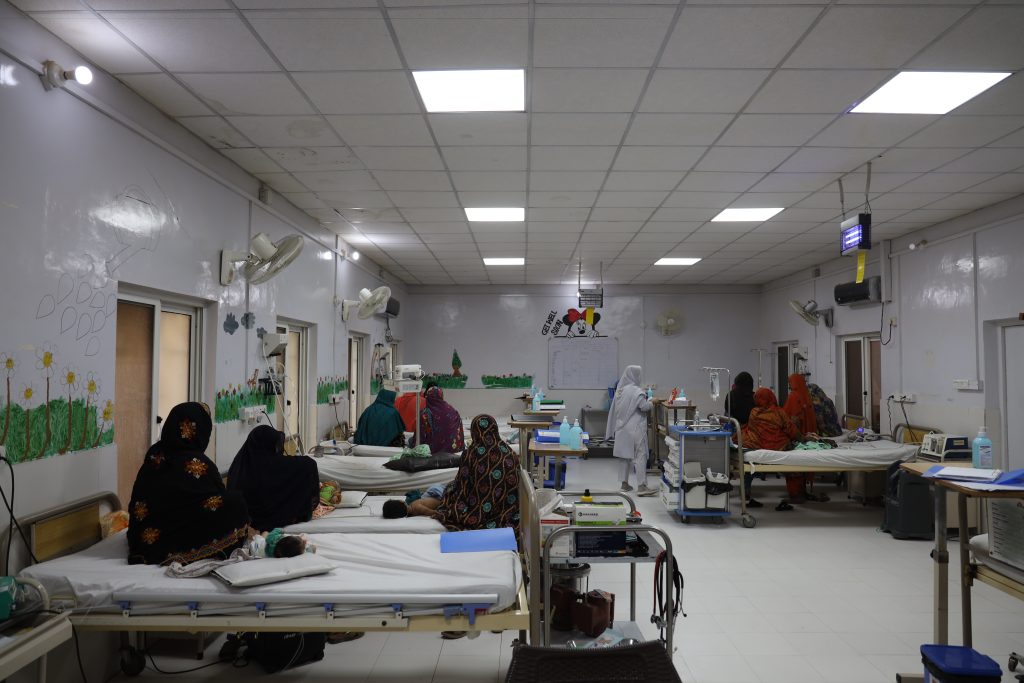
Even knowing the family had no money, the driver agreed to rush the woman to the hospital. “As a human being, I felt their pain and decided to bring her to the hospital, completely alone, without any caretaker by her side,” he said, recalling the journey to a Médecins Sans Frontières (MSF) facility in Balochistan, Pakistan.
At the MSF facility, the staff attended to the woman and her baby. Following a dangerous and frightening experience, both were healthy, and, at least for the time being, safe. But the experience of this woman and her child are not isolate.
The mass deportation of Afghan refugees from Pakistan has become a catastrophic humanitarian crisis, deepening the suffering of an already vulnerable community. These deportations leave many refugees without shelter in some holding camps with little to no facilities, healthcare, or means of survival. Average temperatures are around 10°C, falling below 5°C during nights and early mornings. The fear of arrest and detention has prevented many from seeking medical care. This fear leads to trauma-induced miscarriages, untreated illnesses, and the refusal of medical care due to the lack of documentation
Since the late 1970s, Pakistan has been home to millions of Afghan refugees. Over the past four decades many have fled conflict, persecution, and instability in Afghanistan, seeking refuge in neighbouring Pakistan. Over time, many have established communities, livelihoods, families, and small businesses to survive in protracted displacement.
Many of them have spent more of their lives in Pakistan than Afghanistan and have children who have never been to Afghanistan at all. However, since November 2023, the Government of Pakistan has been implementing the Illegal Foreigners Repatriation Plan (IFRP), primarily affecting the large Afghan refugee population. The deportation drive began by targeting undocumented Afghans, then expanded its scope to include holders of the Afghan Citizen Card (ACC), a protection previously given by the Government of Pakistan that allowed Afghan citizens to stay in the country. Most recently, Afghans with Proof of Registration (PoR) cards, who were granted temporary legal stay by the Government of Pakistan in collaboration with the United Nations, have also been subject to forced repatriation.
According to the UNHCR, as of October 2025, more than 2.18 million Afghans were estimated to be living in Pakistan, and many were either born in Pakistan or had spent most of their lives in the country.
The surge in deportations since September 2025, coinciding with the arrival of winter, has sharply worsened the situation for Afghan refugees, as the policy is now indiscriminately forcing the return of all Afghan people, regardless of their status in the country.
“The baby was gasping. Those were his last moments”
In November, a baby in critical condition was brought to MSF’s facility in Balochistan, close to the border with Afghanistan. The family had been referred from a holding centre. “I approached and saw the baby; he was gasping. Those were his last moments. I had never seen the last moments of any person before. I was shocked,” shares an MSF staff member, filled with emotion as he takes a sip of water to calm himself. “With a very heavy heart, I asked the doctor, ‘What happened?’ The doctor told me that the baby was in critical condition: ‘We tried our best. We provided oxygen, but there was no pulse. Nothing.’”
The baby was only five months old and had suffered all night in the cold weather. “It was very cold. At the holding centre, there is no sanitation, no clean water, no food—conditions that leave refugees exposed to the harshest of elements,” says an aid worker from the holding centre. “The weather has been too cold. We were also traumatised to learn about the death of this baby.”
The baby’s body was transferred to the border in an ambulance provided by an aid organisation that had referred the baby to an MSF facility.
One male Afghan refugee mentioned that refugee families were facing significant delays in crossing the Afghanistan-Pakistan border, with food shortages, and children falling ill due to the cold weather. “Because of the deep winter season and the bitter cold, my children suffered and fell sick,” he says. A female Afghan refugee mentioned the lingering pain of uncertainty: “We don’t have a home in Afghanistan, nowhere to stay if we are deported. Now that winter has started, and we are a family with kids, we do not know what to do.”
“My family and I are exposed to cold weather on a daily basis. We don’t have anything to keep ourselves warm. I’m afraid of deportation. If we are forced to return to Afghanistan, the challenges will double. I’m afraid for my wife and children,” shares another refugee who is living with local community but due to fear he is not going out to work. He suffers from exposure to the cold, exacerbated by the high cost of heating, and inadequate housing conditions
MSF’s medical teams are seeing clearly that for vulnerable communities, winter without shelter is deadly. Freezing temperatures sharply increase illness and death, particularly among malnourished children. Cold exposure forces the body to burn more calories just to survive, yet malnourished children have no reserves to keep warm. They deteriorate rapidly. Their immunity weakens, making respiratory infections both common and dangerous, with minor illnesses quickly turning fatal. Without access to medical care, urgent shelter, protection, and nutrition, winter becomes a silent killer.
As winter has already set in, the need for blankets and winter kits for Afghan refugees is increasing. The holding centres often lack necessities, further worsening the situation for Afghans, as there is no water, no sanitation, and the people held there are lucky if they even receive two meals a day, with food stocks often too low to supply enough meals. With refugees facing barriers to necessary medical attention, the need for immediate humanitarian aid has never been more urgent.
Barriers to Medical Care and the Growing Health Crisis
Health challenges, both physical and psychological, are increasing risks to health and survival, contributing to higher levels of morbidity and mortality.
He was detained again along with his wife and later forced to return to Afghanistan.
In October 2025, an Afghan refugee came to the MSF facility for post-natal care. She had delivered her baby at the holding camp, but the baby was stillborn. After receiving care, she was sent back to the holding camp. She was brought to the MSF facility again the next morning in an unconscious condition, accompanied by her mother and father-in-law. Her mother-in-law told our team, “When she was delivering the baby, we had nothing to cover her. She gave birth in front of everyone.” As she spoke, tears streamed down her face, her voice heavy with pain as she relieved the humiliation and helplessness of that moment. Her condition was critical, and she was referred to Quetta for specialised care. She remained in the hospital in Quetta for four days, but they could not afford to provide her with better treatment and she died. Just after her death, the family was told it was their turn to cross the border. They were deported to Afghanistan with her dead body.
According to the MSF team’s assessment in east of Kandahar city, Afghanistan, in late October, returnees are facing severe conditions in the makeshift shelters. Access to safe water is limited, sanitation facilities are almost non-existent, and children face heightened risks of respiratory infections, measles, and diarrhoea. Communities are also encountering significant barriers to healthcare: no regular medical services are available in the shelters, and families must pay out of pocket to access care in town. In addition, community members reported high levels of stress linked to displacement, loss of income, and uncertain prospects.
The Unrelenting Fear and Uncertainty of Deportation
The psychological toll is immense, with mental health crises worsening as refugees are haunted by the uncertainty of their future and the traumatic experience of being forced to leave their homes and livelihoods behind. Harassment, arbitrary detentions, and family separations add to their woes
Alongside the indiscriminate deportations, families are also living with empty stomachs due to the fear of arrest if they step outside to find food or work. “Frequently I can’t buy food for my family. We often go to sleep hungry,” shares another Afghan refugee. “Last time, I had no food at home. One neighbour once went to the market and bought food for me. It happens from time to time that my children and I don’t have food at night.”
On one hand, Afghan refugees are suffering from barriers to healthcare access in Pakistan, and on the other hand, the lack of a proper healthcare system in Afghanistan, particularly for women, only makes their situation worse. “My wife suffers from hypertension. I was shocked when I heard about this repatriation process for Afghan refugees. I was thinking of my pregnant wife and my children,” shares another Afghan refugee. He had come to Pakistan 35 years ago due to the wars and had settled there. Four of his children died due to miscarriages, and his wife is now six months pregnant.
For decades, Pakistan has provided refuge to millions of Afghans fleeing conflict and persecution. Many have known no other home. Their return must not be forced or rushed, but carried out only on a voluntary, safe, and dignified basis, with adequate time and the ability to take their assets so families can rebuild their lives with dignity.
“Mobilising humanitarian aid is critical to provide immediate relief to Afghan refugees living within local communities and people who are being deported, ensuring those affected have access to food, shelter, and essential services. In parallel, the issue of forced returns must be addressed, with a focus on providing safe relocation to third countries and protecting vulnerable groups from further harm. Safety, dignity, and humanity are not optional.”