Mali: Healthcare Powered by Solar Energy

In the Timbuktu region of northern Mali, MSF has just equipped the Niafounké hospital with a new solar panel installation. This energy transition strengthens the hospital’s autonomy and ensures better continuity of care in an area that is both remote and affected by insecurity.

Until now, the hospital relied almost entirely on a diesel-powered thermal power plant, which was prone to frequent power outages. To maintain healthcare services, medical teams had to use a generator on a daily basis, at high cost and with limited reliability. The new photovoltaic solar installation now covers around 60% of the hospital’s energy needs, significantly reducing this dependence.

This energy transition makes it possible to substantially reduce expenses related to the generator, its maintenance, and the purchase of diesel, allowing more resources to be allocated to patient care. It ensures. The continuity of vital care such as the operation of oxygen concentrators in neonatology and pediatrics, surgical and obstetric emergencies, as well as power supply for the laboratory, ultrasound equipment, and the cold chain essential for blood transfusions.
Souleymane Ouattara
Timbuktu project coordinator
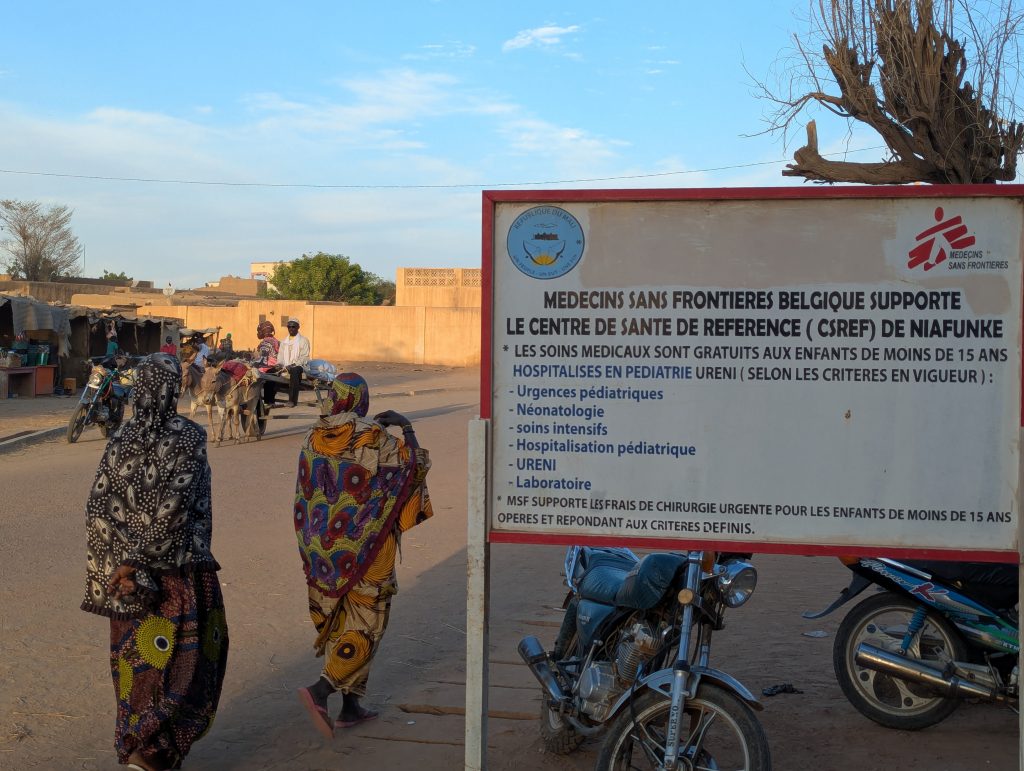
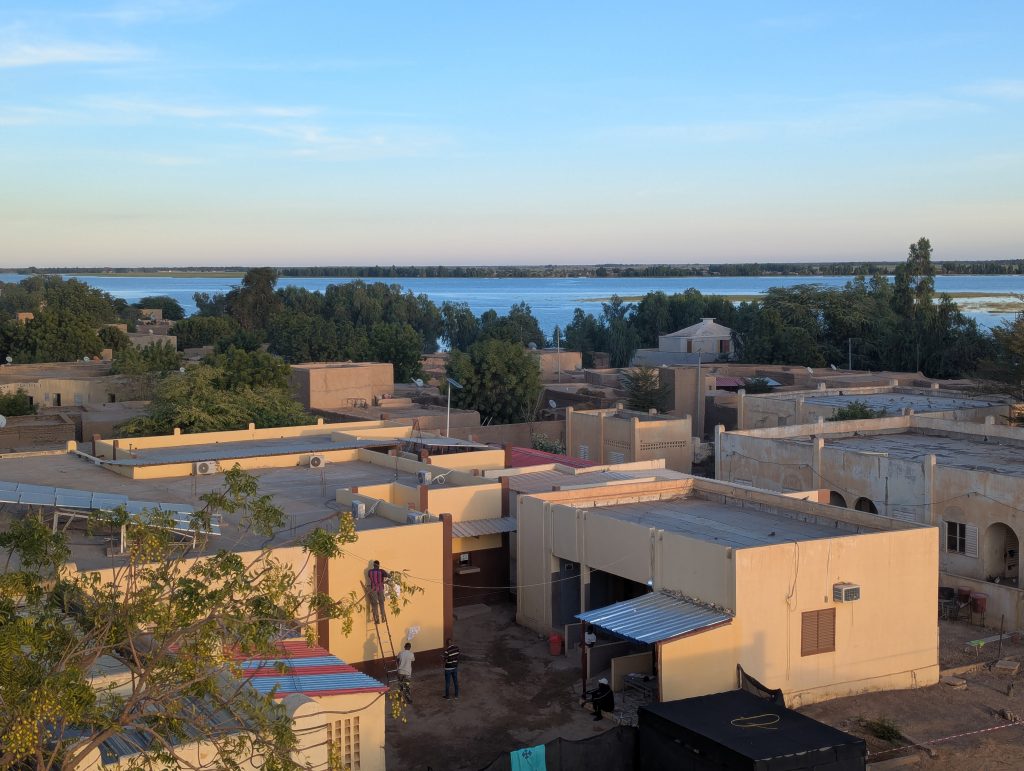
A view of the hospital in Niafunké, northern Mali, supported by MSF since 2021. MSF teams provide care for children under 15 and newborns, and support hospital activities such as the laboratory, radiography, isolation and prevention activities. ©Lamine Keita/MSF
In northern Mali, MSF has been working at the Niafunké hospital since 2021 to facilitate access to healthcare for children and populations affected by the security crisis. MSF also works in other community health centres to respond to the displacement of populations, epidemics and floods in the region. ©Lamine Keita/MSF

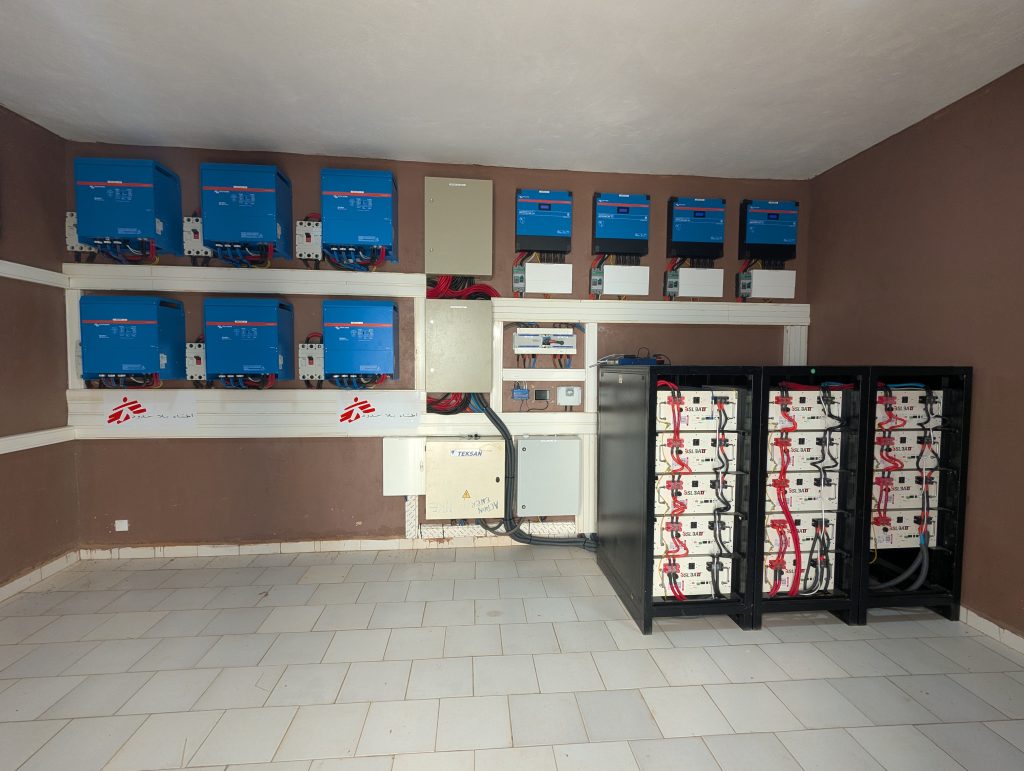
The installation has a capacity of 90 kWp, with a 210 kWh lithium battery storage system, complemented by an 80 kVA generator. This hybrid system allows the hospital to alternate between solar energy, the city’s power grid, and the generator, ensuring a continuous power supply both day and night.

For patients, this energy stability brings tangible improvements to daily life. Fadi, displaced from the village of Léré following threats from armed groups, found refuge in Niafounké with her children.

I fled with my children and my sister because armed men told everyone to leave the village. Today, I am accompanying my son, Ousmane, to the pediatric ward.
Fadi
Refuge from Léré
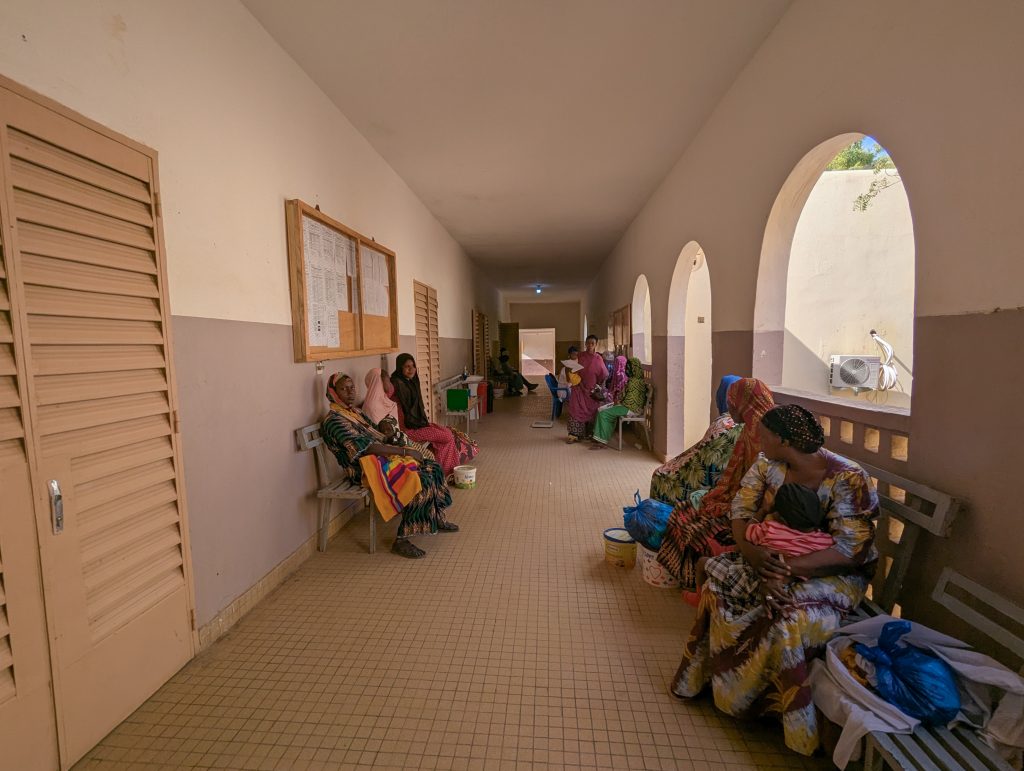
Mothers bring their sick children to the paediatric ward of the MSF-supported hospital in Niafunké, northern Mali. At this hospital, MSF teams provide care for children under 15 and newborns, and support certain hospital activities such as the laboratory, radiography, isolation and prevention. ©Lamine Keita/MSF
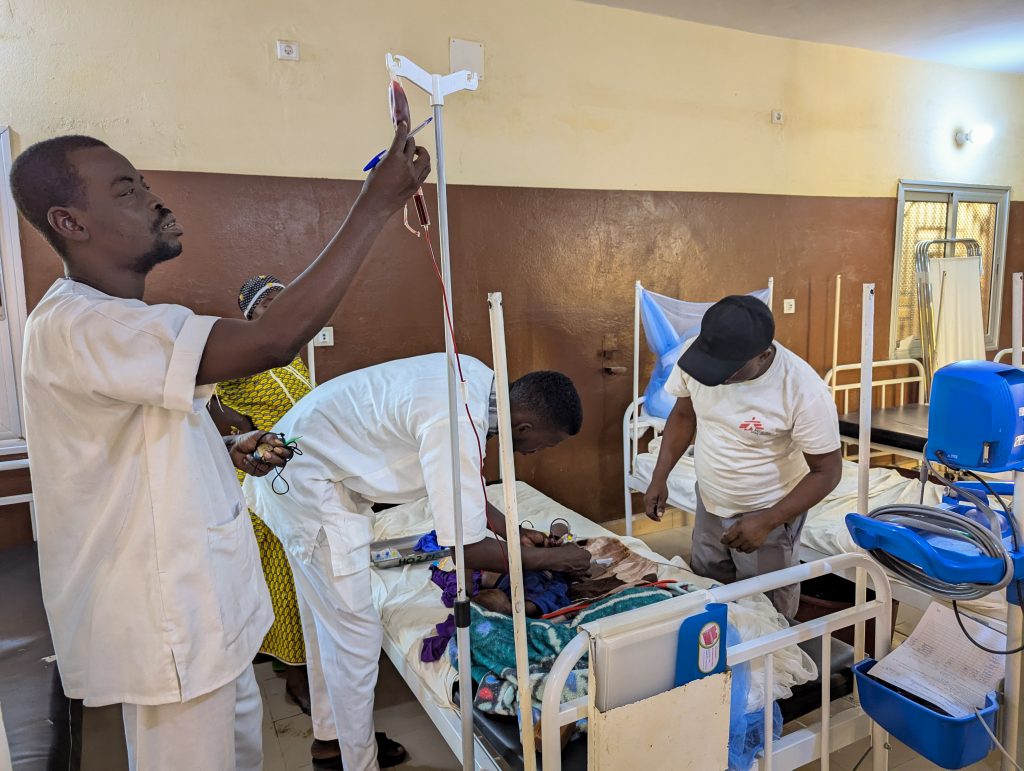
The MSF and Ministry of Health team assist a child hospitalised in the paediatric ward of the MSF-supported hospital in Niafunké, northern Mali. ©Lamine Keita/MSF

In a context of displacement and vulnerability, access to reliable healthcare remains essential.

This project is part of MSF’s Green Initiative, a strategy aimed at reducing the environmental footprint of our activities while improving operational efficiency. For several years, the organization has been deploying hybrid photovoltaic solar systems in various countries around the world, particularly in the Sahel, to limit dependence on diesel—an expensive and polluting energy source whose transport to remote areas is often complex.

Beyond environmental benefits, reduced energy costs make it possible to redirect financial resources toward medical care. Solar energy stabilizes the functioning of laboratories, cold rooms, and essential hospital services, thereby improving working conditions for teams and the quality of care provided to patients.

The room housing the lithium batteries that power the Niafunké hospital with solar energy installed by MSF. MSF equipped the facility with solar panels, and currently covers 60% of its energy needs, ensuring better continuity and quality of care. Until now, the hospital relied almost entirely on a diesel-powered thermal power plant, which was prone to frequent power outages. ©Lamine Keita/MSF

In an ongoing fragile humanitarian context, solar energy represents far more than a technical solution: it is a lever for autonomy, resilience, and hope for health facilities and the populations they serve. Through these initiatives, MSF combines humanitarian action, environmental responsibility, and a long-term commitment in the service of life.

Since 2019, MSF has been running a pediatric project providing care for children under the age of 15 who are hospitalized at Niafounké Hospital. MSF also supports four community health centers and carries out primary and community health activities in isolated villages in the Gourma area, in the Tombouctou region.


Show Buttons
Share On Facebook
Share On Twitter
Share On Linkedin
Contact us
Hide Buttons