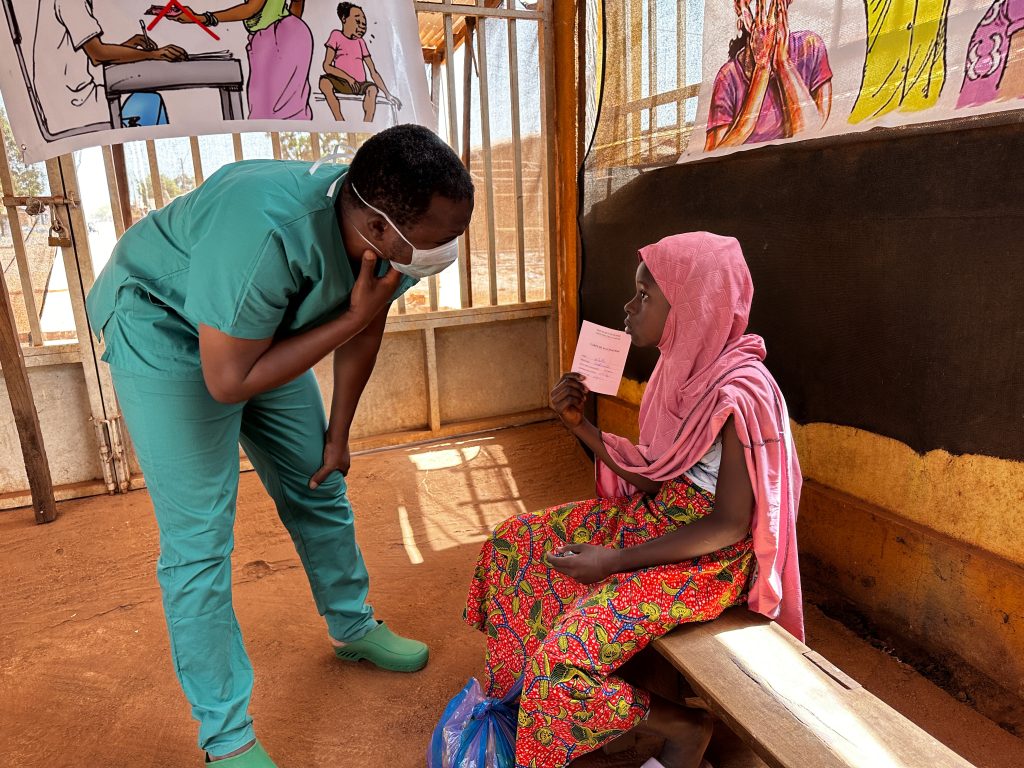
My daughter was the first to fall ill, in Mandiana, where I work in a gold panning mine. For several days, she had a very high fever and we were told that it was malaria and bronchitis. We were evacuated to the regional hospital and my daughter died there. As her younger brother also started to have the same symptoms, relatives advised me to hurry and take him to the epidemic treatment centre supported by MSF. My son had trouble breathing and his neck was swollen. At the centre, we were told that it was diphtheria. He was hospitalized and treated for free. Today he is much better.
Hawa Fofana
Mother of a two-year-old boy
In Guinea, diphtheria had not been reported for more than 30 years. However, in 2023, the first cases reappeared in the border district of Siguiri, in the northeast of the country. Faced with this resurgence, MSF, in coordination with the Ministry of Health and Public Hygiene, opened a project combining patient care, vaccination and community awareness.
This resurgence of diphtheria cases is also seen in several countries in West Africa and the Sahel, including Niger, Nigeria, Mali, Chad and Mauritania. The disease circulates particularly in cross-border areas, where people around a lot and are linked to inadequate vaccination coverage.
Diphtheria is an acute bacterial infection that mainly affects the respiratory tract and is transmitted by droplets. It can cause a thick membrane to form in the throat, leading to severe breathing difficulties if the disease is not treated quickly.
Nicoletta Bellio
MSF project medical manager in Siguiri
As of 28 March, MSF has treated 213 patients at the Epidemic Treatment Centre (CT-Epi) in Siguiri. Patients with respiratory complications or signs of neurological damage, such as paralysis, difficulty swallowing, blurred vision or even heart problems, receive specific treatment including diphtheria antitoxin (DAT), an essential drug used to neutralize the toxin of the disease. “Diphtheria can progress very quickly. Without receiving antitoxin in time, the consequences can be dramatic. The patient may die,” explains Nicoletta BELLIO, medical manager of the MSF project in Siguiri.
Diphtheria antitoxin is the most effective treatment for the disease and is essential for neutralizing the toxin, but it is only produced by a limited number of manufacturers and is expensive. It can take up to six months to become available in a country. MSF is advocating for Guinea to be included among the priority countries in the provision of DAT, in order to guarantee rapid and free access to this life-saving treatment for patients. MSF calls for urgent mobilization of international partners to ensure rapid and equitable access to diphtheria antitoxin and vaccines.
“My sister was hospitalized for diphtheria and recovered. Soon after, I started to have the same symptoms such as a sore throat, body aches and a fever. The staff at the treatment centre took good care of me and gave me medicine and food. They even came to see us at night. Today, I can finally go home and continue my treatment from there thanks to the doctors,” explains Gnalén Konaté, a stay-at-home mother.
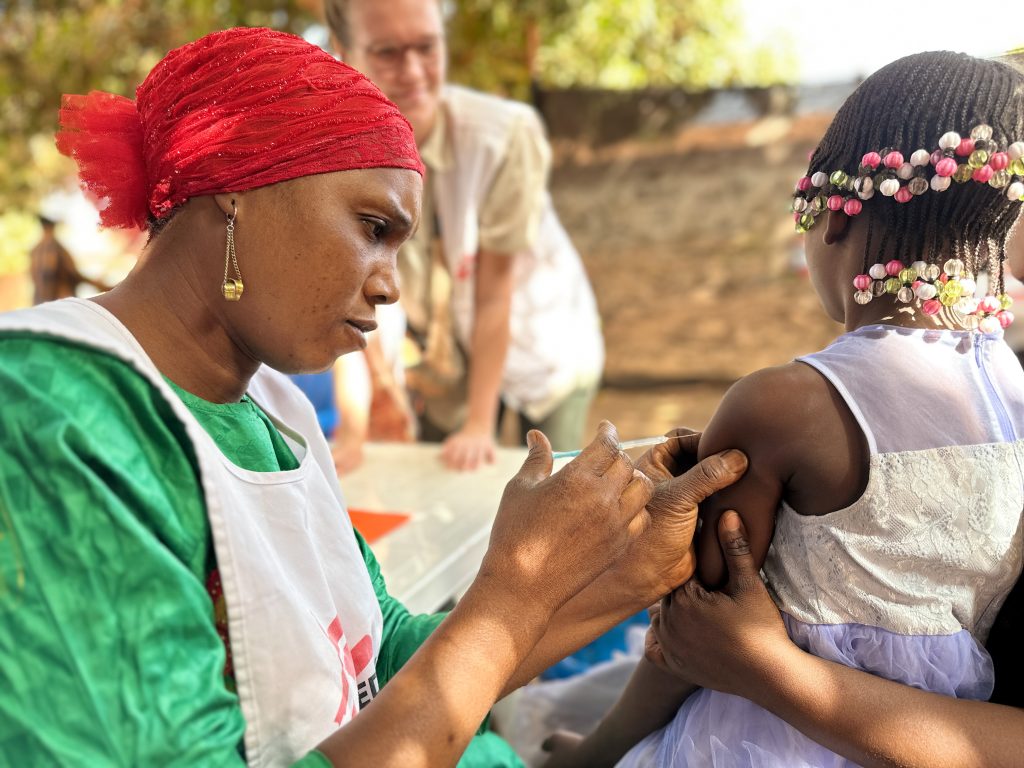
In addition to medical care, MSF teams support the Expanded Programme on Immunization (EPI) with vaccination activities for children aged six weeks to nine years in the most affected areas. As of 28 March, MSF has vaccinated 85,000 children. About 20 fixed and mobile vaccination teams cover the districts of Siguiri and the surrounding area, particularly the sub-prefectures of Doko, Kintigna and Kourémalé. Other, more distant, villages are also planned to visit by the teams in the future. In total, more than 180,000 children are expected to receive two doses of vaccines by May. Unfortunately, some children had never been vaccinated against diphtheria, which has contributed to the rapid spread of the disease.
“Diphtheria remains a vaccine-preventable disease, and the vaccine is essential for preventing severe disease, interrupt transmission and prevent new outbreaks of cases”, says Nicoletta Bellio.
The solution is not just medical care and vaccination though. MSF’s health promotion teams also coordinate awareness-raising activities in the communities.
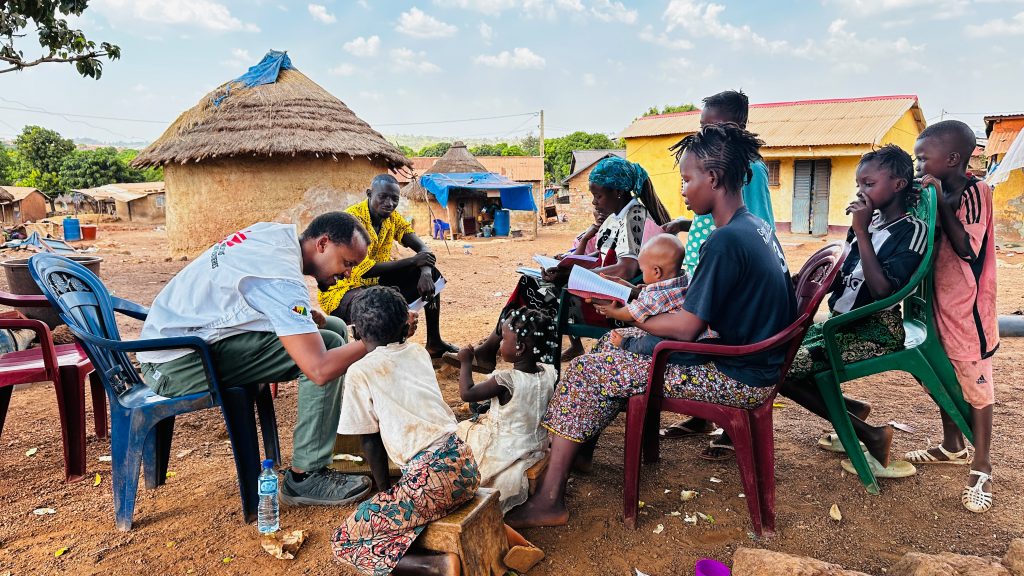
Community health workers (CHWs), community relays (RECOs), heads of health centres and health posts disseminate prevention messages and quickly identify suspect cases. The aim of awareness campaigns is to increase understanding of the disease, enabling it to be recognised early and prompting referral to a treatment centre. Awareness-raising messages are also shared through local media.
At the same time, the involvement of traditional practitioners is essential, because in several places people go and see them first when they fall ill. MSF organises awareness-raising sessions at health centres and with community leaders and traditional healers to help people recognise the warning signs of diphtheria and quickly refer patients to health facilities.
Difficult access to vaccines
“Access to vaccines and antitoxin remains a challenge globally, with lead times of up to several months. To maintain free care and strengthen the response in these cross-border areas, more medical organisations and humanitarian partners need to get involved,” says Adélard Shyaka, MSF’s medical coordinator in Guinea.
Like many websites, MSF uses cookies to enhance your user experience. By continuing to navigate this site you are giving consent to the issue of these cookies. No, give me more info
This website uses cookies to improve your experience while you navigate through the website. Out of these cookies, the cookies that are categorized as necessary are stored on your browser as they are essential for the working of basic functionalities of the website. We also use third-party cookies that help us analyze and understand how you use this website. These cookies will be stored in your browser only with your consent. You also have the option to opt-out of these cookies. But opting out of some of these cookies may have an effect on your browsing experience.
Necessary cookies are absolutely essential for the website to function properly. This category only includes cookies that ensures basic functionalities and security features of the website. These cookies do not store any personal information.
Any cookies that may not be particularly necessary for the website to function and is used specifically to collect user personal data via analytics, ads, other embedded contents are termed as non-necessary cookies. It is mandatory to procure user consent prior to running these cookies on your website.