Once you leave the city of Semera behind, the Ethiopian landscape quickly opens into vast stretches of dry earth that seem to run endlessly toward the horizon. Sparse green bushes dot the dusty ground, framed by distant mountains and volcanoes that define the Afari landscape. As our vehicles drive toward the town of Magenta to deliver nutrition to children through Doctors Without Borders/Médecins Sans Frontières (MSF) outreach activities, a river runs alongside the road. One of the main challenges faced by local communities is right in front of our eyes: water.
Afar, crossed by the Danakil Depression marking the northern end of the East African Rift Valley, is considered one of the hottest inhabited places on Earth. Water availability and quality in the region are strongly influenced by its arid climate and complex geology. Certain groundwater sources are not suited for regular consumption, yet people depend on them. The Awash River, a critical water source for many communities, is subject to environmental contamination along its course and remains vulnerable to pollution. In Afar, home to more than two million people, many being nomadic and pastoral, many families rely on a combination of seasonal rainfall, shallow wells, boreholes and, occasionally, trucked water, reflecting the constraints of accessing quality water sources.
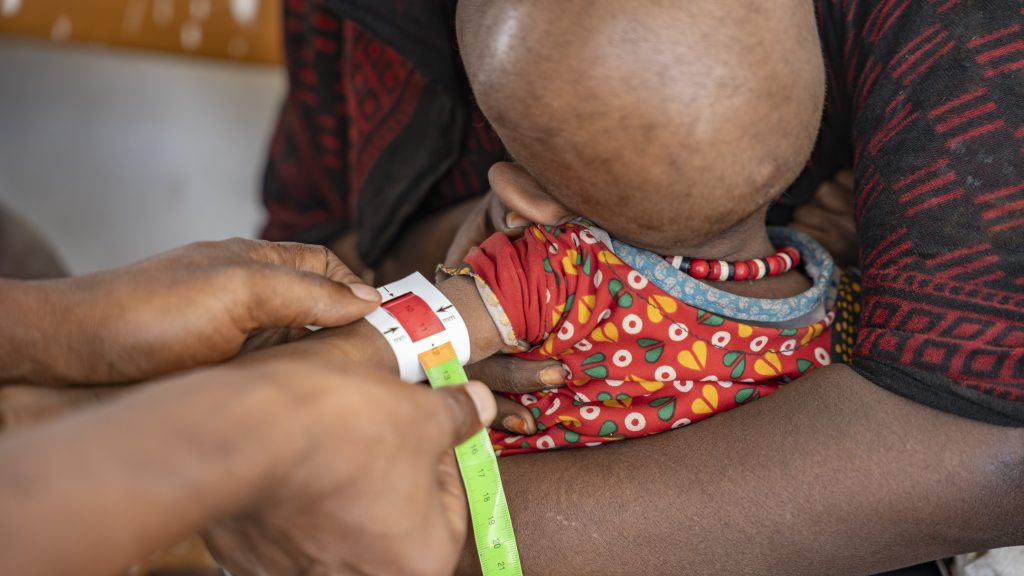
This year the drought was worse, and we did not get the same crops as in previous years. My baby girl got diarrhoea, so we went to our closest health facility, where she was treated and discharged. After we returned home, her condition did not improve and she later developed another episode of diarrhoea, which made her weaker. A neighbour advised us to go to Dubti hospital, saying it was a good place for children like Fatuma. Once we arrived, we were referred to MSF’s ward. That’s when I learned my child was suffering from malnutrition.
Abahefa Ari
A mother of five
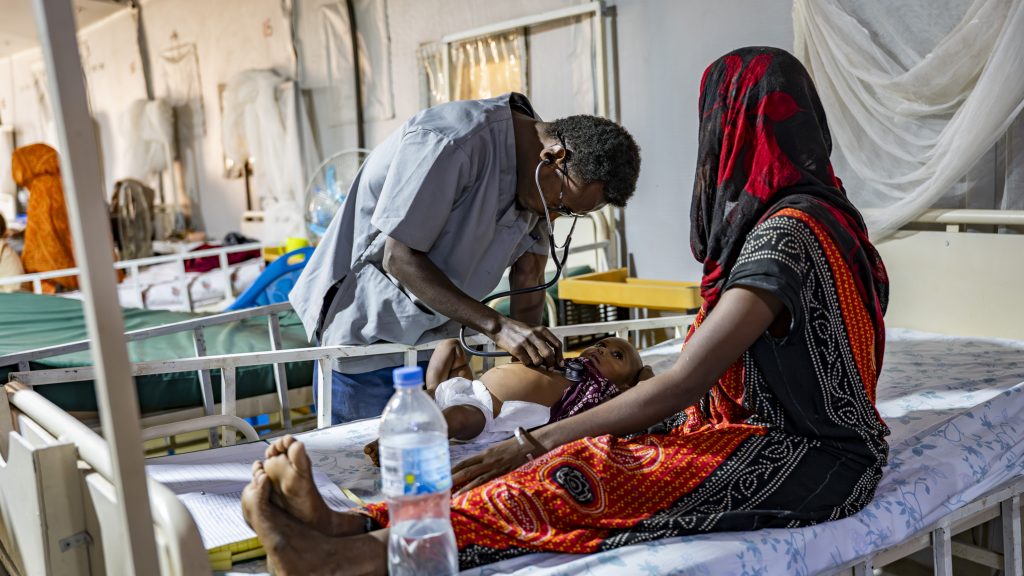
For Abahefa, it was the first time one of her children had been admitted to the Intensive Therapeutic Feeding Centre (ITFC). For others, the ward is unfortunately familiar. Isaa, the mother of one-year-old Fafi, has been there before. “The first time we came, my daughter was only seven months old,” she explains. “We stayed for five days until she was discharged. This time, we have been here for 10 days, and I can already see how she is getting better.” Isaa and Fafi were referred to Dubti Hospital by MSF mobile clinic teams.
MSF has been present in Afar since 2022, providing critical support to children and pregnant and lactating mothers affected by malnutrition. At the Ministry of Health’s Dubti General Hospital (DGH), we run the ITFC with a capacity of 50 beds. The ward treats children under five suffering from Severe Acute Malnutrition (SAM) with medical complications. In 2025 alone, we treated 1,594 children here.
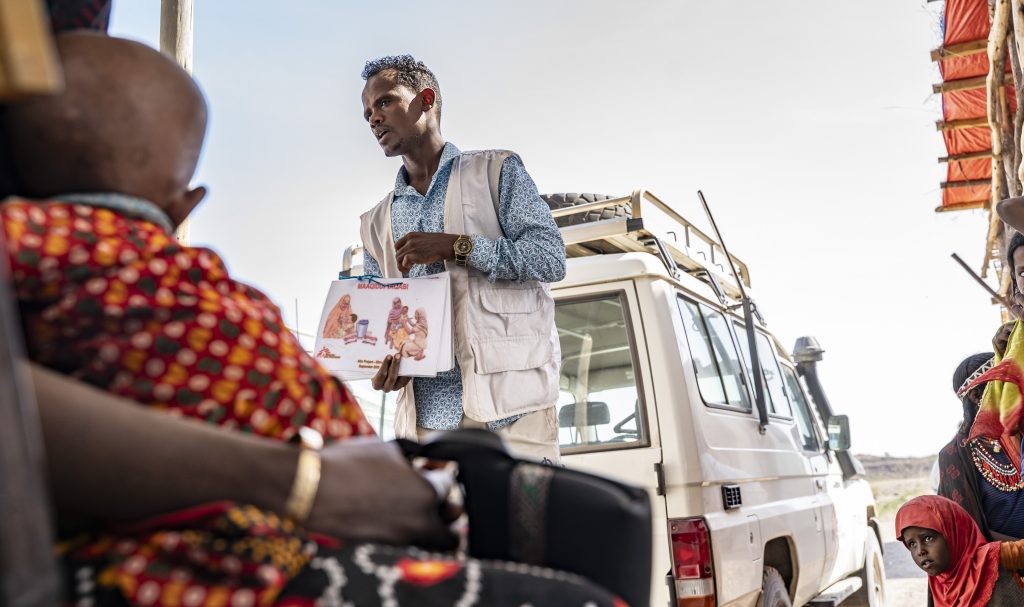
Last year we also kicked off outreach activities to service communities living far from the hospital and provide regular follow-up care. Children with severe complications are referred to the ITFC at Dubti General Hospital when needed, as was the case with Fafi.
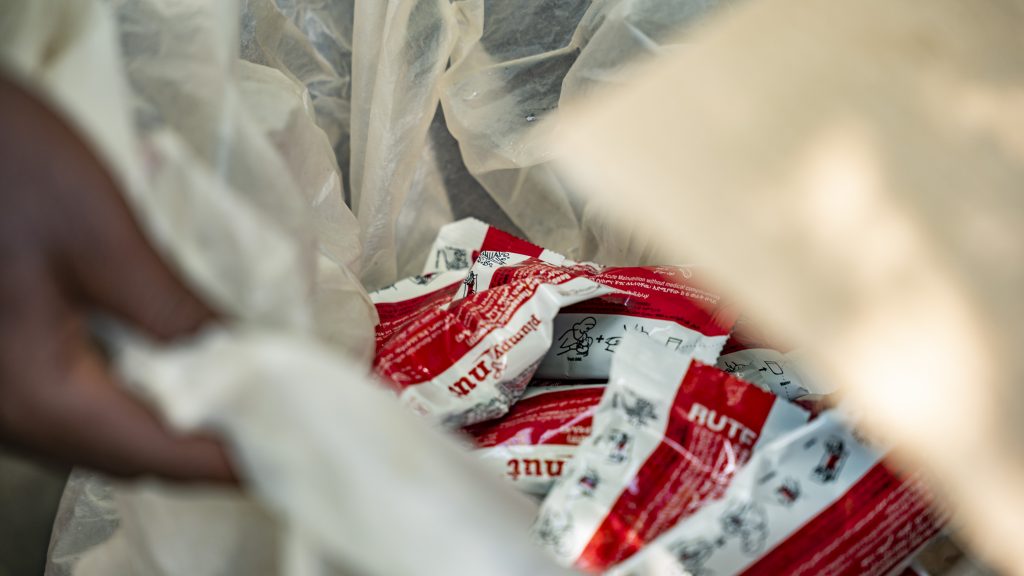
This longer-term approach helps reduce the need for repeated hospital admissions. Two mobile teams now visit eight locations every week, screening and treating children with SAM and providing therapeutic food such as Plumpy’Nut. Distance is one of the biggest barriers to care here. Families often travel for hours to reach the nearest health post and sometimes days to reach the hospital. Any disruption like flooded roads or lack of transport can mean a child doesn’t get treated in time.
Emmanuelle Quet
MSF project coordinator in Afar
Access to certain areas within Afar is challenging not only for patients, but also for our teams. On the road to Magenta, for example, the river can flood the roads, making it extremely difficult even for 4×4 vehicles to pass. Recently, an MSF team spent more than six hours covering just 30 to 40 kilometres, and our nurses and drivers had to push the vehicles out of the mud to ensure Plumpy’Nut reached families in need of their weekly lifesaving nutrition. Only a few days earlier, an outreach team got stuck while transporting a child in need of urgent care being referred to MSF’s ITFC, resulting in a life-threatening delay for the child. Despite the challenges the team managed to reach the ITFC to provide the timely life-saving care for the patient.
The combination of intense heat, unsafe drinking water, long travel distances and hard-to-reach health facilities continues to harshen the living conditions of people in Afar, significantly limiting access to timely healthcare. These challenges have been aggravated by a sharp reduction in Mobile Health and Nutrition Teams (MHNT) that usually bring medical services closer to remote and pastoralist communities. Afar has some of the lowest health indicators in Ethiopia, including high infant mortality rates, widespread child stunting, and the highest proportion of underweight children in the country.
In 2025, MSF outreach teams treated 1,745 children and nearly 100 pregnant and lactating mothers across the eight locations in Afar and referred 272 children from health posts and centres to the ITFC due to medical complications.
Together with the Ministry of Health and the Regional Health Bureau, MSF continues to provide lifesaving treatment to local communities. By combining hospital-based care with weekly outreach visits, we are helping ensure that more remote communities can be screened and treated.
However, significant challenges remain. “We can treat severe malnutrition, but the root causes go far beyond healthcare alone,” emphasises Emmanuelle Quet. “Improving access to safe water, developing community livelihoods, and strengthening local health services and referral pathways are essential if communities are to become more resilient.”
Like many websites, MSF uses cookies to enhance your user experience. By continuing to navigate this site you are giving consent to the issue of these cookies. No, give me more info
This website uses cookies to improve your experience while you navigate through the website. Out of these cookies, the cookies that are categorized as necessary are stored on your browser as they are essential for the working of basic functionalities of the website. We also use third-party cookies that help us analyze and understand how you use this website. These cookies will be stored in your browser only with your consent. You also have the option to opt-out of these cookies. But opting out of some of these cookies may have an effect on your browsing experience.
Necessary cookies are absolutely essential for the website to function properly. This category only includes cookies that ensures basic functionalities and security features of the website. These cookies do not store any personal information.
Any cookies that may not be particularly necessary for the website to function and is used specifically to collect user personal data via analytics, ads, other embedded contents are termed as non-necessary cookies. It is mandatory to procure user consent prior to running these cookies on your website.