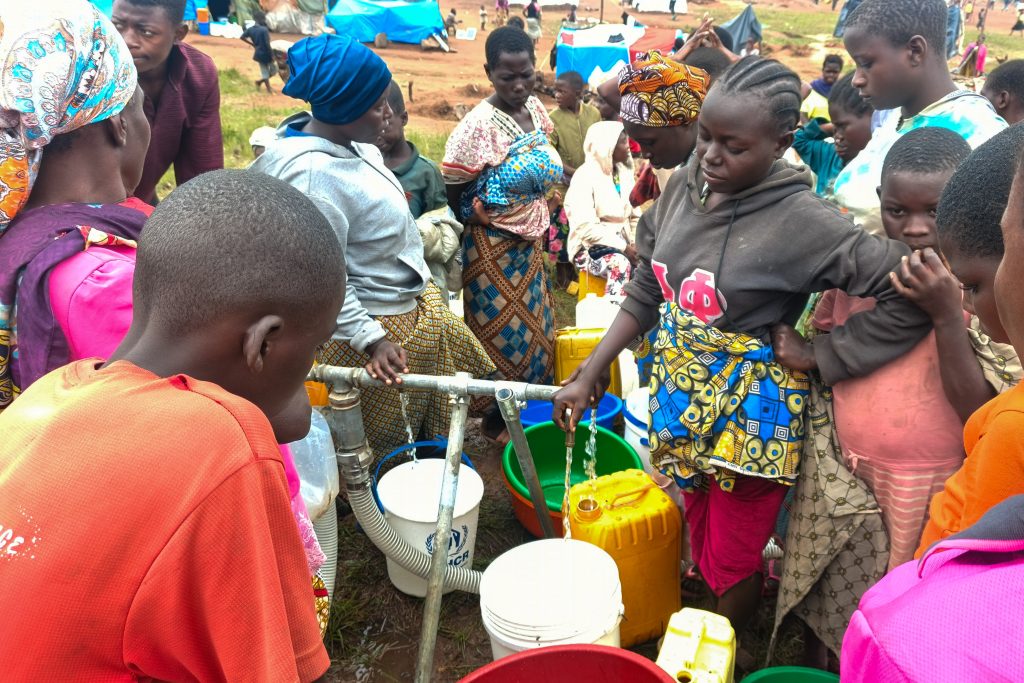
After two months of work from Médecins sans Frontières (MSF) teams on a spring 5 km away from Busuma camp, water finally flows through the taps in the camp. More than 66,000 people who have fled violence in the Democratic Republic of Congo live there. Carolina Lopez Led, MSF emergency coordinator, talks about this initiative and its impact in Busuma camp, Ruyigi, eastern Burundi.
What was the situation in Busuma camp when MSF got involved in the water distribution?
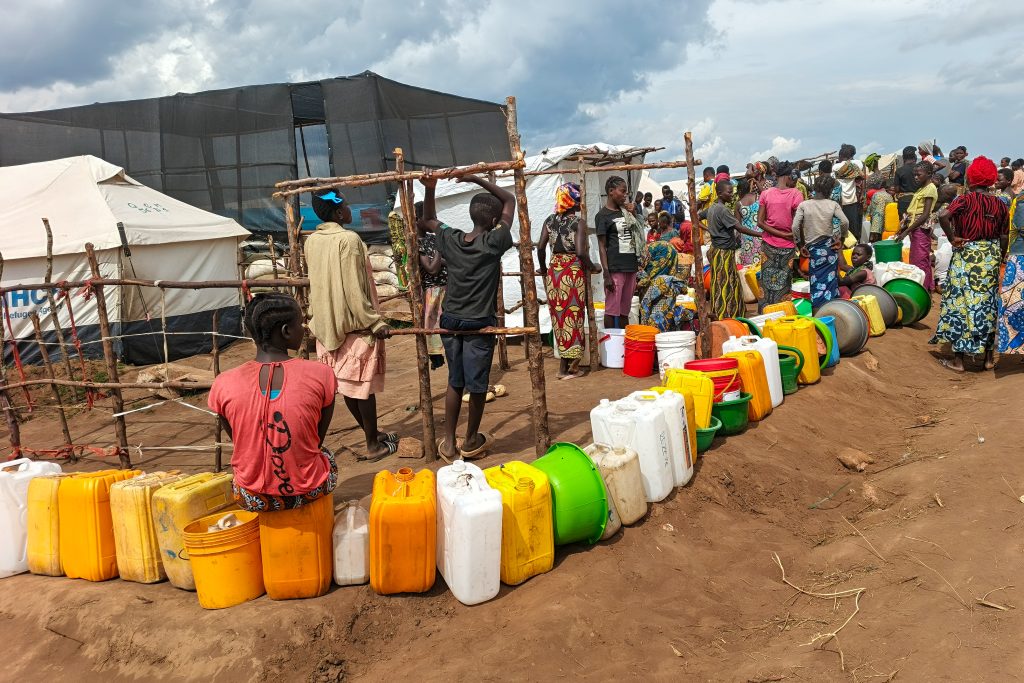
MSF team arrived in Busuma camp on 16 December 2025. We realised that there were already cases of cholera, a disease that is transmitted through the ingestion of contaminated water or food and when hygiene measures are not respected. The first thing we did was to go to the cholera treatment centre to support the Ministry of Health, and we started distributing water to residents using trucks at various locations inside the camp. In the meantime, our team spotted a water source about 5km from the camp and started working on it.
Can you tell us how the work to capture water from the source went? What were MSF’s objectives?
We realised that distributing water by water trucking was logistically complicated and very costly. It was a temporary solution, and we needed a longer-term response. Together with the health district authorities, we identified a water source 5 km from the camp, visited it and, after analysis, saw that it was possible to develop it. MSF began the work by hiring local workers, as it is a difficult place to access and there is no electricity to bring machinery. A pipeline was constructed by digging and crushing rocks to install pipes that carry water from the source to the Busuma camp.
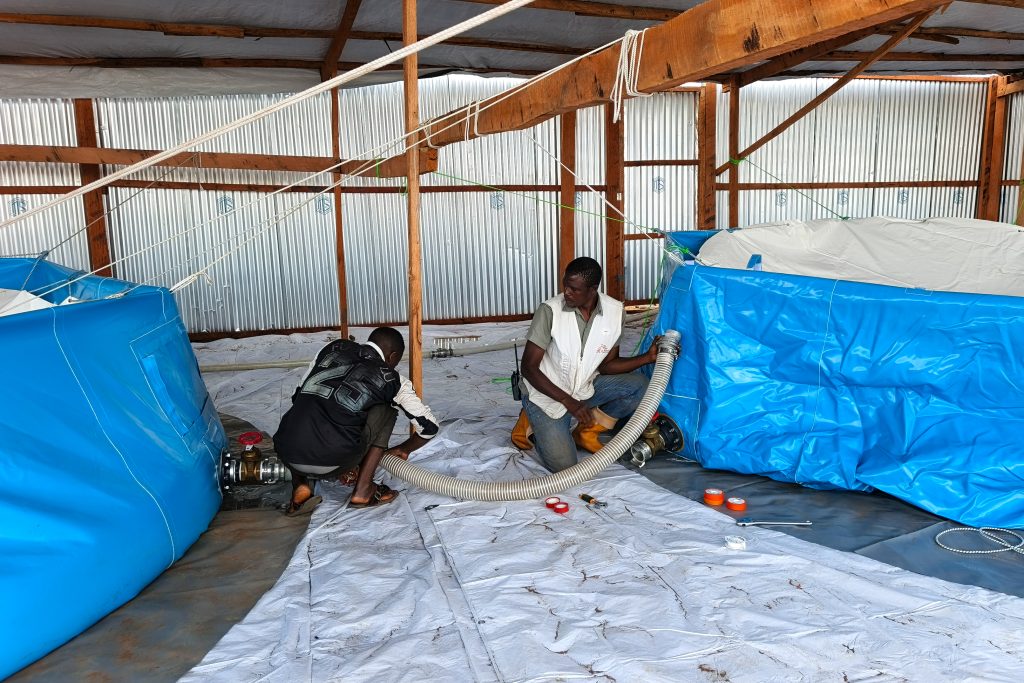
It was developed by hand from the hill to the camp so that water would be available to the refugees in the camp. The water flows continuously, and water treatment centres have been built with three tanks that store around 90,000 litres in total.
We have asked other actors to set up additional tanks to increase storage capacity and facilitate distribution to different networks in the Busuma camp.
Is the response from other actors and authorities sufficient? Does MSF collaborate with these actors?
Water is a basic need. We must do everything we can to distribute the minimum amount possible. There is a water and sanitation committee, and meetings are held regularly. The main challenge is related to the lack of funding. With more funding and mobilisation, humanitarian actors could connect the pipes to reservoirs to increase the number of taps in different locations in the camp. The actors are there and have technical knowledge, but what is lacking is the funding to implement it.
What was the reaction of the camp residents when the taps were turned on?
When the water started flowing from the taps, people started singing: ‘Water is life! Water is life!’. It was really moving to see the results after two months of work and all the effort that had been put in.
And now, how are you going to continue to increase water distribution?
The population is suffering despite all the efforts being made by the stakeholders. There is still a lot of work to be done. In addition to this source, two boreholes are being constructed by other stakeholders to increase the amount of water available for distribution. There were few water tanks in the camp because water trucks come to fill them every day, but only in very small quantities. Normally, in an emergency, each person should have between 15 and 20 litres of water per day, and we are still a long way from that.
With the catchment of the water spring, we may be able to achieve around 5 to 7 litres per person per day, but that is still not enough.
Like many websites, MSF uses cookies to enhance your user experience. By continuing to navigate this site you are giving consent to the issue of these cookies. No, give me more info
This website uses cookies to improve your experience while you navigate through the website. Out of these cookies, the cookies that are categorized as necessary are stored on your browser as they are essential for the working of basic functionalities of the website. We also use third-party cookies that help us analyze and understand how you use this website. These cookies will be stored in your browser only with your consent. You also have the option to opt-out of these cookies. But opting out of some of these cookies may have an effect on your browsing experience.
Necessary cookies are absolutely essential for the website to function properly. This category only includes cookies that ensures basic functionalities and security features of the website. These cookies do not store any personal information.
Any cookies that may not be particularly necessary for the website to function and is used specifically to collect user personal data via analytics, ads, other embedded contents are termed as non-necessary cookies. It is mandatory to procure user consent prior to running these cookies on your website.