Before he joined Doctors Without Borders/Médecins Sans Frontières (MSF), Shabir was already a familiar face in his community, a schoolteacher people trusted. What he didn’t have was a way to talk to them about mental health. This is his account of turning that trust into a bridge, one conversation, one  awareness session, one myth at a time.

A platform I didn't have before

My name is Shabir Ahmad Shah. I work as a community mental health worker, and I joined MSF in January 2022. Before that, I was a teacher, and I think the whole community already knew me well. They considered me religious, honest and hard-working, and because of that, they trusted me. It didn’t take long to build rapport, because people already knew who I was.

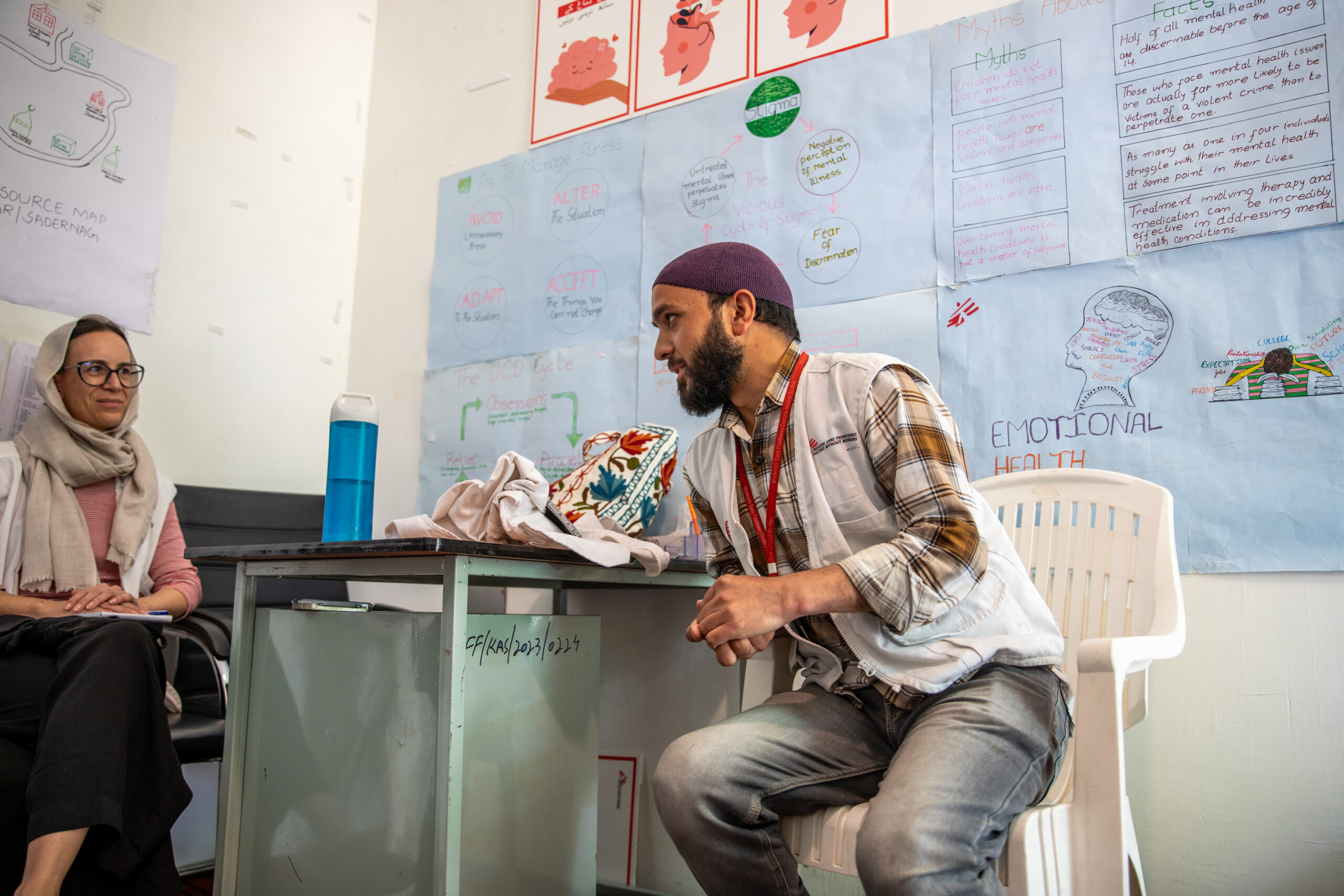
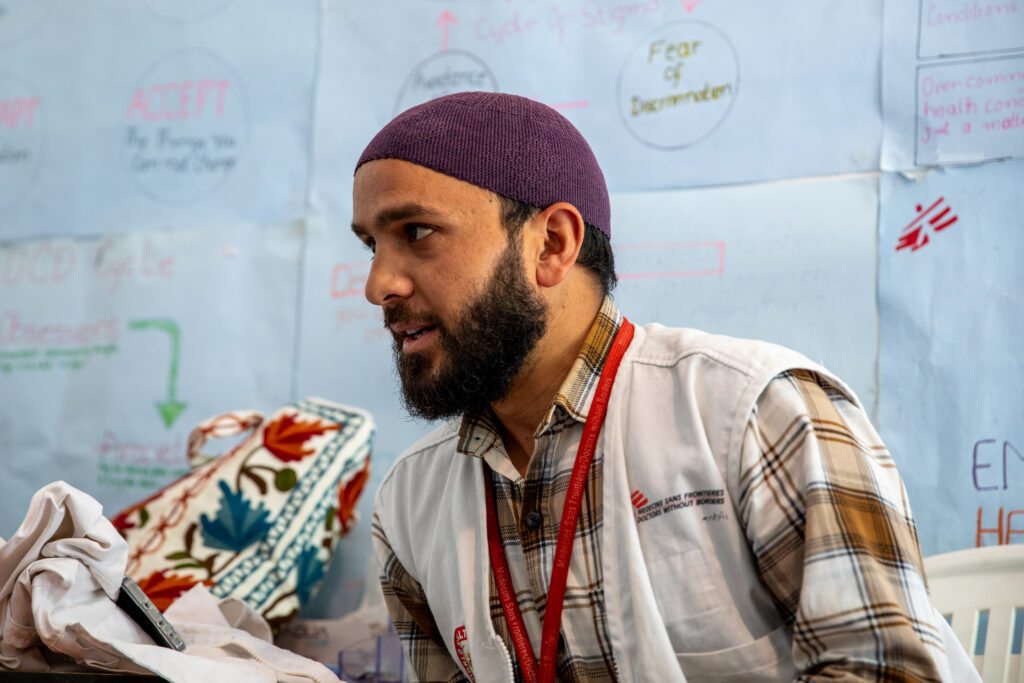
Shabir Ahmed Shah, a Doctors Without Borders India/Médecins Sans Frontières(MSF) community mental health worker, reviews materials on coping with difficult emotions with a colleague before a mental health awareness session in Kahlil, Tral, Kashmir.

As a teacher, I had heard that mental and physical health were connected, but I didn’t have deep knowledge of it, and I had no real platform to talk to people about it. MSF gave me that platform. It became my route to reach them, and it has been a very good one.

There’s a particular satisfaction in serving your own community, in coming to understand the problems that lead people towards mental health difficulties in the first place. Before joining this work, you simply don’t see those problems clearly.

Undoing a taboo

When we first started going into the community, people didn’t want to talk about their mental health at all.

Stigma is deeply present in our society, and mental health is treated as taboo. If we brought it up, people would immediately think of someone they knew who had been called “mad,” someone who had been sent to a mental hospital. They didn’t see it as something normal, something that could happen to any of us. So we worked to normalise it.

 We explained that just as physical health can deteriorate, so can mental health, and that this is nothing shameful. We told people plainly: I myself can be mentally stressed. Any normal person can be. 

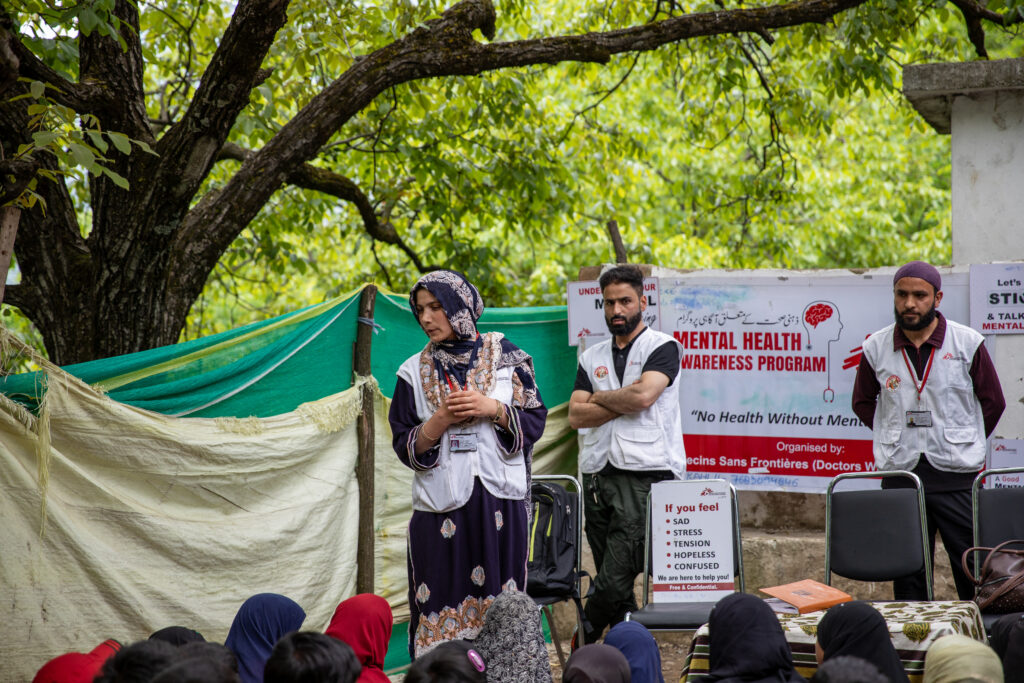
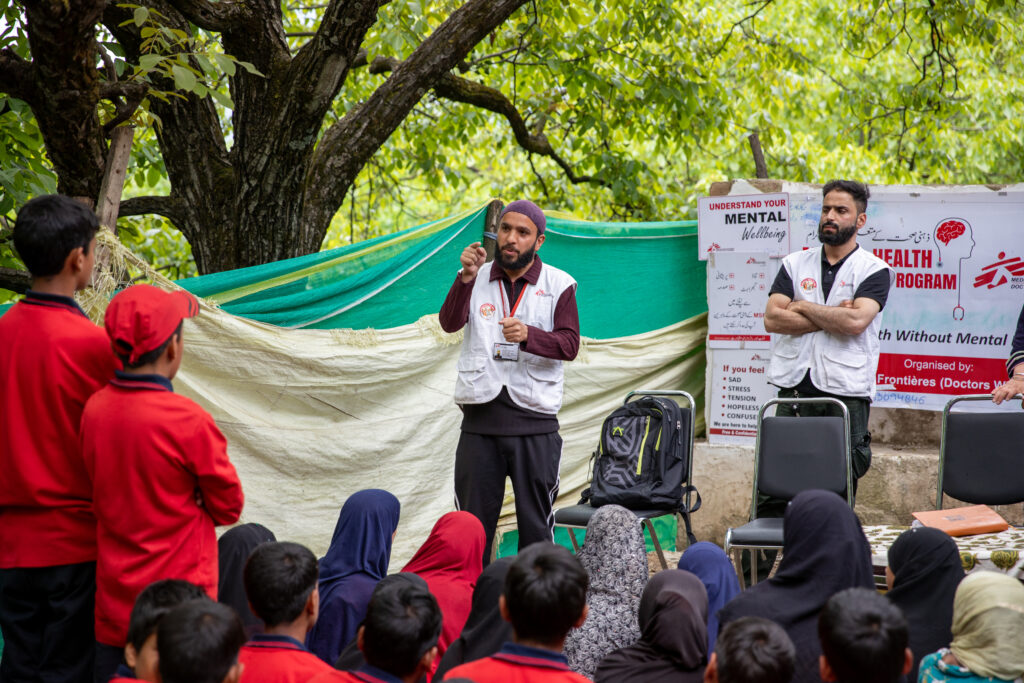
Shabir and other mental health worker speaks to students in Nagbal, Tral, Kashmir, part of a mental health awareness session encouraging students to recognise stress and know where to seek support. ©Deepak Bhatia/MSF

Slowly, people began to understand, and while I won’t say the stigma is entirely gone, people are coming forward now in a way they simply didn’t before. Children, too. Their parents used to stop them coming to us at all. Now we’ve helped parents understand that pressure from studies, from work, from everyday life, can affect anyone.

A lot of the stigma we still see is tied to marriage, the fear of what neighbours will say, whether a proposal will be affected if word gets out that someone in the family has a mental health condition. We’ve seen marriages, and broken marriages, where a child’s mental health difficulty was quietly at the centre of it all.

What lies beneath the difficulty

Once people started opening up, patterns became clear. We saw domestic violence, particularly among newly married women, tension with in-laws, and children caught in the middle of it all, carrying real psychological weight because of it. Poverty runs deep in this locality too, and it wears people down in ways that are easy to overlook until you’re sitting with them directly.

A day in this work

Our day usually starts at quarter to nine. We set our weekly plan two or three days in advance, deciding what activity is scheduled, what the topic will be, who our audience is, and how we’ll divide the session between colleagues. We check on transport, then head out.  Sessions run about an hour. We share information about what mental health is, and how stressful events can affect our daily life, our work and our studies, and we talk through different ways to cope. It’s always interactive, and we value the feedback participants give us.

It’s important to keep track of our work, so each week we submit a report with anonymised information: the number of sessions, the number of participants, and the themes that came up. We also facilitate referrals to counsellors for more specialised care.

We don’t only run group sessions and psychoeducation talks in the community. When someone needs one-to-one support, we refer them to a trained counsellor, who holds those sessions in confidence. 

We’ve organised community events too, a cricket match, for instance, that brought children, teachers and community members together, with refreshments, awareness messaging over the microphone, and a wall of posters about mental health, some of them designed by students themselves. People enjoyed it, especially the children, and it opened space for conversations that wouldn’t have happened otherwise.
A Doctors Without Borders India/Médecins Sans Frontières(MSF) community mental health worker speaks to students in Nagbal, Tral, Kashmir, part of a mental health awareness session encouraging students to recognise stress and know where to seek support. ©Deepak Bhatia/MSF

Building something that can outlast us

Our focus now is community resilience. Earlier, our work only centred on awareness and psychoeducation; now we’re trying to build something more lasting. That shift hasn’t been simple. The community sometimes shows resistance, because people are used to cooperating when something material is offered in return, and we aren’t able to provide that. What we can offer is knowledge, and slowly, people are beginning to understand that this is genuinely for their own benefit. It will take time to fully adjust, but the cooperation is growing.

Trust itself took real work to build. We had to make people believe that whatever they shared with us would stay with us, that it would go no further than the room we were sitting in. Once that trust took hold, people began sharing far more intimate things than they ever had before.
Looking after my own mind

Every person can have poor mental health, whatever their background. But when I go to work, I try to do it like a professional: I set my own stress aside, because if I carry it into the community, people will sense it, and I won’t be able to help anyone well. People expect that the professionals supporting them are, at the very least, mentally well themselves, so I try to arrive with a good mood, a clear mind.

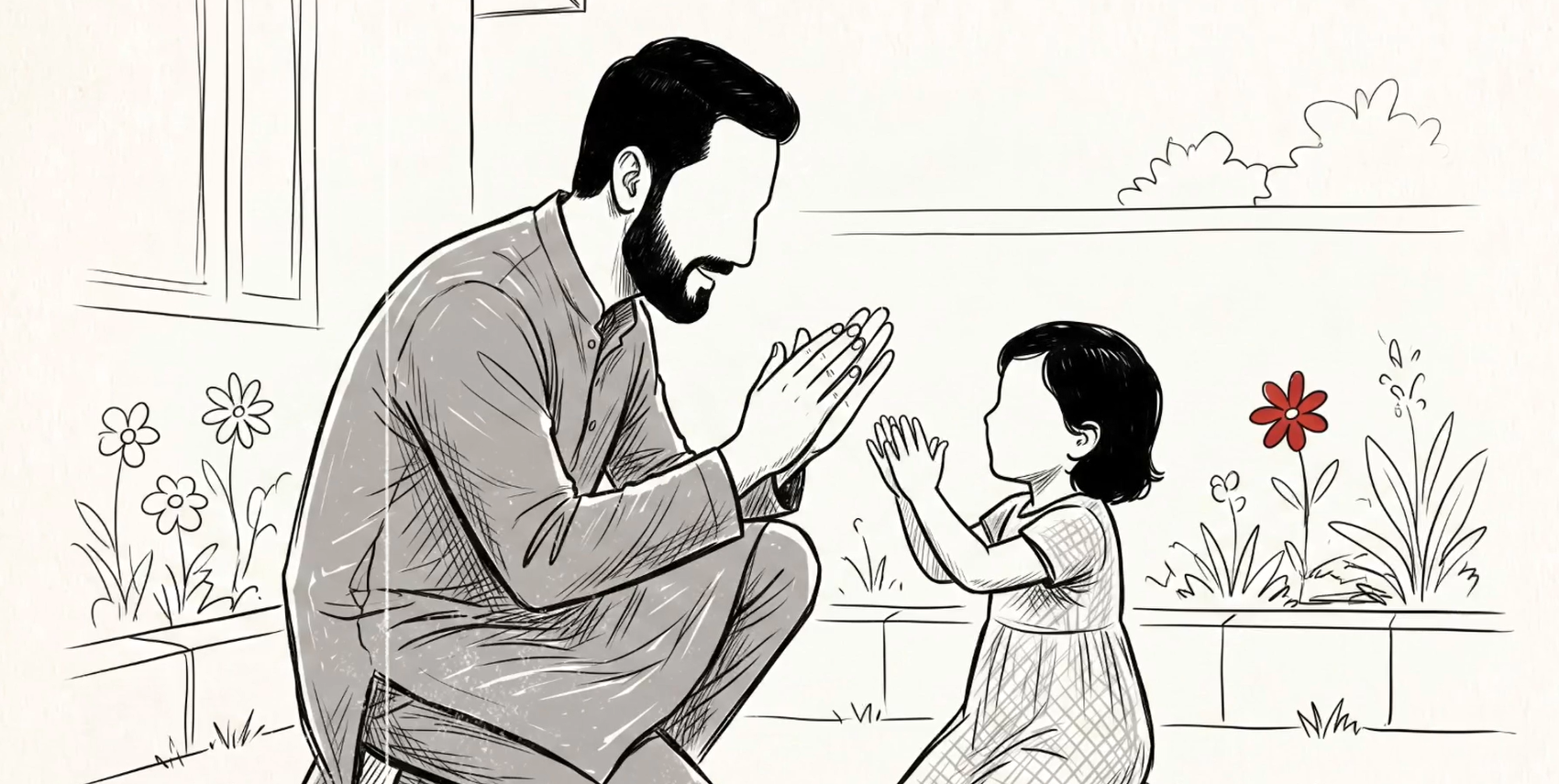
For myself personally, whenever I have a difficulty, I pray, and I make time to switch off. And I spend time with my child, playing with him. That alone helps me forget a great deal of my own sorrow.
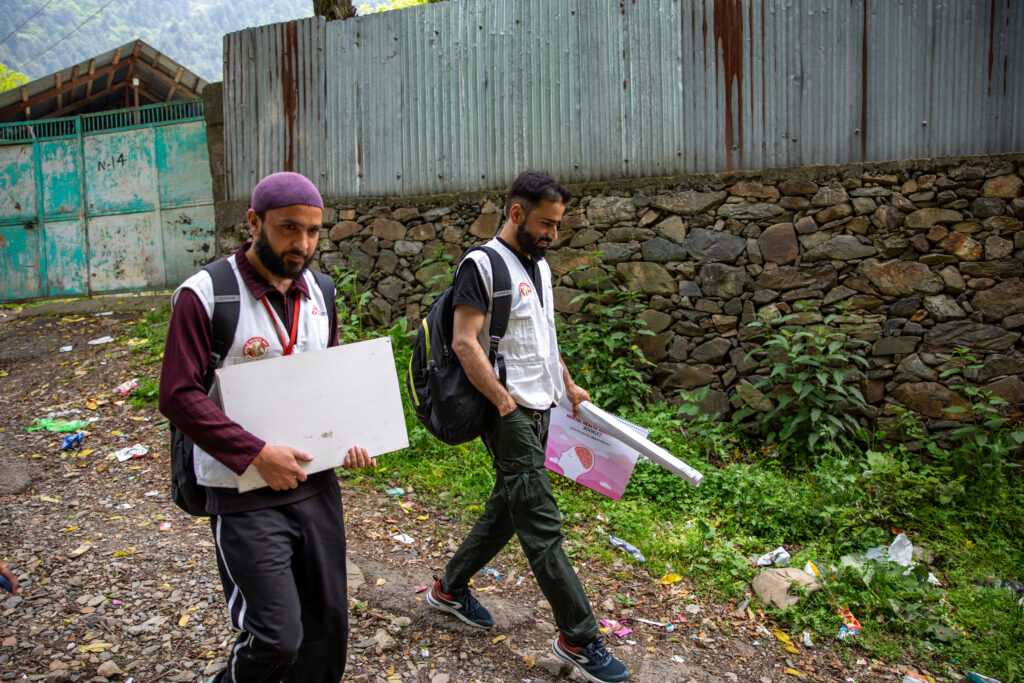
Shabir and Doctors Without Borders India/Médecins Sans Frontières (MSF) community mental health worker walk through a village in Tral, Kashmir, carrying awareness materials while on the way to the next community mental health awareness session. ©Deepak Bhatia/MSF

What I hope for

Right now, there’s a lot of confusion around mental health in Kashmir. People with mental health difficulties often have to travel very far to find help. We want to close that gap. We want to stay close to the community, build lasting trust, and make sure that whatever difficulty someone is facing, they know exactly where to come.

Mental and physical health are deeply connected; when the mind is under stress, the body suffers too, often first through digestion, through appetite, through an inability to feel any real enjoyment in life, however comfortable that life might otherwise be.

I’ve seen it for myself: someone can have everything they could want, and still find no peace, because their mental health isn’t right. That’s why I believe, without hesitation, that if you want to truly enjoy anything in this life, your mental health has to be looked after first.

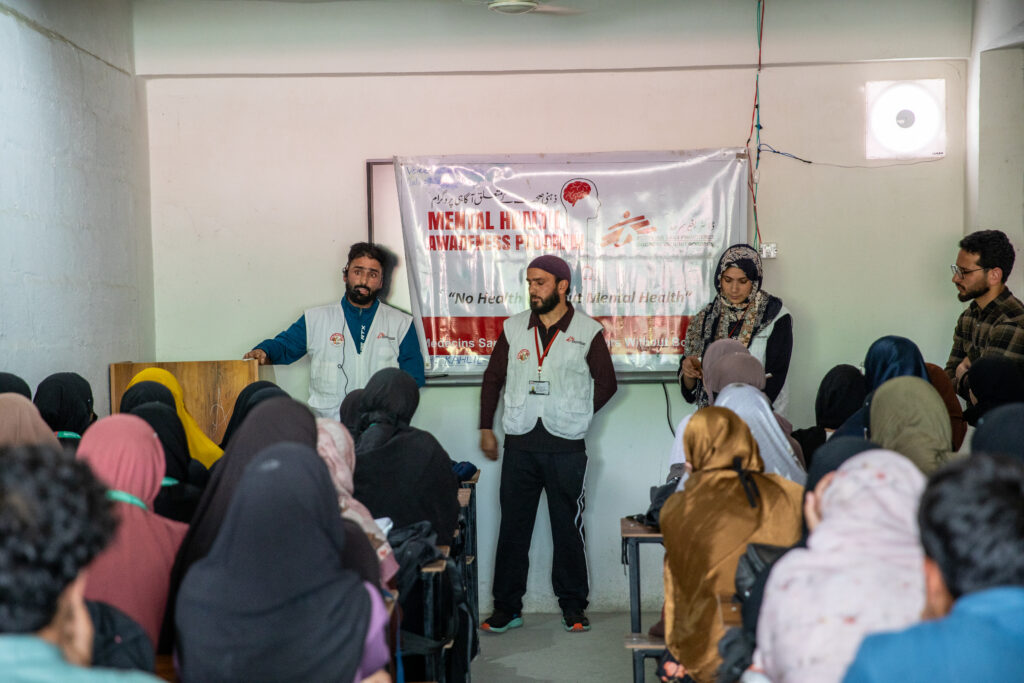
Doctors Without Borders India/Médecins Sans Frontières(MSF) community mental health workers conducting a mental health awareness session with students of a coaching institute in Tral, Kashmir. ©Deepak Bhatia/MSF
MSF provides free, confidential mental health and psychosocial support in Kashmir, including counselling for young people and adolescents.