“My name is Dr. Mustapha Ado. I’m a medical officer working in the Diphtheria Treatment Centre (IDH). I’m serving as the Medical Activity Manager for the Ministry of Health.
Diphtheria, as we know, is an acute bacterial infection affecting the upper respiratory tract and throat. It is caused by an organism called Corynebacterium diphtheriae. It affects all ages, but mainly children between the ages of 5 and 14 years.
Here in this centre, we admit and manage patients affected by diphtheria. The collaboration between MSF and the Kano State Government has been wonderful in trying to bring this outbreak to an end. There are many areas in which the collaboration has been very successful.
For severe or complicated diphtheria cases, MSF collaborated with the Ministry of Health in treating these patients. MSF provided an ICU, which helped reduce the case fatality rate. They also established a referral pathway through which patients with multiple complications, such as myocarditis, kidney injury, or upper airway obstruction, could be transferred to a teaching hospital for specialist care.
Another great area of collaboration was human resources. This centre has a 60-bed capacity, but with MSF’s support, it was upgraded to accommodate up to 120 patients.
Before MSF’s support, we had only six or seven medical doctors here. With MSF’s support, there was a time we had about eighteen medical doctors. The same applied to nursing staff. At one point, we had thirteen nurses and thirty-eight nurse aides, which made a significant difference.
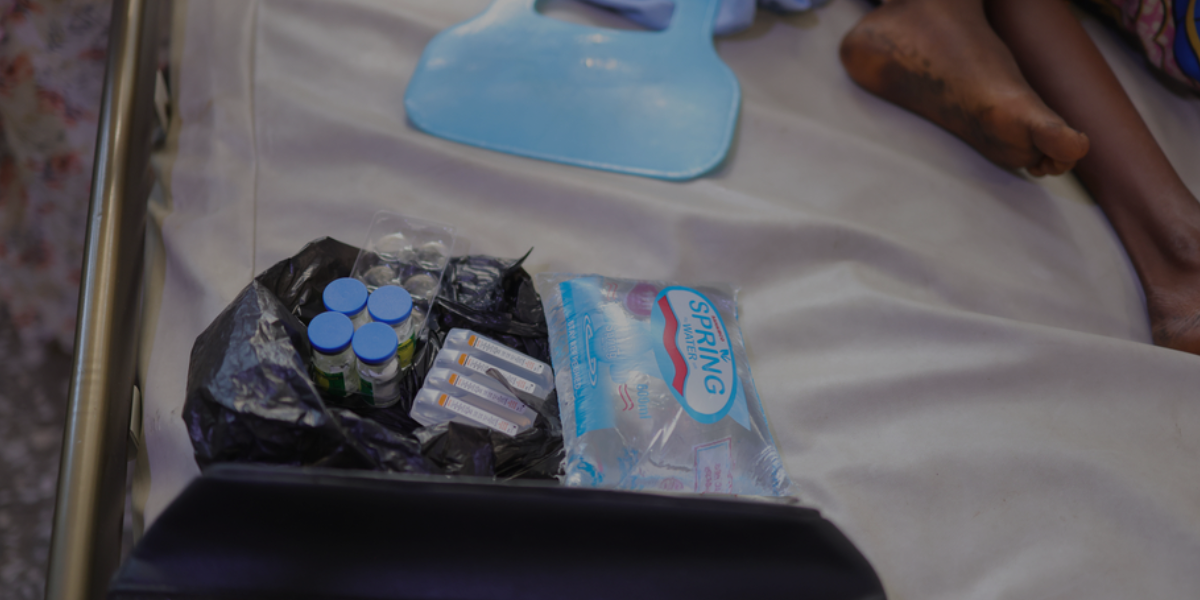
Another important collaboration was in supplies. Diphtheria antitoxin is crucial—it is the backbone of diphtheria case management. Through the collaboration between MSF and the Ministry of Health, MSF supported the provision of diphtheria antitoxin, consumables and other essential medicines. We cannot overemphasize the importance of antibiotics, which MSF provided for diphtheria patients. This was a very valuable contribution.
Capacity building was another major area of collaboration. The MSF team and the Ministry of Health team worked together to build the capacity of the staff. I am confident that Kano state and Nigeria as a whole will continue to benefit from the expertise and knowledge that staff gained through this collaboration.
Another very important aspect was infection prevention and control. We know that diphtheria is a notifiable disease with outbreak potential, so infection prevention and control is essential for effective management.
MSF provided Ministry of Health staff with personal protective equipment, standard operating procedures for using this equipment, and conducted a series of trainings on infection prevention and control.
Another important achievement was the establishment of a proper triage area equipped with functioning suction machines and other biomedical equipment. Before, we did not have these, but with the collaboration between MSF and the Ministry of Health, we were able to equip both the ICU and the triage area with lifesaving equipment.
Previously, we had mortality rates of around 25 per cent. Through this collaboration, the training, the capacity building, and the continuous supply of medicines and consumables, as well as strengthening the skills of the healthcare workers caring for these patients, we saw a major reduction in both mortality and morbidity.
Before MSF’s exit, our mortality rate had fallen to less than 5 percent. This was a remarkable achievement. The impact has been extremely valuable for us as clinicians and for all the partners involved in this effort.
Regarding vaccination, diphtheria is a vaccine-preventable disease. The vaccination campaign had been long overdue—we had hoped it would happen two or three years earlier. Through the collaboration between MSF and the State Ministry of Health, the first and second rounds of vaccination were carried out. We are hopeful that in the coming years we will see the full impact of this campaign.
Before MSF’s exit, we had a clear referral pathway to tertiary centres for specialized care. Now, because of several factors, we are no longer able to refer these patients effectively. One major issue is financial. Most of our patients come from low socioeconomic backgrounds and cannot afford to travel to AKTH. As a result, they remain in this centre, and unfortunately, we lost one of the two patients.
Another major challenge is the shortage of medicines. During MSF’s presence, drugs were readily available and of very high quality. Since their departure, we have been left with only limited supplies, and we are not even certain of their quality or potency.
Electricity is another serious issue. MSF used to provide diesel for our generators, ensuring continuous power whenever there was no electricity. Unfortunately, now, we have frequent electricity gaps – sometimes for the whole morning. This is extremely challenging. If a patient requires emergency suction or urgent intervention, it becomes very difficult to manage them properly.
Human resources have also become a major challenge. As I mentioned earlier, MSF supported the Ministry of Health in recruiting competent staff. Since MSF’s departure, more than 70 percent of the healthcare workers in this Diphtheria Treatment Centre have returned to where they came from. Most of them were volunteers who received monthly incentives through MSF. Now those incentives have ended, and almost 70 percent of those staff are no longer here.
We previously had eighteen medical doctors in this centre. Now we are down to six. We used to have around thirty nurses and thirty nurse heads while MSF was here. Now we have only ten nurses and fifteen nurse heads. The quality of care that thirty nurses and thirty nurse heads can provide simply cannot be compared to what is possible with only ten nurses and fifteen nurse heads.
There are many challenges, but these are the main ones. Another very important challenge is access to diphtheria antitoxin. While MSF was here, together with the Ministry of Health, it was relatively easy for us to obtain diphtheria antitoxin. MSF would contact other centres, even outside the country, to ensure that antitoxin was available here. We appreciate the efforts of the State Ministry of Health in continuing to provide diphtheria antitoxin. However, the quantity available now is far below what we had when MSF was supporting this centre.”