Every day in Médecins Sans Frontières (MSF)-supported secondary hospitals across South Sudan, from Aweil, in a stable area under government control, to Akobo in Jonglei, an unstable conflict zone held by opposition groups, our teams receive women and children in increasingly severe condition, dying from diseases that could have been diagnosed and treated weeks earlier. Across the country, thousands of mothers and children find the doors of their primary healthcare clinics shuttered. They must travel long distances, at a cost they cannot afford, to reach a hospital only after preventable conditions have become critical. 

Abuk Athak did not plan to walk to hospital in labour. A year and a half ago, she walked for two hours from her village in Aweil West, already in labour, because the nearest health centre, in Ruangol, had been closed in February 2025: no staff, no medicine, no midwife. She arrived at Aweil State Hospital exhausted and in pain. Her baby, a boy named Rau, survived. She had made that journey, she says, because “There was no one there.” 

Aweil: a primary care network that closed without announcement 

South Sudan’s public health system depends almost entirely on external financing. Since independence, it relied first on the Health Pooled Fund (HPF) and, from 2024, on the Health Sector Transformation Programme (HSTP), a multi-donor mechanism funded by the World Bank, Canada, the United Kingdom, Sweden and the European Union. The HSTP covers medicines, staff incentives and basic service provision across Primary Health Care Centres (PHCCs) and Primary Health Care Units (PHCUs) nationwide.

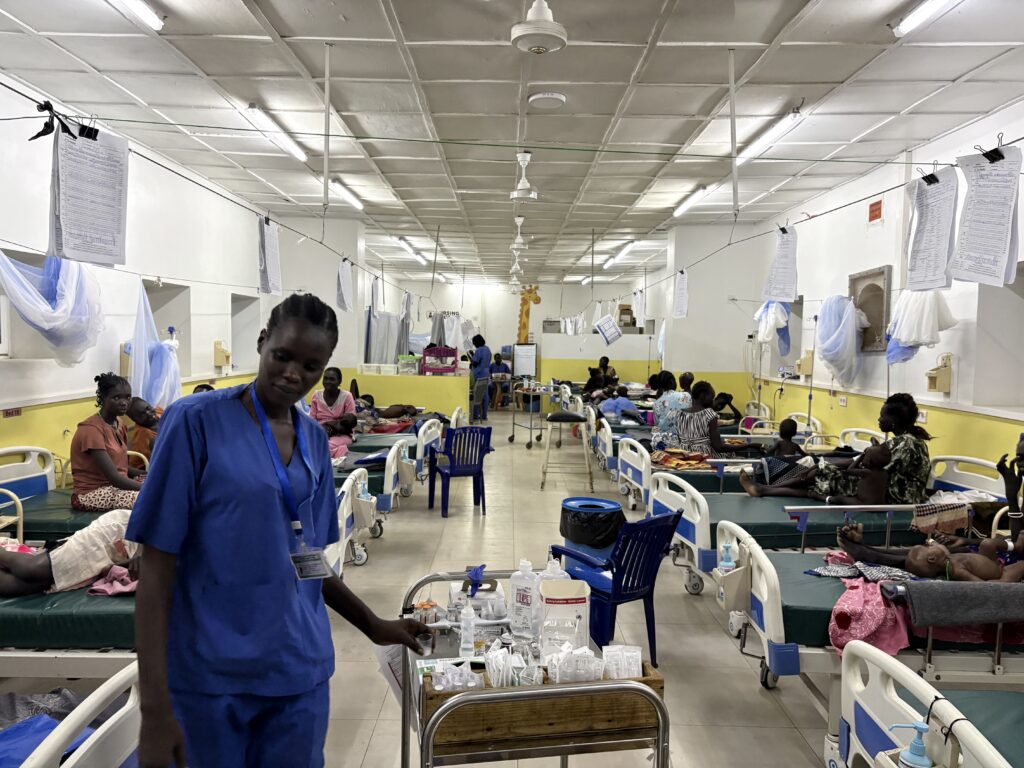
Inside the inpatient therapeutic feeding centre at MSF-supported Aweil State Hospital, which is operating at full capacity, providing care for children under five with severe acute malnutrition. Between January and October 2026, admissions rose by 47%, from 1,227 to 1,801, compared with the same period in 2025, marking the highest number recorded at the hospital in five years. ©Aurelie LECRIVAIN/MSF

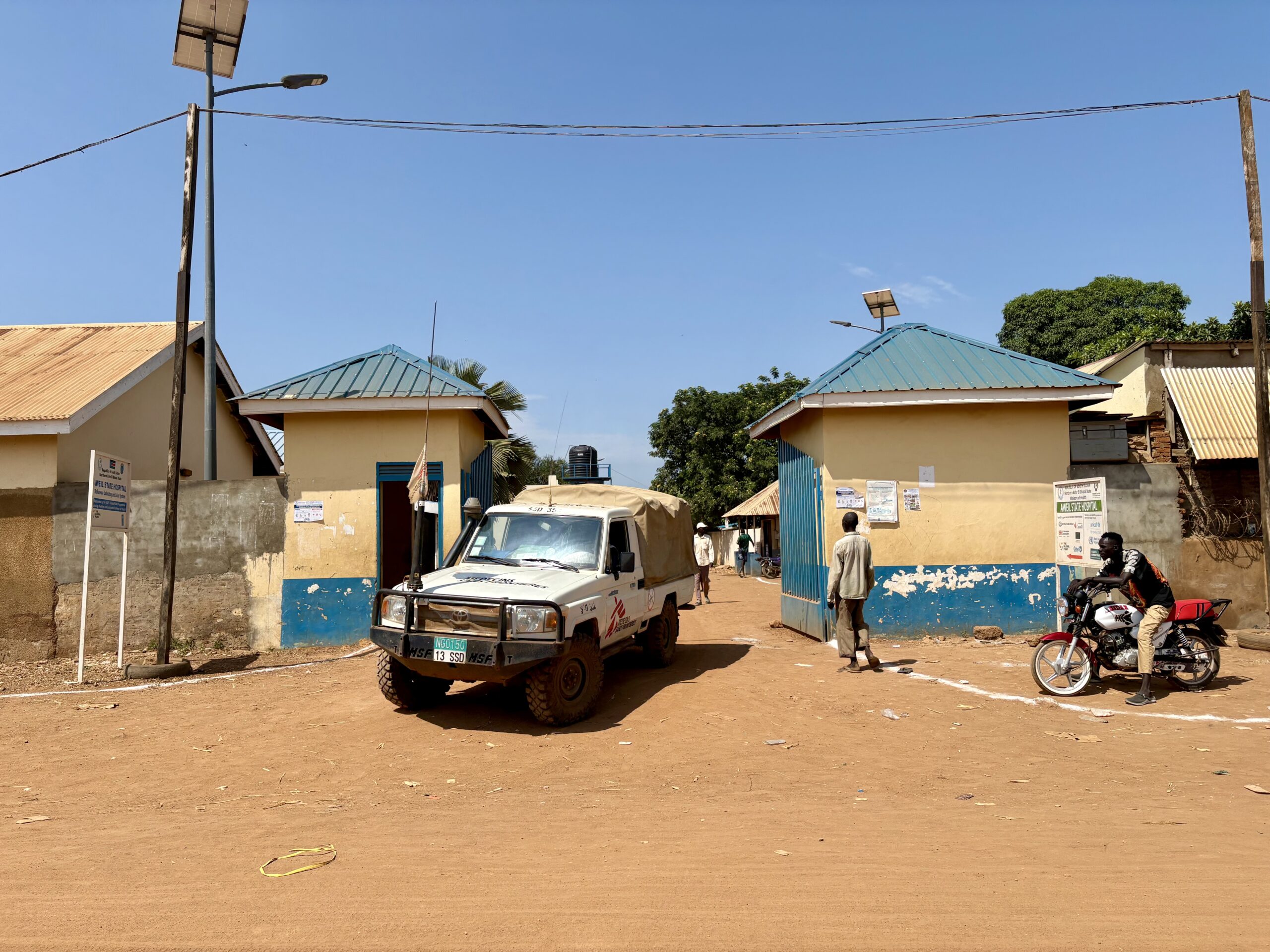
Aweil, the capital of Northern Bahr el Ghazal, is a government stronghold and one of the most stable areas in South Sudan, largely untouched by active conflict. It is the kind of place where, in principle, the HSTP should work.  

The HSTP faced a funding shortfall even before its launch in 2024, when the US and Sweden, both previous donors to the Health Pooled Fund (HPF), did not commit funding to the new programme. As a result, the HSTP launched with plans to support only 816 health facilities across 10 states and two administrative areas, rather than the 1,158 originally envisaged.  

The crisis reflects not only insufficient funding, but also a failure to translate available resources into functioning healthcare services. By January 2026, the number of functional PHCCs and PHCUs in Northern Bahr el Ghazal alone had fallen from 131 to 63. Staff incentive payments were reduced or stopped entirely. Facilities remained nominally listed as open while their doors were locked and their shelves empty. The health centre near Abuk’s village was one of 71 that closed, quietly, without announcement and without replacement. 

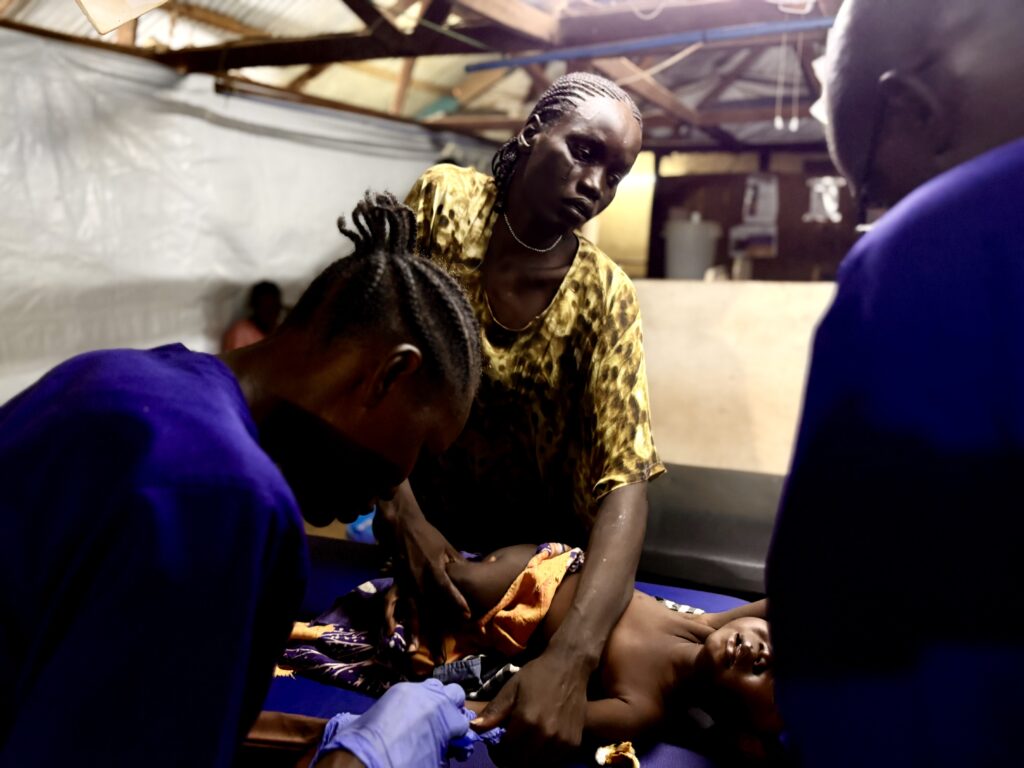
A year and a half after giving birth at Aweil State Hospital, Abuk is back, carrying her 18-month-old son, Rau. MSF teams rushed the boy to the emergency ward. At eighteen months old, he weighs 6 kilograms. He is suffering from severe malaria and moderate acute malnutrition.  

MSF medical staff attempt to find a vein to take a blood sample from 18-month-old Rau in the emergency room at Aweil Hospital. Rau was brought to the hospital by his mother, Abuk Athak, after becoming severely ill with malaria. In the hospital Abuk found out that Rau was also moderately malnourished. ©Aurelie LECRIVAIN/MSF

“Before our healthcare centre closed, we could receive antenatal care, give birth, and get our children tested at the first sign of a fever,” explains Abuk. “One day, it simply closed. We were told there were no more funds. Now, I am forced to wait until the very last moment to bring my children to the hospital, simply because I cannot afford the travel costs.” 

Aweil State Hospital: the last door open 

Aweil State Hospital is the only secondary healthcare facility for an estimated 1.4 million people in Northern Bahr el Ghazal. It is now absorbing the caseload of a state whose primary care network has collapsed.  

Between January and September 2026, total hospital admissions rose 44% – from 14,8170 to 21,352 – compared with the same period in 2025. Admissions of children under five with severe acute malnutrition rose 47% from 1,227 to 1,801, the highest malnutrition trend the hospital has recorded in five years. Vaginal deliveries with complications increased 35%. A fifth of all patients admitted are now classified as critical, a 20% increase from January to September 2025 (10,426 patients) to the same period in 2026 (12,549 patients).