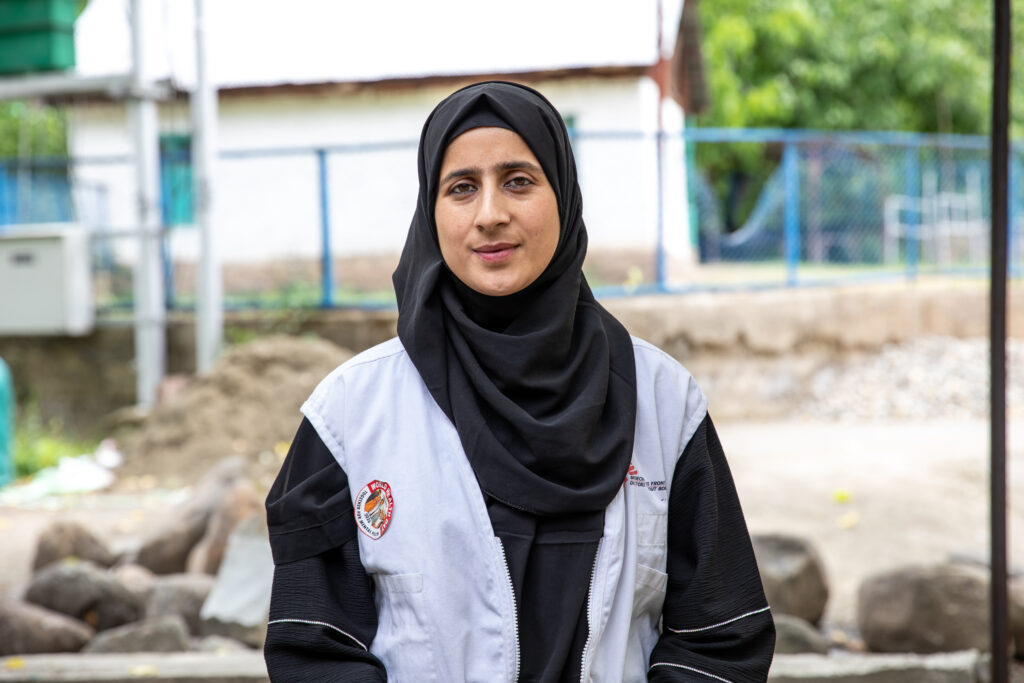
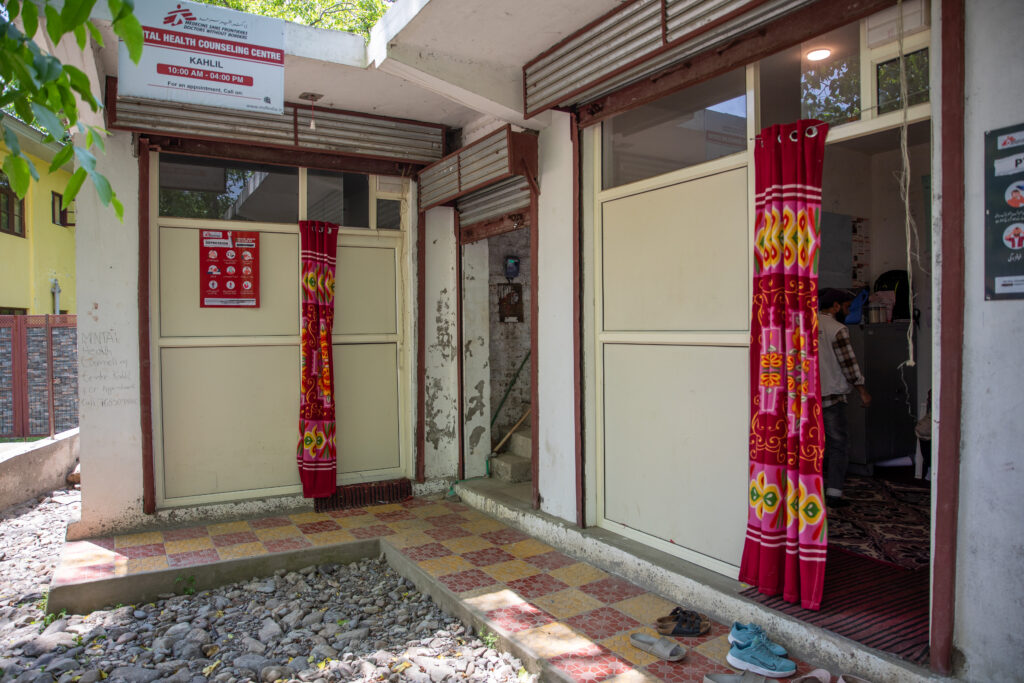
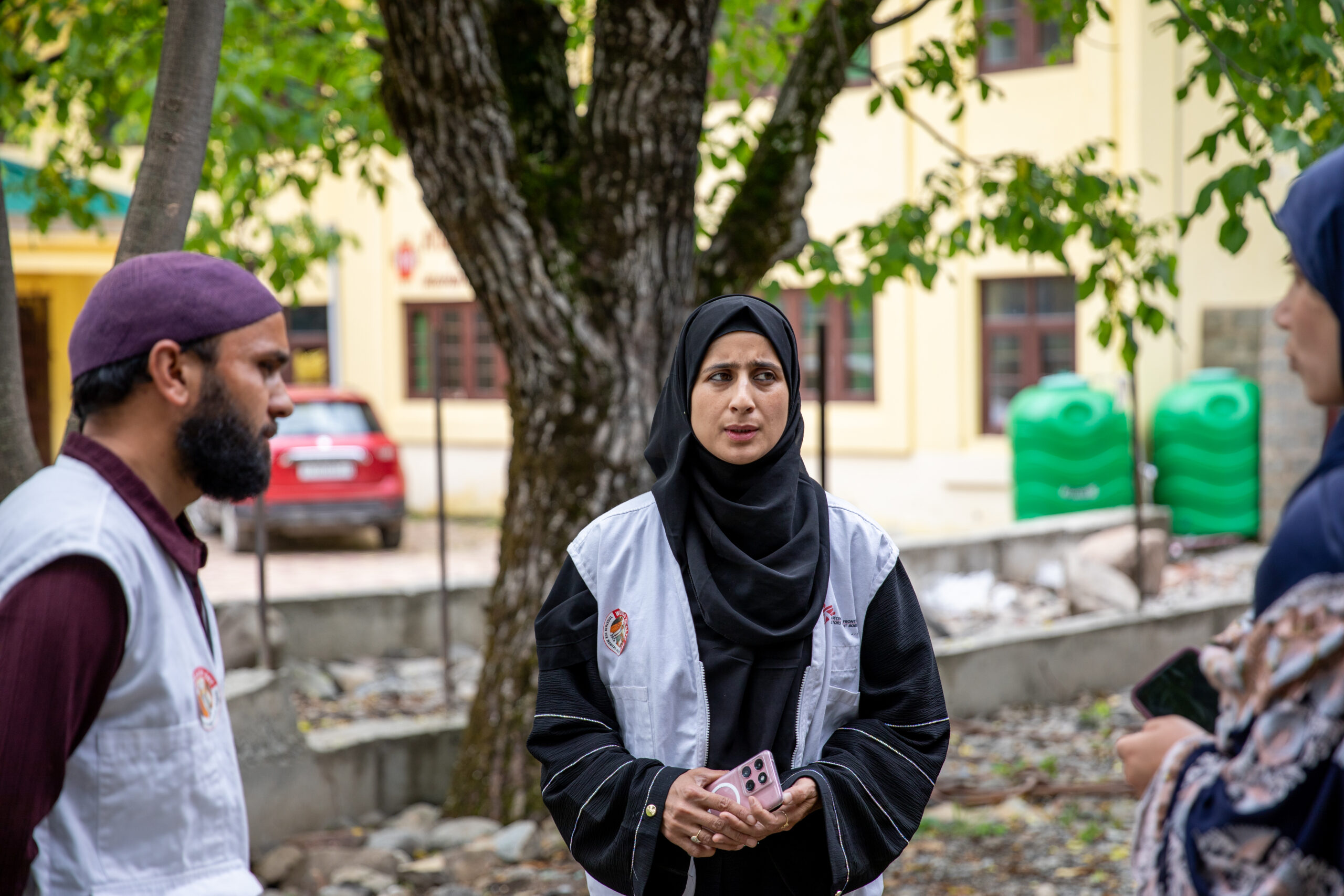
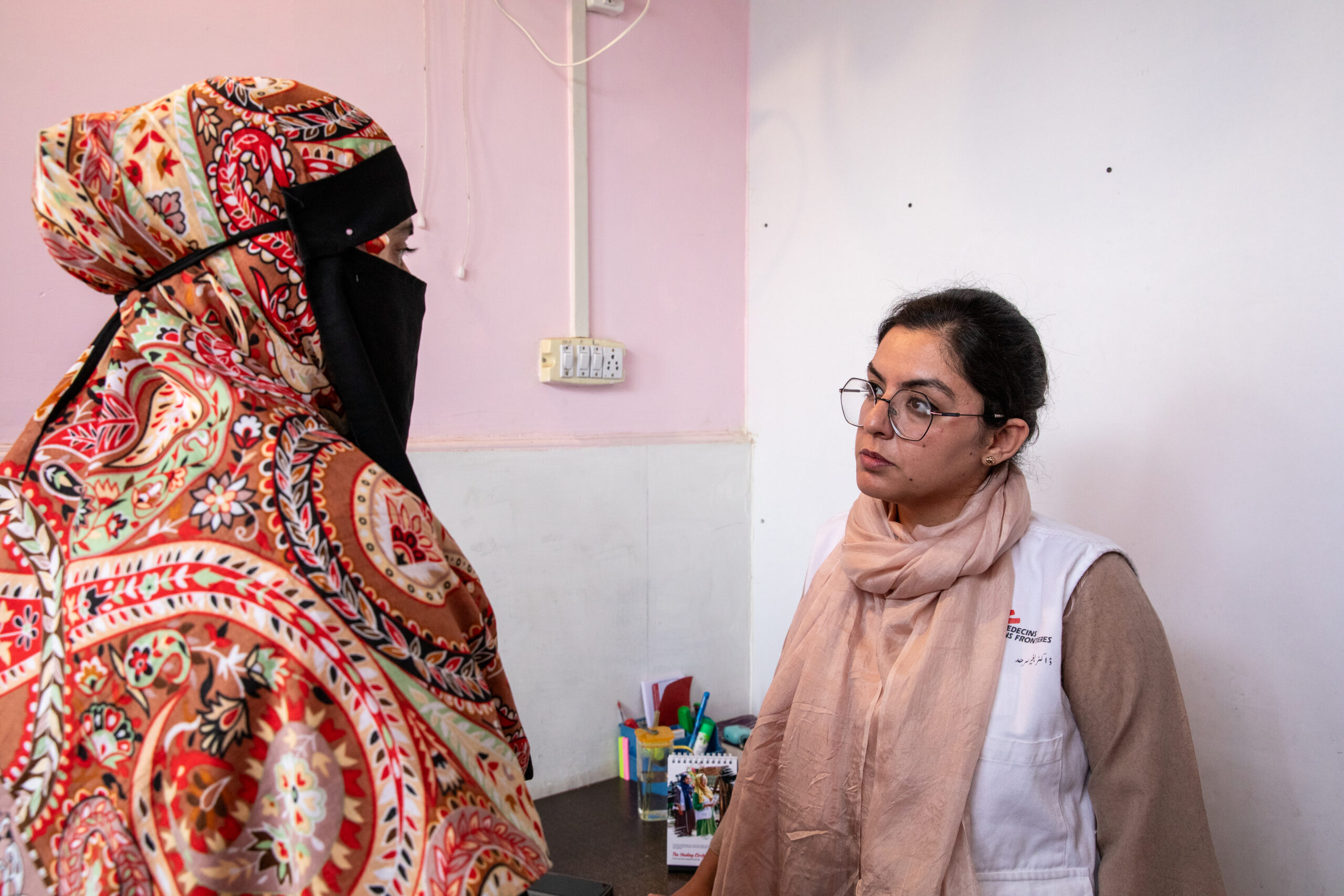
A first-person account from Nusrat, a counsellor with Doctors Without Borders India/Médecins Sans Frontières (MSF) in Kashmir.
Here, pain rarely announces itself as pain. It arrives as a headache that won’t lift, or a heartbeat that won’t slow down. As a counsellor with MSF’s mental health project in Kashmir, I have learned to listen for what isn’t being said. This is what that work has taught me.
Here in Kashmir, the language of distress is physical. People don’t say when they are upset, when they are emotionally down, when they are sad. They won’t say, “I am sad today.” They will come up with physical complaints instead: “I have a headache.” “I have palpitations.” “I have body aches.” Earlier, this was even more common than it is now.
I’ve come to read this as its own kind of language. Learning to hear the feeling underneath the symptom is, in many ways, the real work of my job.
The weight of stigma
For every patient who reaches us, I know there are others who never do.
Through my own experience, I have seen how afraid people still are of the stigma attached to mental health here. I remember many people who, because of this stigma, never came to our clinics at all. I think of young women who are ready to seek help but whose families won’t allow them to go. The reason is rarely about the girl herself: families worry that if it becomes known she has any kind of mental health conditioneven something as ordinary as the stress most of us live with, it will be harder to find her a good match for marriage.
It’s a stark illustration of how deeply stigma can shape a person’s access to care.
I don’t expect this to change quickly. It may take many more years, but we have to start somewhere. What gives me hope is what happens when families do get involved: I have seen real change in patient after patient once that support is there. Recently, we have also begun to see more acceptance in the community itself, and that matters as much as anything we do in a session.
The change I would like to see is simple: someone in the neighbourhood, in the family, in the extended family, who knows where to send a person in distress, so it doesn’t take ten doctors and ten psychiatrists before someone finally ends up in a counselling session.
Supporting each other
I believe resilience doesn’t come only from hardship. It also comes from supporting each other. If people become more aware, they start helping each other too. If I know that someone in my neighbourhood is struggling with a mental health difficulty, they should know where to go for help, or there should be someone around them, in the family or the wider community, who can point them in the right direction.
One simple idea
If there is one thing I keep coming back to, it’s this: mental health is not separate from health. It is health.
People take care of their physical health without a second thought. If they have body pain or a headache, they see a doctor and feel no shame in it. It should be exactly the same with mental health, because mental health is part of health. When a person is mentally well, that is what it means to say a person is healthy.
That is what I try to offer, alongside every session I hold: free, confidential counselling and psychosocial support, yes, but also the quiet, repeated message that people in Kashmir don’t have to carry their pain alone, in silence, or in disguise. One conversation, one family, one neighbourhood at a time.