For many years, sexual and gender-based violence (SGBV) has remained a deeply alarming reality in Eswatini, affecting both men and women, and predominantly women and minors.
The percentage of girls aged 13–24 who have experienced sexual violence in their lifetime declined between 2007 and 2022, reaching around 8 per cent in 2022, according to UNFPA.
Yet the burden remains substantial, as the Royal Eswatini Police Service reported 4,700 gender-based violence cases between April 2024 and January 2025 — an 8 per cent increase compared to 2023.
To make matters worse, survivors are often abused by those closest to them. Domestic violence and abuse committed by intimate partners or family members remains one of the most common forms of violence reported.
Many women believe that because the perpetrator is their partner or a close relative with financial power, they cannot refuse sex or report the abuse.
“Women go through many difficulties,” says Nomsa Mbuli, a women’s rights activist. “They often suffer at the hands of the people they love. Most survivors cannot fight for themselves; many depend on the very people who are abusing them, which makes reporting violence extremely difficult. I know women in Eswatini are already very resilient because of the challenges they face from a young age into adulthood, but they still need support to become more empowered.”
Mbuli works closely with women survivors and refers many of them to the Médecins Sans Frontières/Doctors Without Borders clinic in Matsapha.
“One of the clinics we work closely with is MSF’s,” says Mbuli. “I like referring women there because the services are inclusive, non-discriminatory and accessible to everyone. There is a strong sense of confidentiality, and people feel safe.”

At the start of this year, MSF launched a targeted community outreach and awareness campaign across different groups in Matsapha. Since then, the clinic has seen a rise in survivors seeking support, of about 26 patients in the first six months of 2026. ©Nelson Dube/MSF
Services exist, but access remains a bottleneck
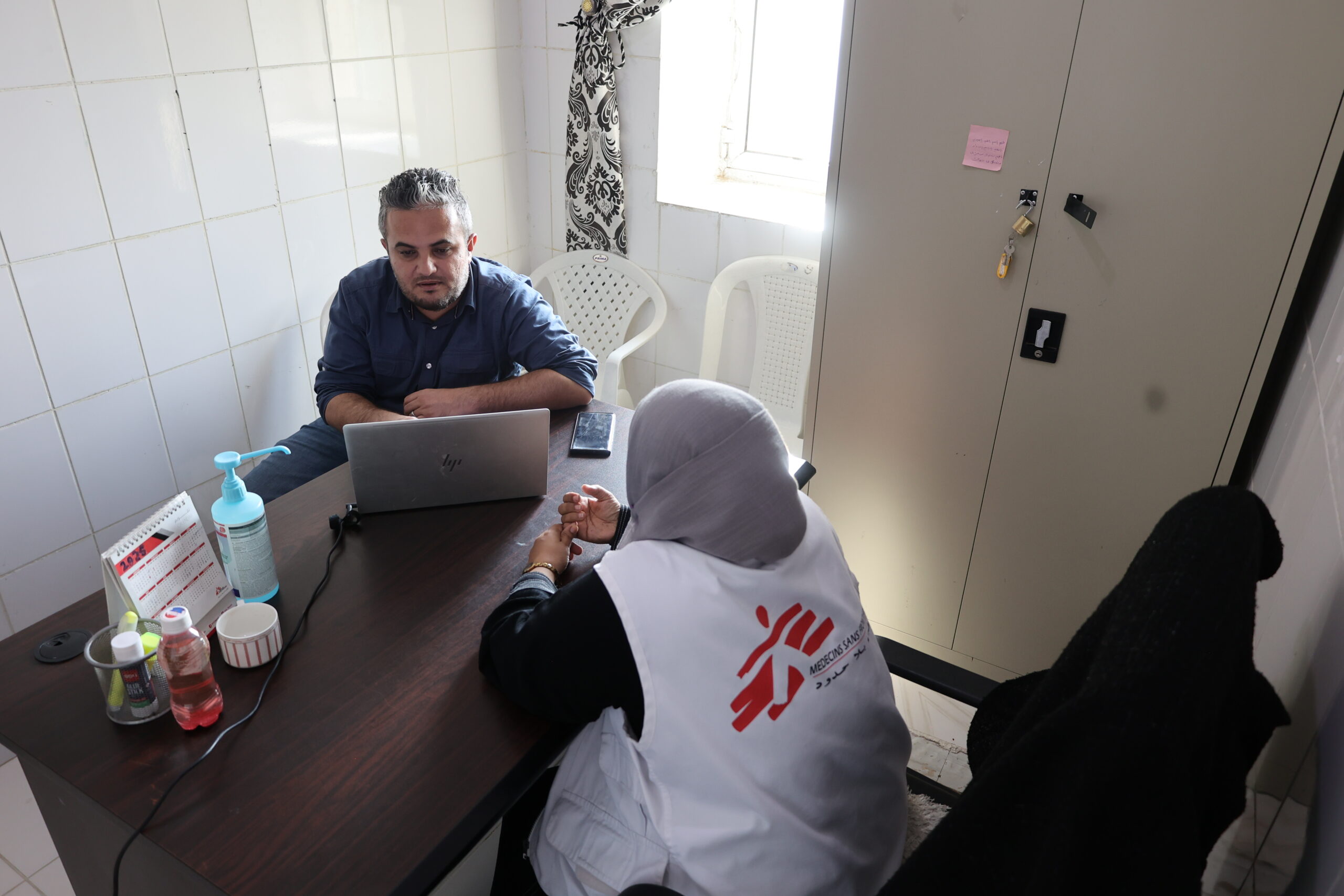
Our teams at Sitsandziwe Clinic combine sexual health care and mental health services under one roof, aiming to reach people who are often excluded from traditional healthcare systems.
Most survivors who come to the clinic want to be seen by female healthcare workers. Having women represented across different positions helps build trust and encourages survivors to seek support.
Despite the services available and the scale of the need, many survivors never seek medical care.
“Sexual violence is one of the major public health crises facing Eswatini,” says Dr Tandzile Nhlengetfwa, a general practitioner and our focal point for sexual violence services at the clinic. “The barriers to seeking care are not only cultural; survivors also face stigma, victim-blaming and fear of reporting.”
In 2023, the year the clinic opened, only 5 survivors sought support. The number doubled to 10 in 2024 and reached 16 by the end of last year. This was alarmingly low compared to the scale of need, prompting our team to prioritise raising awareness and improving access to services.
In response, MSF launched a targeted community outreach and awareness campaign at the start of this year. We also reinforced our response mechanisms by improving survivor pathways, strengthening staff capacity through training and focal points, establishing a dedicated helpline, and expanding referral networks with key protection and legal partners.
Since then, the clinic has seen a significant increase in survivors seeking support, reaching 29 survivors in the first six months of 2026. All of those who came forward in the past period were women, 24 per cent of them minors.
While this increase is encouraging and suggests that more survivors are becoming aware of available services, the need remains far greater than the number of people currently seeking care.

Multi-layered barriers
Survivors continue to face multiple barriers when trying to access support. Social stigma, fear of judgment, concerns about personal safety and cultural norms often discourage people from reporting abuse or seeking healthcare. For men and boys, harmful gender norms and expectations around masculinity create additional obstacles to disclosing experiences of sexual violence.
“Unfortunately, we have not seen any male survivors,” Dr Tandzile adds. “It is not because there are no cases, but because many men do not report the abuse. In Eswatini, deeply rooted cultural and traditional norms create barriers for men. Because of toxic masculinity, many fear they will be seen as weak if they report sexual violence.”
Mandatory reporting (to the police) requirements for minors can also discourage some families from seeking medical assistance, for fear of legal consequences or further social repercussions. As a result, many survivors arrive for care long after the critical period following an assault.

More than just medical care
MSF encourages survivors of sexual violence to access medical assistance within the 72-hour window, when interventions can be most effective. Nevertheless, our teams continue to provide care beyond 72 hours after an assault, as further services, such as treatment for sexually transmitted infections (STIs), pregnancy follow-up, and HIV testing, remain crucial.
Our clinic offers emergency contraception, post-exposure prophylaxis (PEP) for HIV, hepatitis B vaccination, prevention and treatment of STIs, HIV and pregnancy testing, psychological support, social support, referrals to protection and legal services, and medical documentation when required.
Lorem ipsum dolor sit amet, consectetur adipiscing elit. Ut elit tellus, luctus nec ullamcorper mattis, pulvinar dapibus leo.
When survivors arrive at the clinic, they are immediately fast-tracked and receive care in a private space.
Dr Tandzile Nhlengetfwa
General practitioner and MSF focal point for sexual violence services at the clinic
Medical care is only one part of support. While survivors can access healthcare services, many continue to face significant barriers in obtaining protection, legal assistance, justice and longer-term psychosocial support. For MSF teams, this remains one of the most critical gaps in Eswatini’s response to sexual and gender-based violence.
For many survivors, the challenge is not only surviving violence: It is finding a pathway to care, protection, and recovery afterward.