“My home looks like the colour of the sky, and smells like the scent of the earth”: Voices of the forcibly displaced and memories from the south
“A small slope, starting from below with a big chinaberry tree. You go up a little, there is a loquat tree with big, delicious fruit that we’re always climbing… A small, cozy home – two rooms, a kitchen, and a bathroom, and I was so happy with it.”
Like a child describing a house seen in a dream, Warde* spoke to us about her home in Deir Al Zahrani, in the Nabatiyeh Governorate of southern Lebanon.
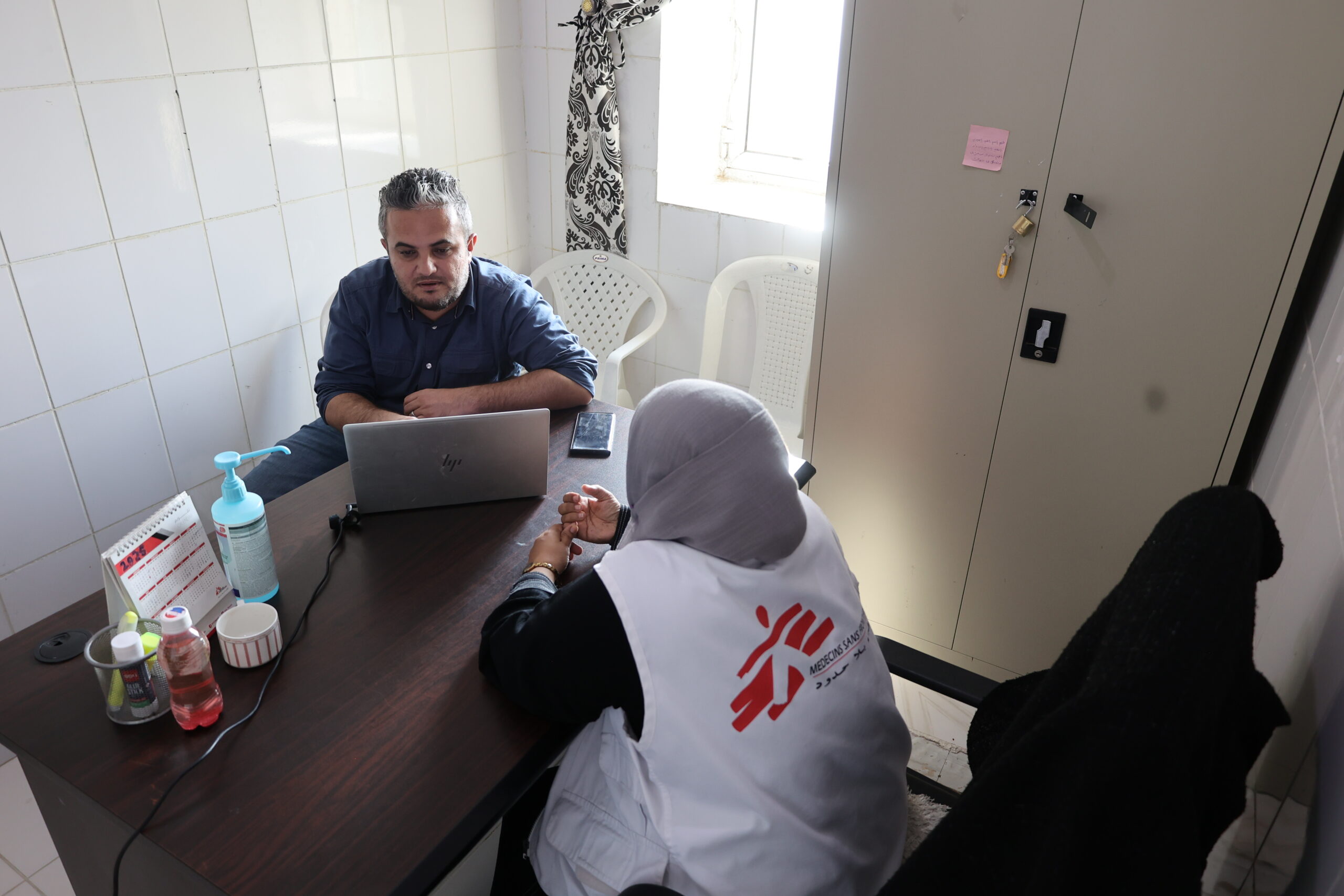
After the latest escalation of the Israeli war in Lebanon broke out last March 2, Warde remained in her home with her husband, son, and three daughters for 18 days amidst the roar of shelling and relentless airstrikes. They stayed until Israeli missiles struck directly behind their house, leaving people dead and injured, forcing the family to flee in search of safety. Warde is one of the women we met in shelters in Beirut and Jiyeh in Mount Lebanon, where MSF teams are providing medical services through mobile clinics launched as part of the emergency response to the escalation of war in Lebanon.
War, displacement, and compound suffering
At its peak, the Israeli war displaced more than one million people in Lebanon. As of July 22, more than 375,000 of them remain unable to return home, or simply no longer have homes to return to, according to the International Organization for Migration (IOM).
Forcibly displaced people endure the ongoing toll of war and displacement, which extends far beyond the loss of a home and stability. The intense violence of Israeli warplanes and the accompanying sonic booms caused Walaa* to suffer a miscarriage. She was displaced with her husband, son, and daughter from Mayfadoun in the Nabatiyeh Governorate.
Walaa says: “The sound of the warplanes was so frightening. No matter how much faith one has in God, fear is out of your hands.”
Walaa had been living with her husband, Mohamad Ali*, in Mount Hermon, Syria, his birthplace, before they moved to her home country, Lebanon, in 2011 to settle in the south.
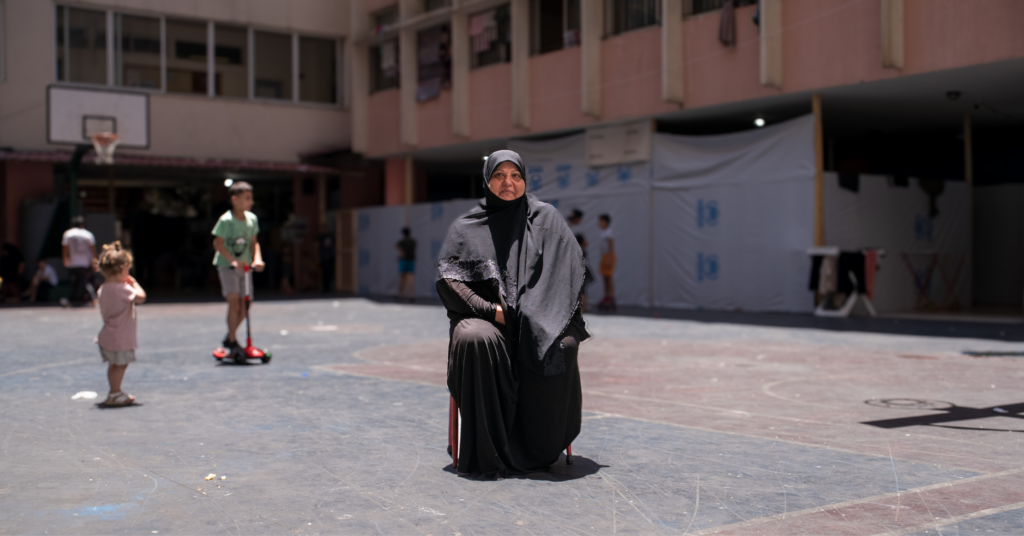
As for Halime, displaced with her husband and daughter from Qaaqaaiyet El Jisr in Nabatiyeh to a public school in Beirut, displacement has weighed heavily on her physically and psychologically.
She says: “Everything here is hard for me. I can’t accept it. I’ve developed so much stress that I can no longer stand on my feet or walk. If I want to get up off the floor, my husband has to pull me up. I went to the doctor and ran tests, and it turned out I have inflammation throughout my entire body.”
Children bear doubled burdens
Those displaced by the recent Israeli war were often forced to leave their homes multiple times due to ongoing Israeli military attacks, even after the so-called ceasefire announced last April. This created a state of volatility and uncertainty that compounded the hardships displaced people were already facing, from inadequate conditions in shelters, particularly regarding water and sanitation, to disrupted livelihoods, financial distress and challenges in accessing healthcare.
Children, in addition to the challenges they share with their families, have had their education disrupted and been torn away from their daily surroundings.
Warde tells us:
“Not a single child is at peace. They go out and play a bit at the sports club, but the real challenge is with their studies. Nothing is available. Every child now has emotional distress and depression, feeling like, ‘I’m not in my home.’ There is no future in sight.”
Mohamad Ali and his wife, Walaa, spoke to us about their daughter’s deteriorating state after her close friend was killed in an Israeli airstrike:
“Our daughter suffered and is still suffering psychologically from this loss. She was texting her, telling her, ‘I want to come see you,’ and then they bombed her house. Her friend, her friend’s mother, aunt, and cousins were all martyred. I’ve struggled so much with her; she developed health and psychological problems.”
Many shelters suffer from severe overcrowding alongside poor sanitary conditions, compromising the privacy of those sharing these spaces.
Halime says of her 13-year-old daughter:
“When my daughter came to the public school here, her initial reaction was that she didn’t want to live here. But reality set in: ‘Darling, there is no home. Right now, there’s only this school to be our shelter. You have to accept it.’ It was hard for her the first few days, but then she managed. Still, she spends most of her time in the room.”
Memories of home and hope for return
Nisrine was displaced from her home in Seddiqine, Sour/Tyre, and returned when the ceasefire was first announced. However, she was soon forced to leave again with the renewed Israeli military threats against her village.
She says: “I miss everything about my house. Everything, everything, everything. During the truce, we went up and thought it was over. But when I went to the house and saw the destruction, I felt it was going to be a long process. I brought everything I needed: mouneh (preserved seasonal foods), olive oil, oil-cured aubergines, my spices.” In early July, following the de-escalation in southern Lebanon, Nisrine returned to her village, however, she remains unable to return to her home.
Sanaa, displaced with her husband Said to Beirut, lost their home in Hariss, Nabatiyeh, which had survived prior rounds of Israeli escalation. Sanaa says: “When will I get back to my couch, to sitting in the kitchen with my cup of coffee beside me? My heart breaks to the idea that we might not find that again anytime soon. God willing we stay alive until the house is rebuilt and I can relive these moments. It’s a deep ache, a deep ache.”
Her husband Said shares the same longing: “I just want to sit on the soil. They deprived us of so many things that were dear to us. This is my home, and one’s home is like their own skin.”
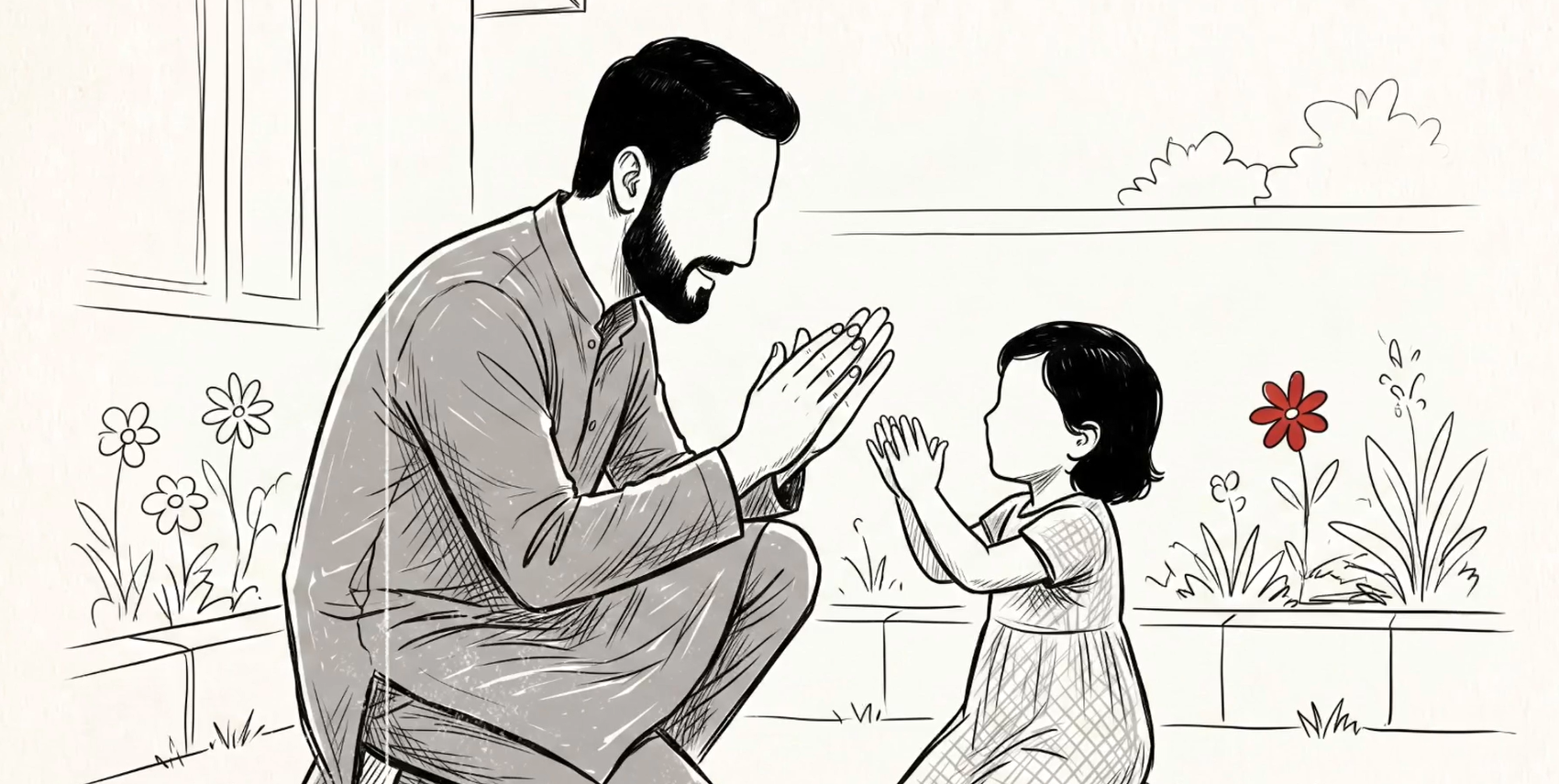
Their daughter recalled memories of happy family occasions when they returned home during the truce, such as Father’s Day: “I told them, ‘We need to gather like you used to, despite these circumstances.’ I just wanted to bring my parents back into the atmosphere they had before. We brought them a cake, gathered the family, and sat together. I remember my dad was in the bathroom, so we surprised him when he came out. He was sick at the time. He had suffered a stroke and spent 10 days in intensive care, so I wanted to lift his spirits, and I threw him this surprise.”
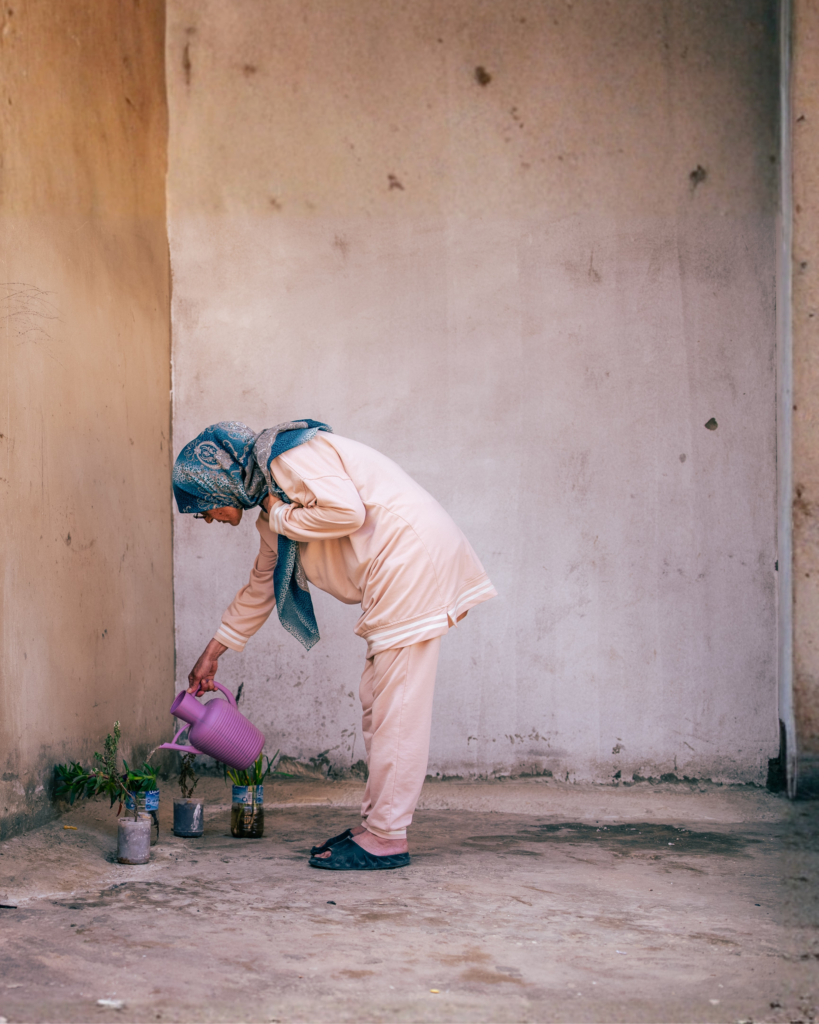
Warde deeply misses her home garden; during her displacement, she even bought flowers and plants, dreaming of bringing them along when she returns home. She says:
“I’m someone who loves flowers so much. I have a long walkway, all planted with flowers… Roses, Brugmansia, summer seasonal flowers… Every flower has a story and a name, and I care for them like my own children.” Warde remains displaced in Jiyeh, far from her village.
Walaa longingly awaits her return home, especially since she can no longer cook as she used to due to the lack of an equipped kitchen in the shelter. She says: “I love cooking food and making sweets so much. The last dish I cooked was stuffed grape leaves in olive oil when we went back during the truce, and I made ghraybe (shortbread cookies). It pains me that it’s been so long since I’ve cooked a meal. At home, we used to have dinner downstairs in the courtyard, under the grapevie. We were used to sitting on the ground. We’d spread out a mat and mattresses and sit together.”
Despite the cruelty of displacement, Mohamad Ali holds onto a few cherished memories: “If there’s anything we’ll hold on to from our displacement, it’s the good people we’ve met, the people who helped us, and those who welcomed us. They made us feel like we weren’t strangers.”
*Names have been changed to protect the privacy of the individuals.