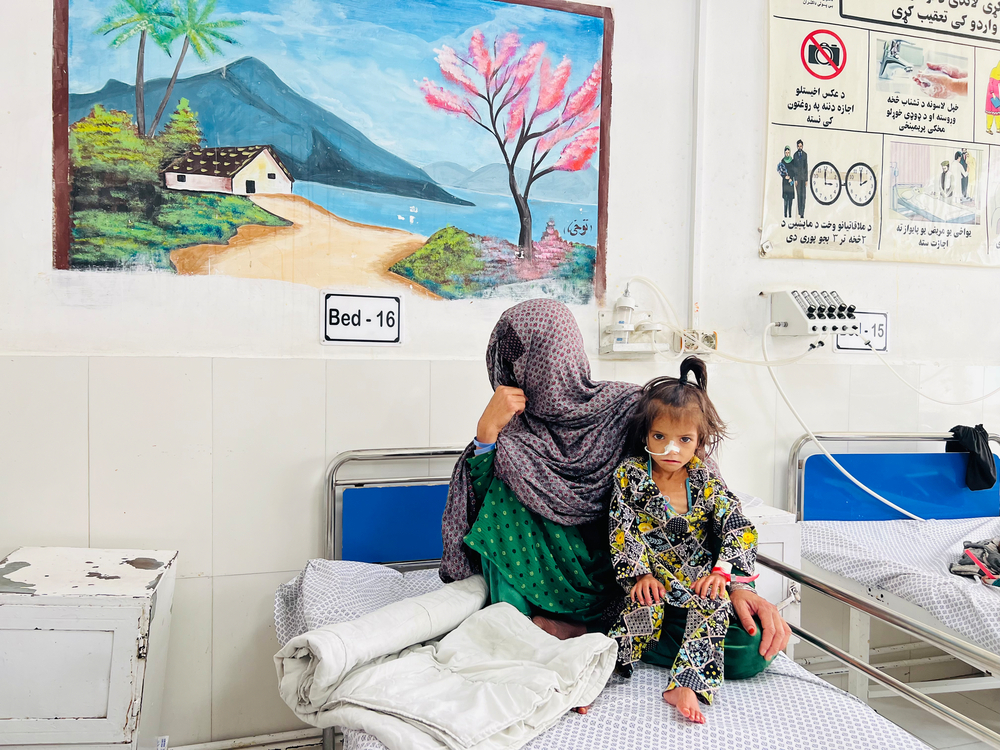
Nazia, a mother of five, is taking care of her one-and-a-half-year-old son, Ahmad, at an inpatient therapeutic feeding centre (ITFC) run by Médecins Sans Frontières (MSF) in Afghanistan’s Kandahar Province. Ahmad was admitted with severe acute malnutrition accompanied by diarrhoea. 

According to Nazia, Ahmad was born “weak and thin”. She was unable to breastfeed him and says she did not have enough food for herself. She used to soak bread in tea or bean soup to feed her son. “I could not even afford sugar for the tea”, she says. 

Ahmad has been receiving treatment at the centre for six days and his condition is improving. But Nazia, who is pregnant with her sixth child, worries that her next baby may face the same difficulties. “We do not have proper food at home. In the past, my husband used to go out to work, and he would bring something to eat,” says Nazia. “Now he leaves for two or three weeks looking for work but comes home empty-handed.” 


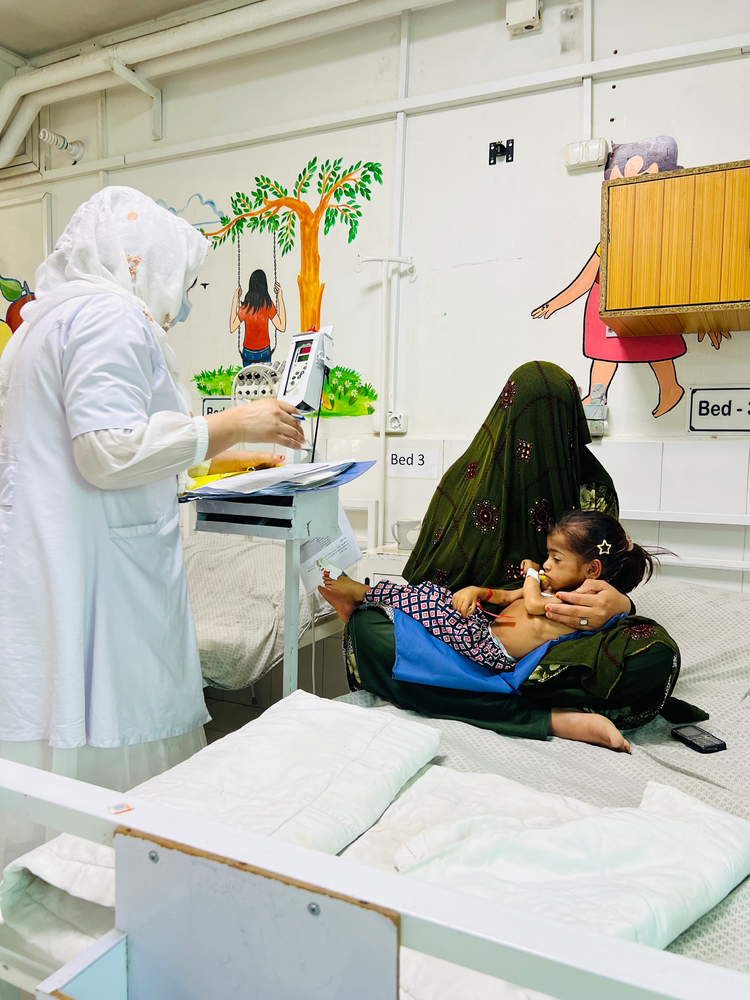
Four-and-a-half-year-old Qabila rests in her mother's arms while a healthcare worker records information at an MSF-supported inpatient therapeutic feeding centre in Helmand, Afghanistan. Qabila is being treated for severe acute malnutrition and acute watery diarrhoea. Despite financial difficulties, her family has repeatedly travelled by motorcycle to seek medical care. ©MSF

In Helmand Province, Parwana, a mother of seven who is eight months pregnant, is facing similar difficulties. Her five-and-a-half-year-old daughter, Robina, has been admitted to Boost Hospital’s therapeutic feeding centre for the third time with severe acute malnutrition and medical complications. Having already lost one child to severe acute malnutrition, Parwana fears for the baby she is expecting. “I cannot afford to get food for my children, and now I am worried about the baby I am expecting,” she says.

The experiences of Nazia and Parwana reflect a broader concern: the risk of malnutrition can begin even before a child is born. Women who are malnourished during pregnancy are more likely to give birth to babies with low birth weight, putting them at greater risk of malnutrition and illness from the earliest stages of life.  

Rising malnutrition admissions and barriers to continued care 

Between January and August 2026, MSF-supported inpatient therapeutic feeding centres (ITFCs) in Herat, Helmand and Kandahar recorded 8,487 admissions of children with severe acute malnutrition, an increase of 28.24 per cent compared to the same period in 2025. 

Admissions of children under six months of age also increased by 31.5 per cent compared with the same period in 2025. These infants accounted for between 26.5 and 35.7 per cent of all ITFC admissions across Herat, Helmand and Kandahar. This high proportion is particularly alarming, as the first 1,000 days of life represent a critical window of opportunity for healthy growth and development. Maternal malnutrition, low birth weight, breastfeeding difficulties and inadequate feeding practices can all compromise a child’s nutritional health from the very beginning of life. 

We are seeing mothers in therapeutic feeding centres who bring their malnourished children two or three times for treatments. We can treat children for severe acute malnutrition, but when they return home, many families are still facing the same difficulties. They struggle to access enough nutritious food, and some face significant barriers to continuing treatment. Without adequate nutrition and access to follow-up care, children remain at risk of becoming malnourished again.
Ana Banda
MSF Medical Coordinator in Afghanistan

For children treated for severe acute malnutrition, however, leaving hospital does not necessarily mean the end of treatment. Once their medical complications have been treated or stabilised, they still need regular follow-up at an ambulatory therapeutic feeding centre (ATFC). 

Yet poverty, long distances to health facilities, caregivers’ health conditions and movement restrictions can make it difficult for families to continue treatment. In addition, some ambulatory therapeutic feeding centres face shortages of nutritional supplies, further complicating access to care. 

When this continuity of care is disrupted, children may remain vulnerable to malnutrition. Malnutrition also weakens their immune systems, making them more susceptible to infections, which can in turn further worsen their nutritional condition. This creates a vicious cycle of malnutrition and disease. 

Limited access to antenatal and postnatal care can also affect the health of mothers and their children, adding to the challenges families face.

Growing needs amid shrinking access to healthcare

While admissions for acute malnutrition typically decrease after the summer peak, MSF teams in Helmand and Herat have continued to observe high numbers of patients in the ITFCs they support beyond August 2026. This continued pressure on nutritional services is particularly concerning in a context of reduced access to healthcare. 

Cuts in international humanitarian funding, including sharp reductions in US assistance in 2025 and reduced support from some European countries, have placed increasing pressure on Afghanistan’s healthcare system. 

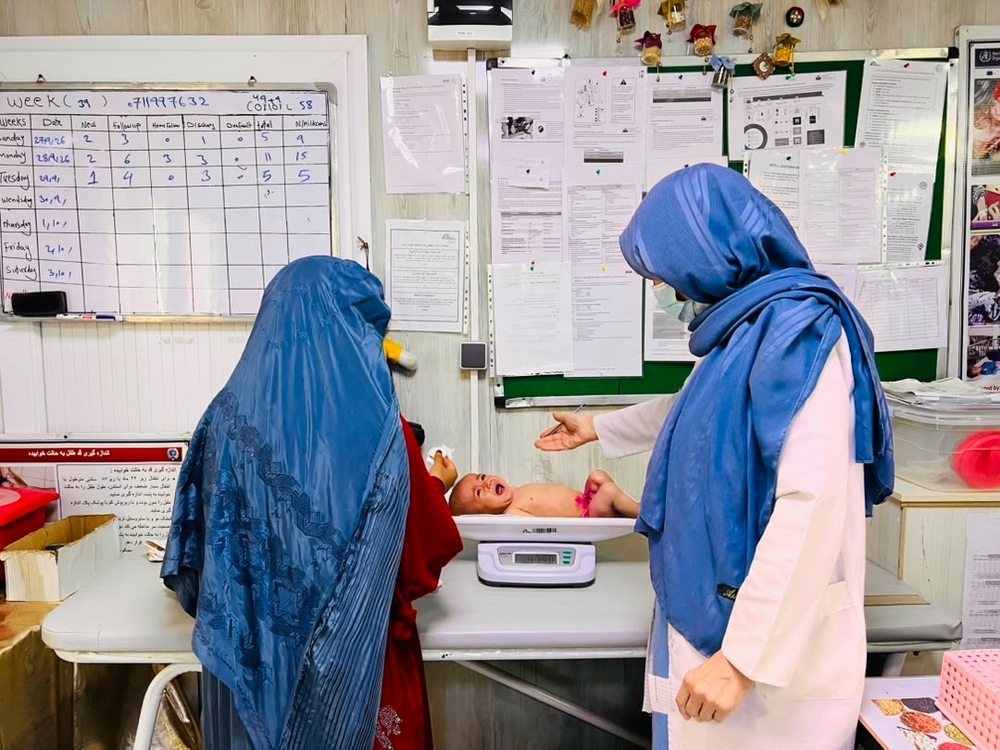
Five-month-old Osman is weighed during a follow-up visit to the MSF-supported nutrition programme in Herat, Afghanistan. After 14 days in hospital for malnutrition and dehydration, he continues outpatient nutritional treatment. His 16-year-old mother travels weekly by tuk-tuk to collect therapeutic milk. ©MSF

By June 2026, only 19 per cent of the funding required for the country’s humanitarian health response had been secured, according to the World Health Organization (WHO).

Between January and June 2026, 295 health facilities were suspended or closed across the country due to funding gaps, affecting an estimated 2.17 million people. This included 53 facilities in Helmand and Kandahar combined, and 19 in Herat. These closures further limit access to essential healthcare and nutritional services, potentially contributing to delayed treatment and increased pressure on the remaining functioning facilities. 

“In Herat, Helmand and Kandahar, MSF supports inpatient therapeutic feeding centres where our teams treat children suffering from severe acute malnutrition and its medical complications,” says Ana Banda. “As more children require treatment, maintaining access to nutritional and essential healthcare services is critical. But hospital care alone is not enough to ensure a lasting recovery, particularly when families continue to struggle to access sufficient food.” 

According to the latest IPC Acute Malnutrition analysis, an estimated 4.04 million children aged 6 to 59 months are projected to require treatment for acute malnutrition in 2027, including nearly 1.1 million children with severe acute malnutrition, a 16 per cent increase compared with 2026. An additional 1.27 million pregnant and breastfeeding women are also expected to require treatment. These projections highlight the scale of the crisis and the urgent need for donors, health authorities and relevant organisations to prioritise and restore funding for nutrition programmes and essential healthcare services across Afghanistan, ensuring that children and families can access the care they need. 
Sources

Médecins Sans Frontières (MSF). (2026). Herat, Helmand and Kandahar – ITFC admissions data, January–August 2025 and 2026. Internal medical data, unpublished. 

Afghanistan Health Cluster. (2026, 13 August). Afghanistan: Health facilities suspended/closed due to funding gaps in 2026 (January–June 2026). Health Cluster partners’ reporting, supported by WHO. 

World Health Organization (WHO), Global Health Cluster. (2026). Afghanistan – Health Cluster dashboard, Q2 2026 (data as of June 2026). https://healthcluster.who.int/countries-and-regions/afghanistan 

Integrated Food Security Phase Classification (IPC). (2026, 13 October). Afghanistan: Acute Malnutrition Situation for August–October 2026 and Projections for November 2026–March 2027 and April–July 2027.