Across Sudan, war continues to drive hunger, disease and displacement, while international aid funding cuts by governments are closing clinics and stripping medicines from the shelves of those that remain. The distance between illness and treatment is growing. Médecins Sans Frontières (MSF) can keep some services open. We cannot replace a shrinking health system.
When Sedra first saw her new-born daughter, her own body was in crisis. Her blood pressure was rising. Her vision blurred, her ears rang, and she began to tremble. She could think of only one question. “Will she grow up and live, or will she leave us?” says Sedra. “I cried a lot. I did not expect to survive myself.”
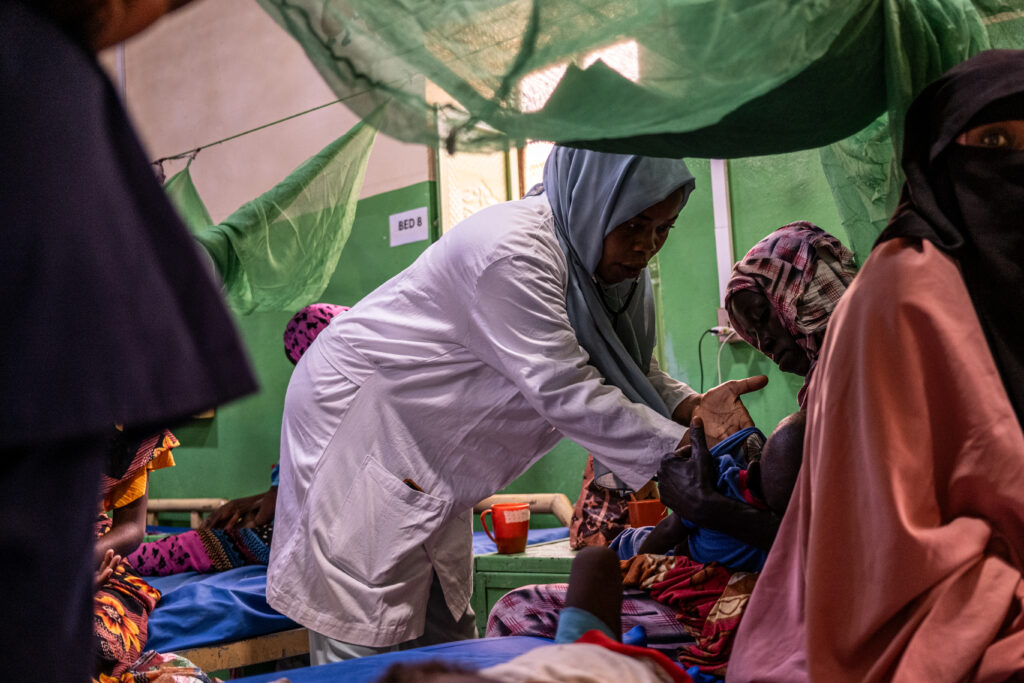
A doctor admitted her to the ward at Zalingei Teaching hospital in Central Darfur state. Her new-born needed neonatal care for malnutrition with complications. Today, the baby is gaining weight, and Sedra, herself a medical assistant, watches her progress closely.
Sedra was able to reach care in time for herself and her daughter. But for many people across Sudan, that is far from certain. War, displacement, attacks on healthcare, movement obstacles, and destroyed services are driving people’s medical needs. And while funding cuts did not create those needs, they are weakening the services meant to prevent, detect, and treat them.
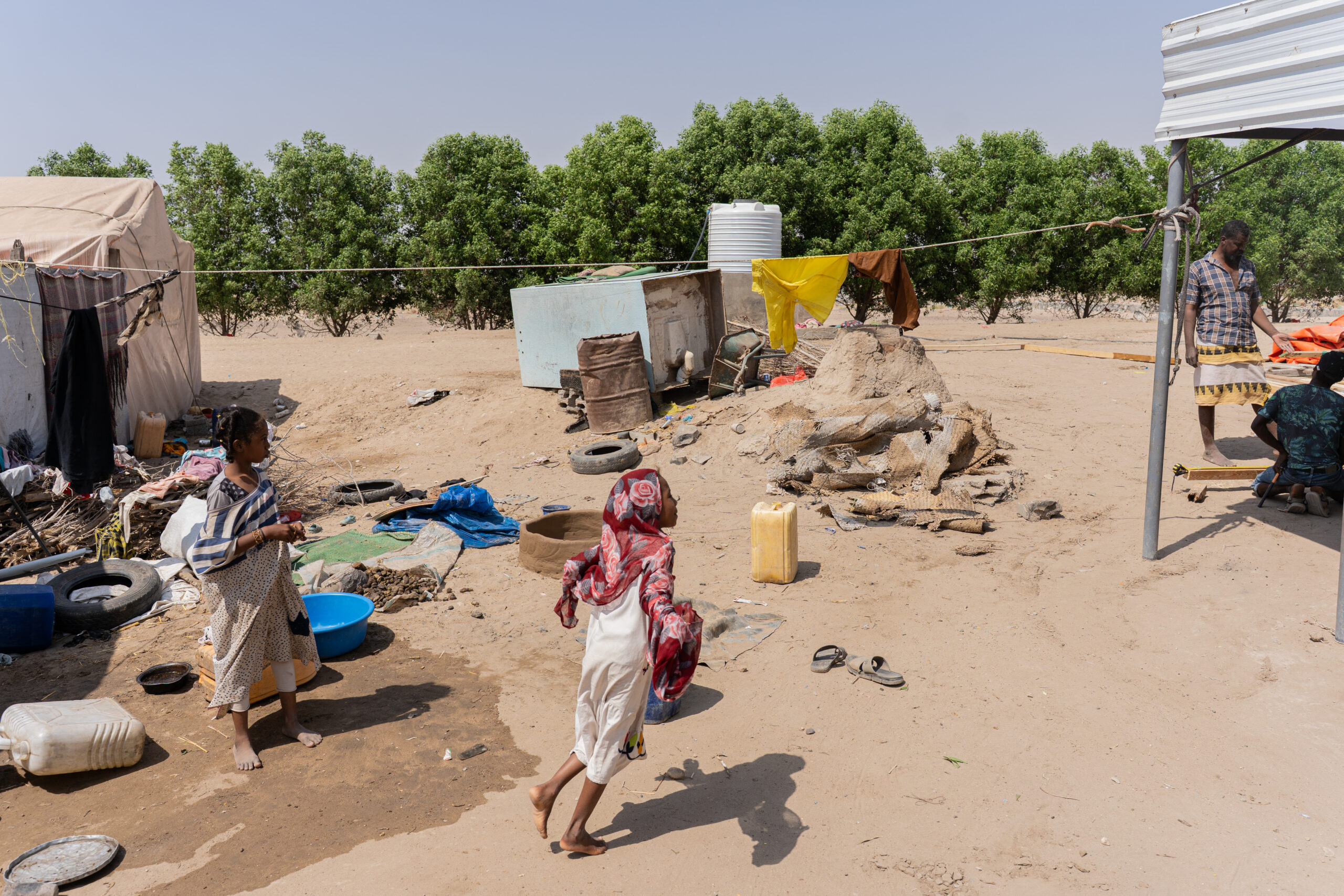
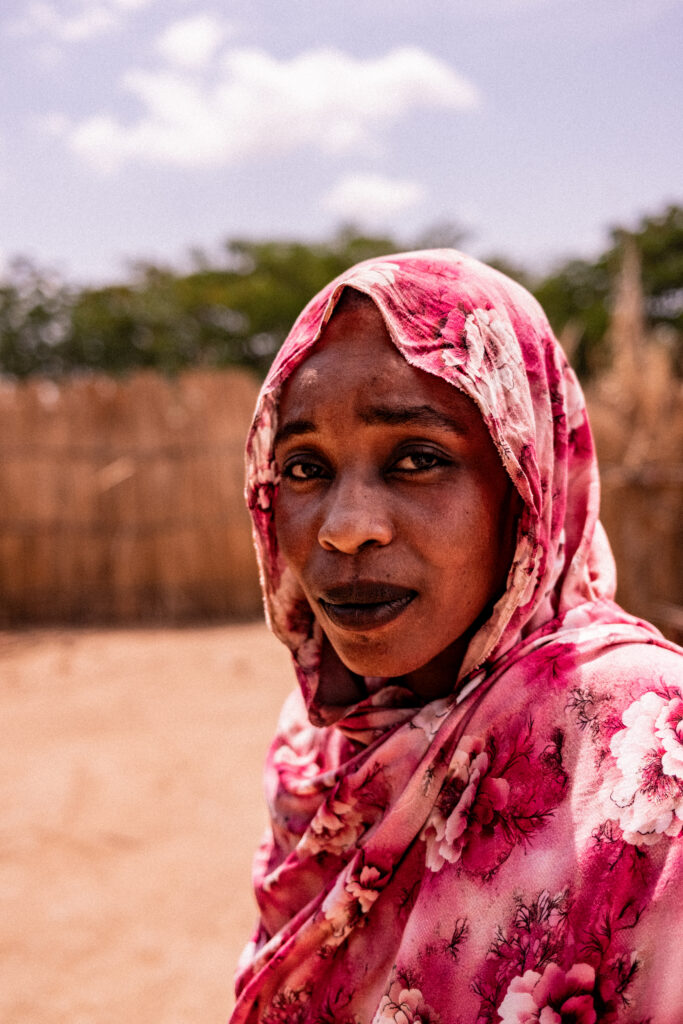
In Hamidiya, Central Darfur, Safa has found safety after fleeing El-Fasher, and then Kabkabiya, in neighbouring North Darfur state. Her father died because of the war and her family scattered. She does not know where everyone ended up. “The situation here is relatively safe,” says Safa. “But there is no healthcare or work.”
Before the fighting she had completed two of the four years of her nursing training. She still hopes to finish. For now, many people, including Safa, focus their time on basic necessities like food. “The day is almost over, and I couldn’t get a single bite,” she says.
Before the fighting she had completed two of the four years of her nursing training. She still hopes to finish. For now, many people, including Safa, focus their time on basic necessities like food. “The day is almost over, and I couldn’t get a single bite,” she says.
An international aid organisation has stopped supporting the healthcare centre near Safa. Reaching another working clinic costs around US$2 in transport. A labourer in Darfur earns roughly US$1 a day, meaning the journey costs about two days’ wages and leaves residents choosing between healthcare and food. “That money could buy food instead,” she says. “If there is no food, there can be no health.”
Vaccinations once available at the centre have stopped, while testing is now largely limited to malaria. Children are falling ill with other diseases, but many families cannot afford to seek treatment. The result: “Children die,” says Safa.
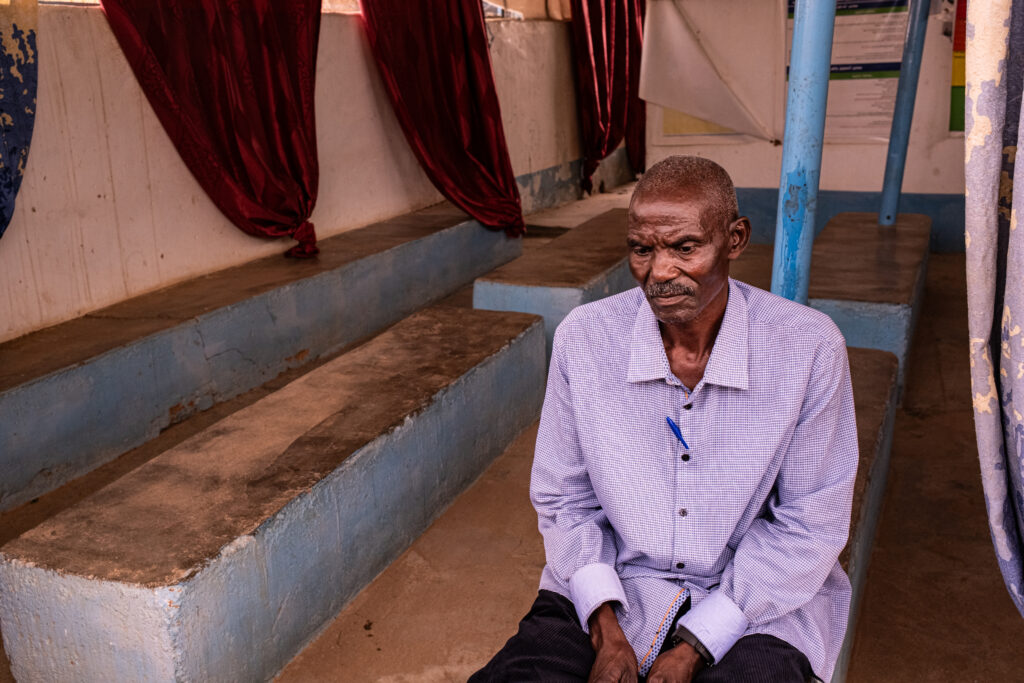
At the health centre in Hamidiya, Jaffer, a medical assistant, watched as services collapsed. He worked there for 15 years. The centre provided medical consultations, maternity and paediatric care, and nutrition and mental health services, and had a pharmacy that stocked medicines for chronic diseases. After funding cuts, only seven volunteers remain.
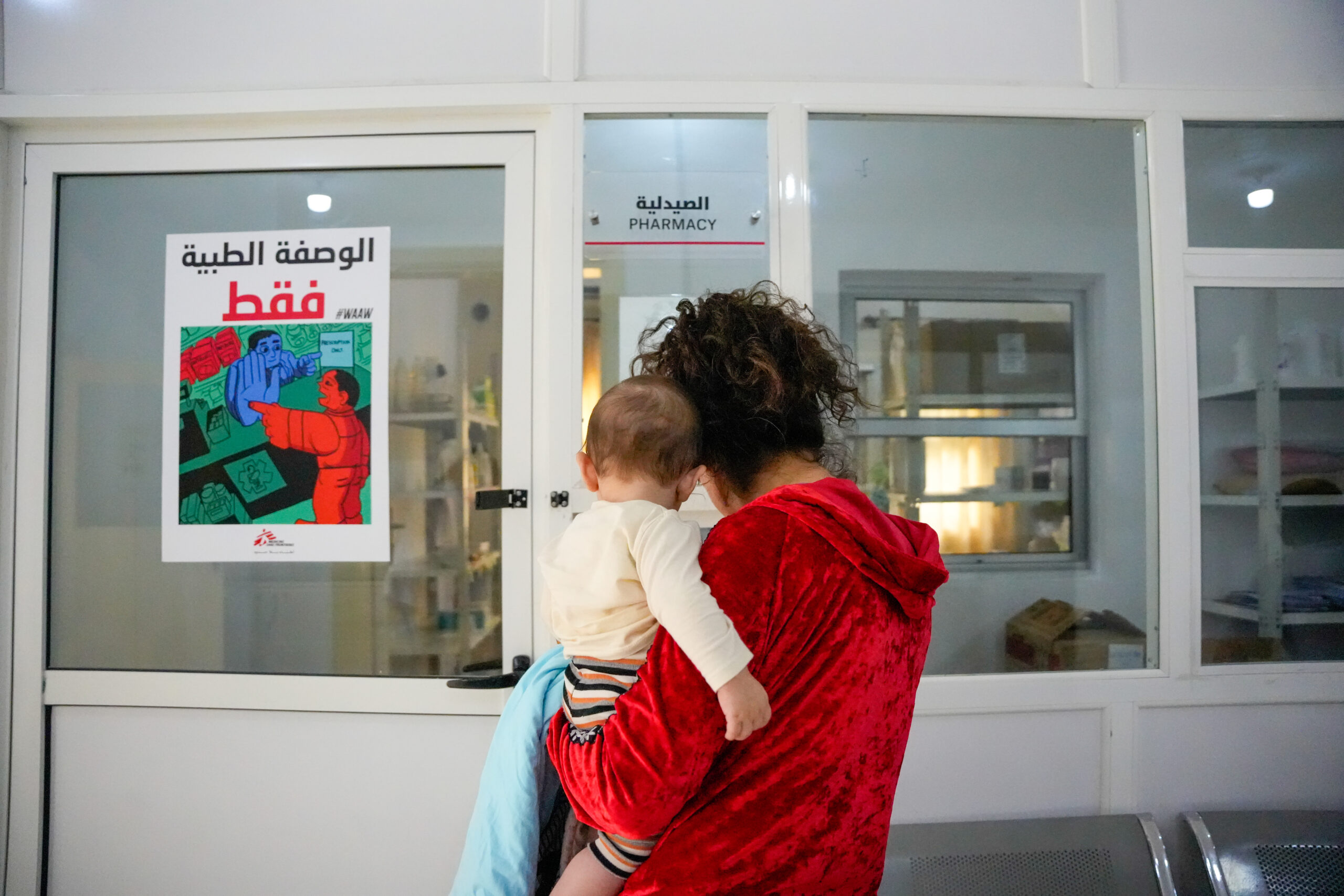
“Now the humanitarian organisation has left, we are in trouble,” says Jaffer. “There is no medication.”
“We used to receive between 150 and 200 patients a day,” he says. “Now we receive 30 to 40.”
This fall in numbers is not a sign that people have become healthier. They have stopped making the journey to a centre that can no longer treat them. The illnesses are still here — the services are not. The volunteers keep returning, protecting the equipment in the hope that another organisation will arrive.
Jaffer’s centre is part of a much wider retreat. In May, MSF reported that support had been withdrawn from more than 45 general healthcare centres in Central Darfur.
“Closing a clinic does not remove a single patient,” says Sebastián Traficante, MSF emergency coordinator in the Darfur region. “It sends them on to the next facility instead: later, after a longer and more expensive journey, and often in a more serious condition. The hospital they reach may already be full. MSF can reinforce some services, but we cannot absorb every closure.”
At Kas hospital in South Darfur state, Rahma spent 18 days beside her one-year-old child, who arrived critically ill with meningitis, malaria, and severe acute malnutrition. After more than two weeks of treatment, the child began to recover. “We travelled for hours to reach this hospital,” says Rahma. “The small hospital near our village closed its doors, and now there is nowhere nearby to seek care. Even if you find a doctor, there are no medicines. Without medicine, what can the doctor do?”
“When a child reaches the hospital after hours on the road, we may be treating several emergencies at once,” says Dr Saiful Islam, MSF medical coordinator in Sudan. “Severe illness requires urgent care, while severe malnutrition leaves a child with less strength to fight infection and recover. A clinic may close kilometres away, and the medical consequences eventually reach our wards.”
Kas is one hospital in one state. The UN estimates that 33.7 million people in Sudan need humanitarian assistance in 2026. As of 11 August, its US$2.87 billion response plan was about 41 per cent funded. The World Health Organization says 21 million people lack access to health services, and 37 per cent of health facilities do not function.
Hunger is another challenge that families struggle against. Nearly 19.5 million people faced crisis-level or worse food insecurity between February and May, according to the Integrated Food Security Phase Classification, which expects 825,000 children under five to suffer severe acute malnutrition this year.
Mubashir, a toddler, spent 16 days in MSF’s inpatient therapeutic feeding centre at Zalingei Teaching hospital. “They gave him milk and medicines,” says Mohammed Khamis, his father. While Mubashir recovered, he will return home to a lack of food. Fewer organisations remain to distribute food, and Mohammed is showing signs of malnutrition himself.
“There is no food to feed my children,” he says. “We are becoming weak.”
As services recede, pressure builds behind them. Admissions at the hospitals MSF supports in Zalingei and Rokero rose by 22.5 per cent between January and April 2026, compared with the same months in 2025. Funding cuts alone do not explain this increase, with fighting, displacement, disease, and hunger all contributing. But every clinic that closes leaves more people with less options.
The effects of the shrinking humanitarian response are also visible in eastern Sudan. Tanedba refugee camp has around 18,400 residents and because of their refugee status, they cannot seek care outside the camp. Eight organisations have stopped working there, and those still going report funding difficulties, operating with reduced hours and services. In June, a humanitarian organisation, left the camp suddenly, leaving people without a service for safe deliveries, including for emergency caesarean sections. MSF now manages emergency deliveries in the camp and refers women who need surgery to Al-Gedaref or Hawata, three to four hours away.
Hours-long travel will become more difficult, with another approaching challenge on the horizon. “The rainy season is coming, and malaria with it,” says Jaffer. The rains make every distance harder to cross, as roads become difficult or impossible to use. Referrals slow, supplies stall, and malaria, waterborne disease and seasonal malnutrition rise together.
Even if services were to begin returning, they would not be operational overnight. A responsible handover needs time, trained staff, medicines, transport and the ongoing resources to keep care running.
“War is driving Sudan’s needs; funding cuts are shrinking the response,” says Muhammad Ibrahim, MSF head of mission in Sudan. “MSF’s work in Sudan is not reliant on funding by governments. But when funding disappears from other health services, clinics close, patients have fewer places to go, and pressure shifts to the facilities that remain, including ours. Donors must protect essential health services and provide sustained, flexible funding to organisations that depend on it.”
Sedra can now imagine her daughter growing up, perhaps to become an engineer, or a doctor. “She is still here,” Sedra says. In Sudan, here means she is alive.
That future exists because a ward was open, a doctor was in it and the treatment they needed was there. Across Sudan, fewer families can count on all three. Survival is coming to depend on the next meal, the next medicine, the next safe referral, the next clinic with its door open. Sudan’s patients are still here. The clinics, medicines, and organisations they depend on must stay.