Ishrat’s work rarely happens behind a desk. It happens in schools, in community centres, and in the community and group sessions she runs across her project area. This is her account of what it takes to bring mental health awareness directly into a community, and to make sure the people who need one-to-one support know exactly where to find it.

Why I do this work

In our daily lives, whatever stage we’re at, a student, a housewife, a child, a woman, everyone is under some kind of stress. Everyone carries some kind of mental health difficulty. I don’t think it spares any age group. That realisation is what drew me in: if this work was already being done, I wanted to be part of an organization where I could help my own community, my own people.

I first learned about Doctors Without Borders/Médecins Sans Frontières(MSF) through an advertisement, back when I didn’t know anything about the organization myself. I applied, sat a written test, and then an interview. Before any of that, I had to go and look the organisation up. 

The first question that came to my mind was: why is it called “without borders”? I found my answer soon enough: it means we help everyone, without any discrimination.
A week in the community

Every Thursday, we sit down as a team and plan the week ahead. If we need a meeting with a stakeholder, we call ahead to check they’re free. If we’re arranging a group session, we usually need to set it up at least a week in advance, especially at schools, where availability depends entirely on their own calendar; if there’s no holiday and no free period, there’s simply no space for us that day. So planning carefully, in advance, matters enormously.

Across a typical week, we run group awareness sessions with students, grade by grade, in schools across our area, with interns, and with women at community centres.

We also hold community and stakeholder sessions to build broader understanding of mental health. When we meet someone who seems to be struggling, our role is to talk with them, help them understand what they might be going through, and connect them to a counsellor at our health facility for one-to-one support. None of it happens without stakeholder meetings first: a school, a centre or a local leader has to agree to host us before a single session can run.

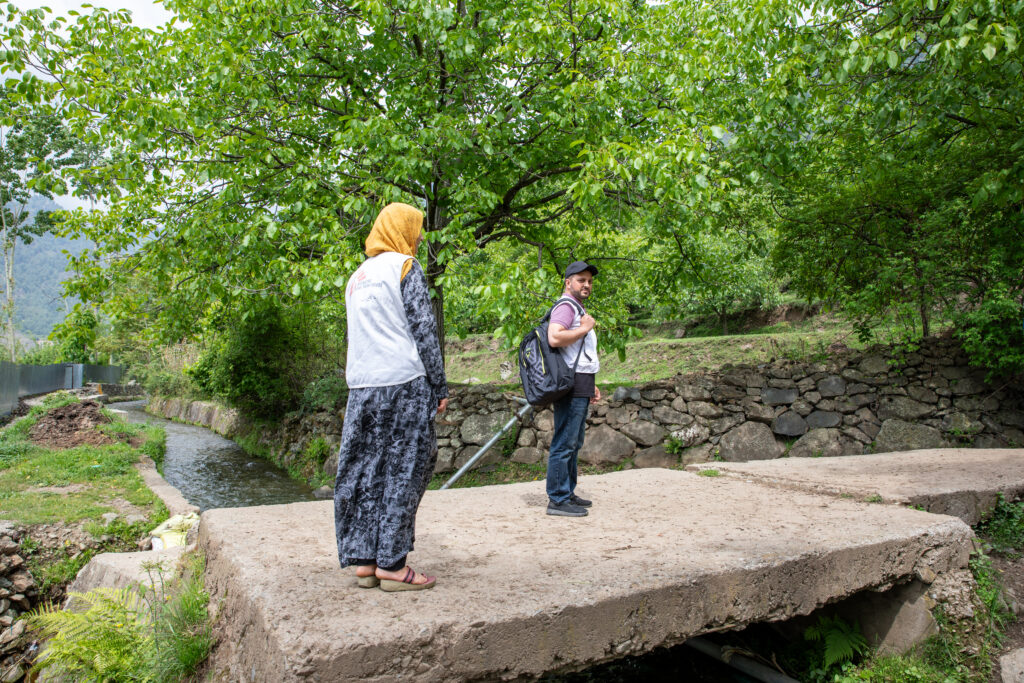
A team of Doctors Without Borders India/Médecins Sans Frontières(MSF) community mental health workers crosses a narrow footbridge over a stream on the way to a session with the Gujjar nomadic community in a village in Tral, Kashmir. ©Deepak Bhatia/MSF
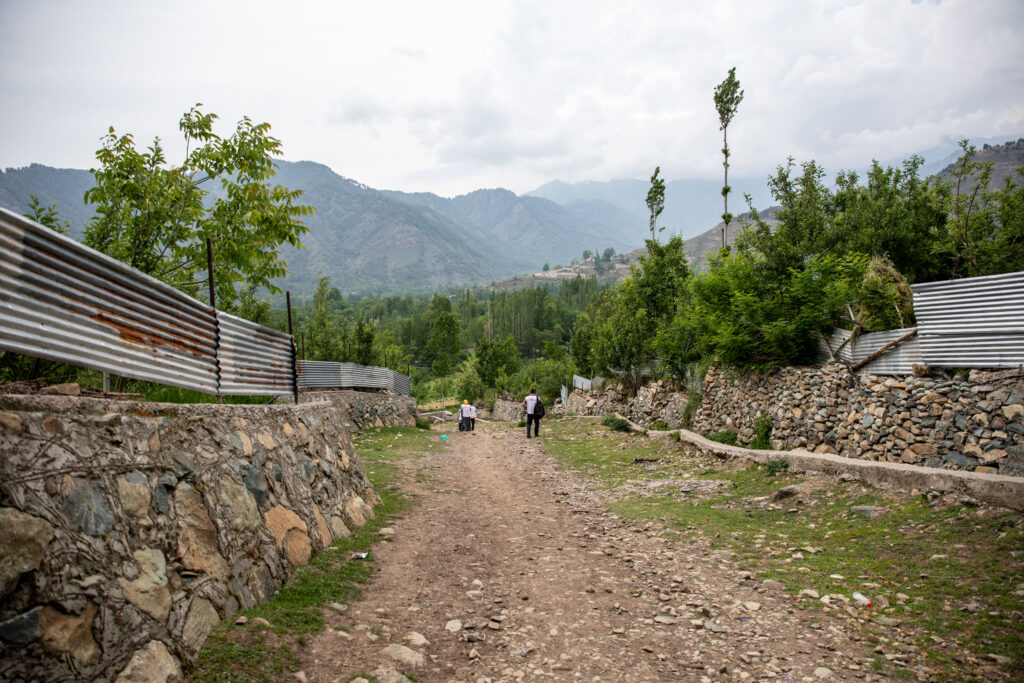
A stone-walled path leads through village in Tral, Kashmir, with Doctors Without Borders India/Médecins Sans Frontières(MSF) community mental health workers visible in the distance. ©Deepak Bhatia/MSF

Building resilience, not just response

We’ve been working in this community for five years now. When we first arrived, we already knew mental health difficulties existed in every age group, but the community itself had very little awareness of it. People gave their mental health far less importance than their physical health. That first year, we had to work hard just to get people to come forward.

Today, people come to us. And that shift is exactly why we’ve moved towards what we call community resilience: rather than only responding when someone reaches us, we go out and help build the community’s own capacity to cope.

What I hold onto

What I hold onto is that this work is a long game. It isn’t measured in any single moment, it’s in making sure that once understanding reaches a family or a community, it stays there, long after we’ve moved on to the next one. That’s what community resilience means to me: not that we’re always present, but that people carry what they’ve learned forward on their own.

*Name changed to protect the patient’s privacy.
MSF provides free, confidential mental health and psychosocial support in Kashmir, including counselling for young people and adolescents.