For five months, 34-year-old Razia*, a mother of six from Gulshan Ghazi in Baldia Town, Karachi, took her tuberculosis (TB) medicines every morning without missing a dose. But instead of getting better, her health continued to deteriorate. 

She had initially been diagnosed with drug-sensitive tuberculosis (DS-TB) at a private hospital and started on standard TB treatment. No resistance was detected and in the fifth month, her sputum was tested again: there was still no improvement. She was subsequently assessed as needing specialised treatment for drug-resistant TB (DR-TB).

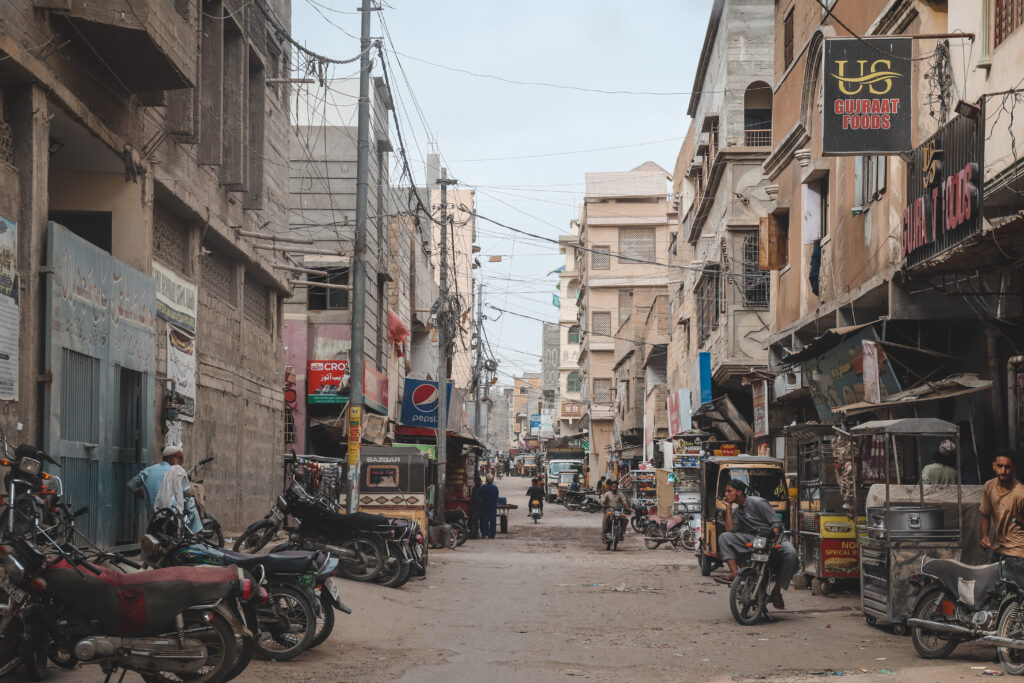
A view of the streets of Baldia, an administrative sub-division within Keamari District of Karachi Division in Sindh Province of Pakistan. Here, since February 2025, MSF has been providing drug-sensitive tuberculosis (DS-TB) services. In June 2026, specialized drug-resistant TB (DR-TB) services were added to the same facility. This means that patients in Baldia, Karachi, can access both standard TB treatment and specialized treatment for drug-resistant TB within the same primary healthcare setting under one roof. ©Gul Nayab/MSF

“I cried bitterly upon hearing this because I had taken the medication faithfully every single day without missing a dose,” Razia said. 

The doctor who referred her explained that the hospital did not have the appropriate treatment for her condition and advised her to seek care either at Jinnah Hospital or at the Médecins Sans Frontières (MSF)-supported TB clinic at the Rural Health Centre (RHC) in Baldia. 

For Razia, the difference was significant. Jinnah Hospital is around 50 minutes’ drive from her home, while the RHC is about 18 minutes away. Already weakened by illness and facing financial difficulties, travelling regularly to a distant specialised centre would have added another burden.

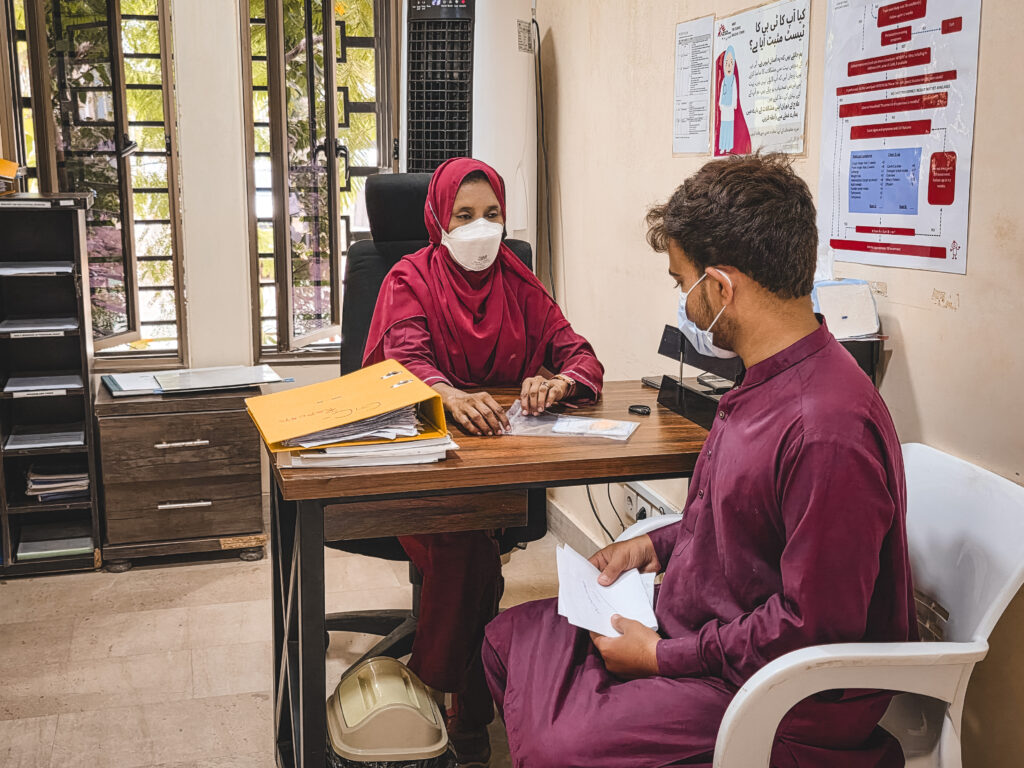
An MSF nurse explains a medicine prescription to a patient visiting the MSF TB clinic at the Rural Health Centre in Baldia, Karachi, for a checkup. At the clinic, MSF provides services to patients with drug-susceptible and drug-resistant tuberculosis under one roof, a care model that helps make TB care accessible to patients. ©Gul Nayab/MSF

Her experience illustrates why where TB care is provided can matter almost as much as what care is provided. 

Pakistan remains one of the countries with the highest TB burdens globally. In 2024, an estimated 669,000 people developed TB in Pakistan and around 51,000 died from the disease. An estimated 15,000 people developed drug-resistant TB. 

Yet access to TB care is not the same for everyone. DS-TB treatment is widely available through primary healthcare services, while DR-TB care has traditionally been concentrated in specialised centres, often affiliated with large hospitals.

Lorem ipsum dolor sit amet, consectetur adipiscing elit. Ut elit tellus, luctus nec ullamcorper mattis, pulvinar dapibus leo.

In Karachi, where more than 20 million people live, there are currently only three DR-TB treatment centres affiliated with big hospitals. For patients living far from these facilities, accessing specialised care can mean long journeys, transport costs and repeated time away from work and family.

Dr Hassan Naeem
MSF Medical Activity Manager at the RHC Baldia TB Clinic
A decentralised model of care 

In light of these difficulties, MSF is working alongside health authorities to implement a decentralised model bringing both types of TB care together at a primary healthcare level. By doing so, the project aims to demonstrate how communities can access quality and timely care while successfully bypass long, costly journeys to big hospitals. Expanding this model to public health centres everywhere will ensure that the treatment is never out of reach for anyone. 

“Bringing DR-TB care closer to where people live removes major practical and financial barriers, especially for patients who need regular visits over a long period,” says Dr Hassan. “More importantly, expanding care outward from major hospitals is vital to catching cases early, identifying and tracing the contacts, stopping TB from spreading to families and communities, and preventing deaths.” 

For Razia, the difference was immediate. At the RHC, her diagnostic assessments were repeated, including X-rays and an electrocardiogram (ECG), before she started her new treatment. Starting the new treatment was difficult. During the first week, Razia experienced severe nausea, vomiting, anxiety and restlessness and decided to stop taking the medicines.

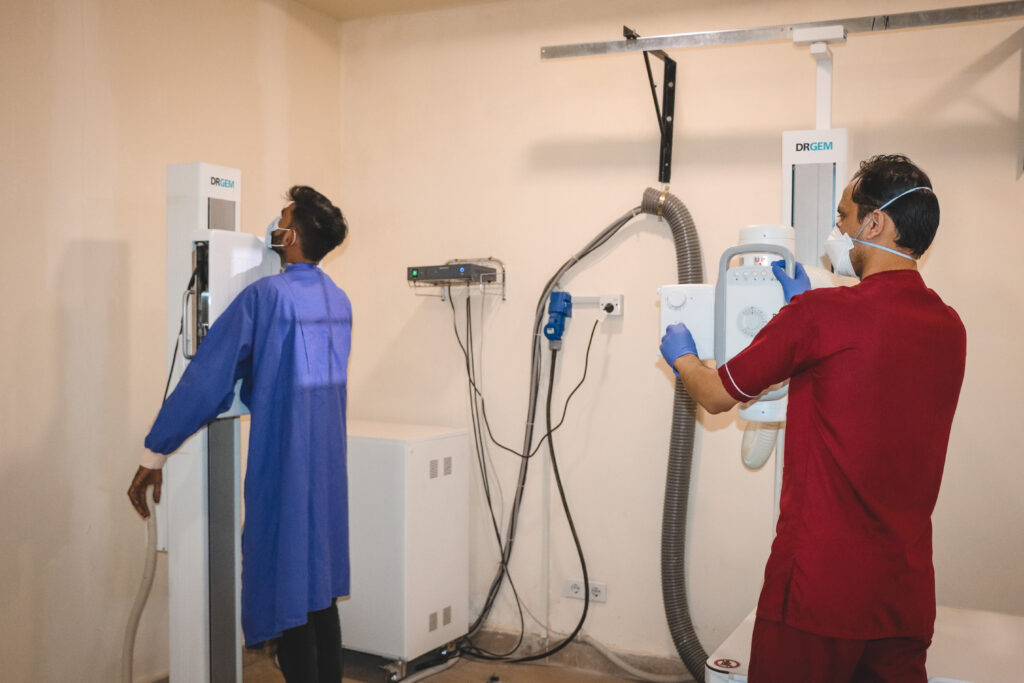
An MSF X-ray technician performs a chest X-ray of a patient visiting the MSF TB clinic at RHC Baldia, Karachi, for a checkup. MSF uses a portable digital X-ray with artificial intelligence support to help diagnose TB in patients. MSF teams also carry the portable digital X-ray into the field to organize camps to screen the community for tuberculosis. ©Gul Nayab/MSF

The health promotion team visited her at home, provided treatment adherence counselling and encouraged her to continue. The clinical team also helped manage her side effects 

“If I had abandoned my treatment back then, I would not be in the condition I am in today,” she says. “Today, I am progressing steadily toward full recovery.” 

For patients with TB, decentralisation of integrated TB care therefore means more than having two services in the same building. It brings diagnosis, treatment, follow-up and patient support closer to the communities where people live. 

For Ayesha*, a mother of four from Baldia, the problem was different. Before reaching the MSF-supported clinic, she had spent about a year moving between healthcare providers without a confirmed diagnosis. 

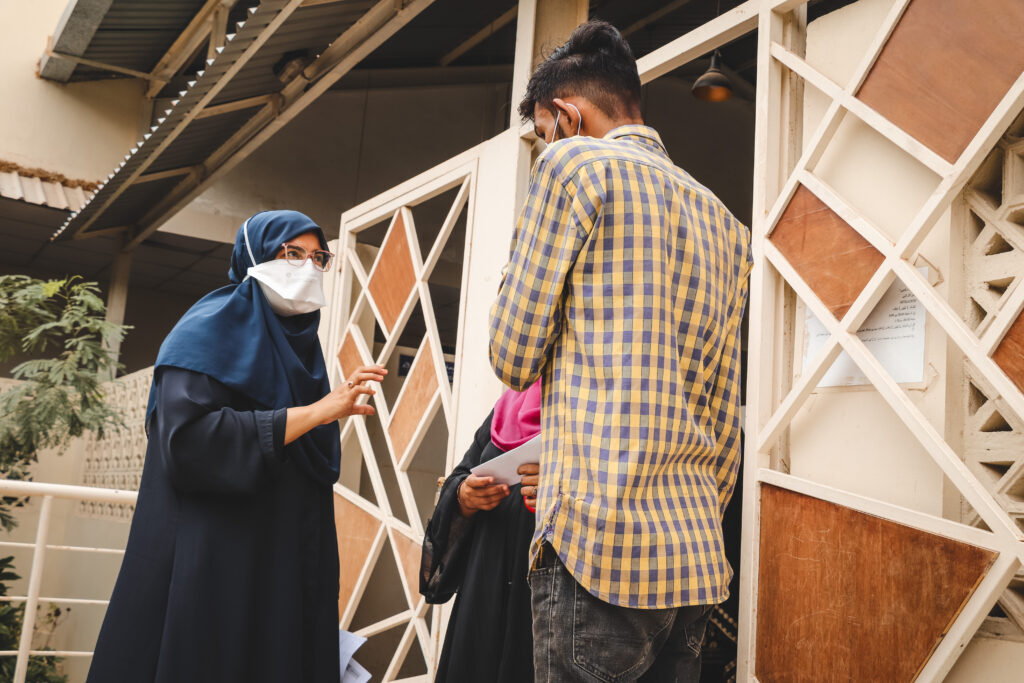
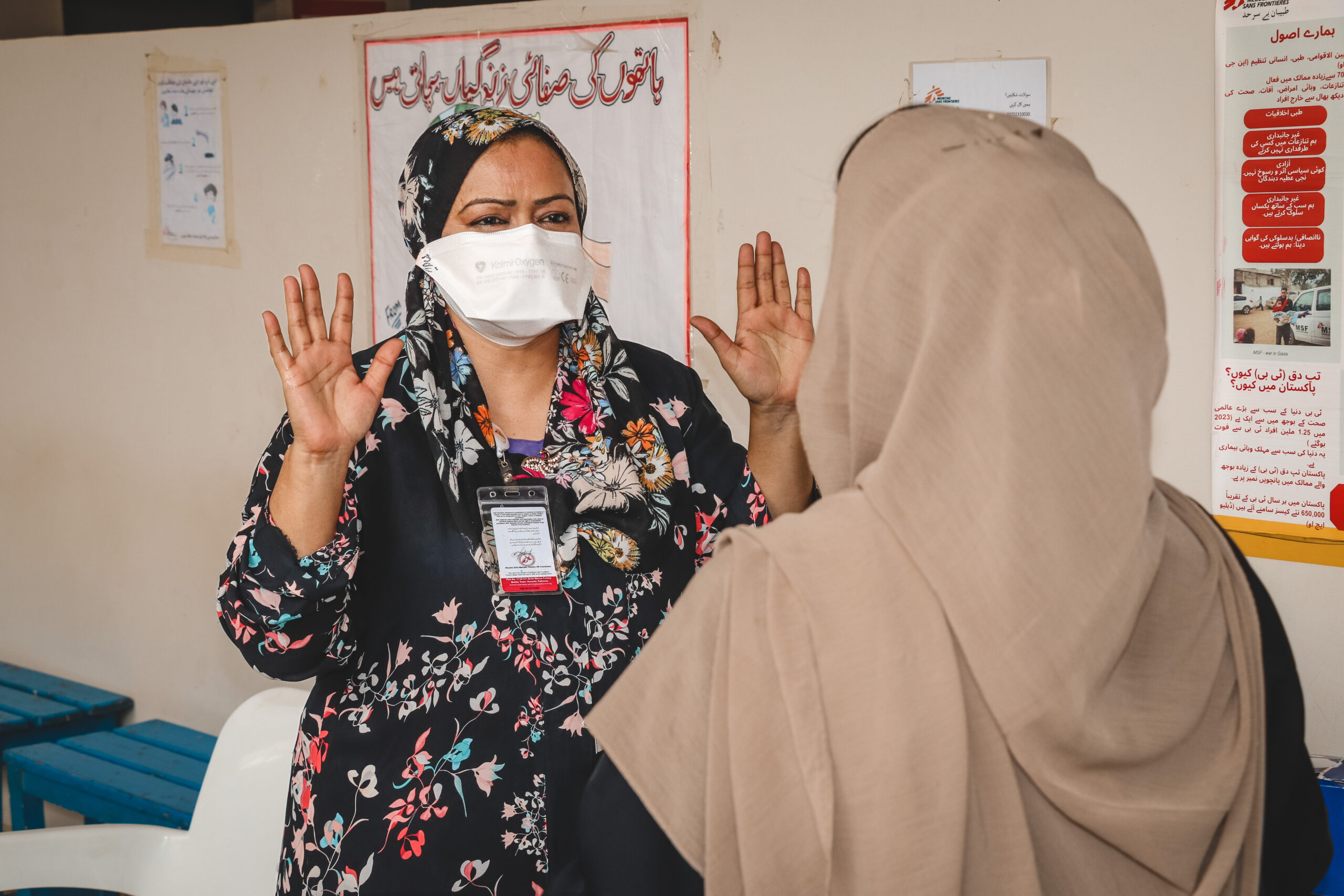
An MSF health promotion officer educates a patient visiting the MSF TB clinic at RHC Baldia, Karachi, about tuberculosis including its prevention and treatment, at the entrance of the clinic. The health promotion team interacts with patients at the clinic, as well as goes into the community to educate people about TB causes, prevention, and the free services MSF provides at the clinic. ©Gul Nayab/MSF

She had persistent fever and cough and was repeatedly given medicines for her symptoms. Some people suggested malaria or typhoid, while others attributed her illness to a seasonal cough. By the time she reached the health facility, she was so weak that she could barely eat or stand. After being tested and diagnosed with DS-TB, she started treatment.  

“I was so sick that I couldn’t even stand up,” she says. “After months of treatment, I have regained my strength and am once again able to care for my children and go to work.” 

Ayesha’s experience highlights why improving TB testing in local health facilities is key, while making access to such testing and care closer to home. When care is only available in distant, specialised hospitals, patients face long delays in getting a correct diagnosis, leading to months of suffering and more people getting sick as late treatment contribues to the spread of the disease. Bringing testing and treatment directly to local health centres stops this endless runaround. 

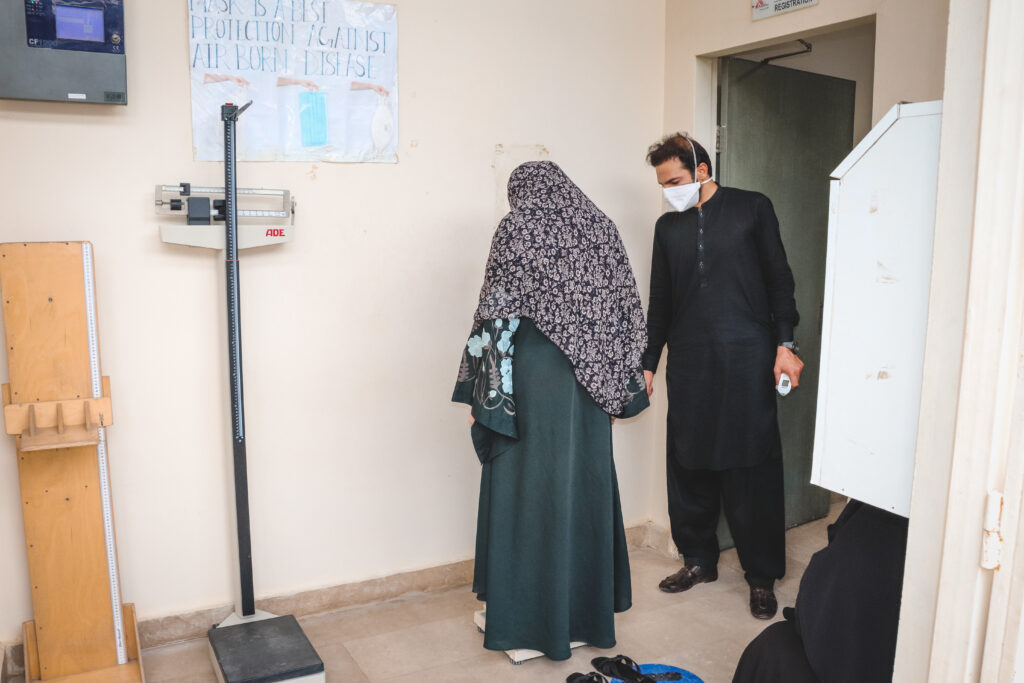
An MSF nurse checks the weight of a patient at the MSF TB clinic at RHC Baldia, Karachi. Upon entering the MSF clinic, the clinic’s nursing staff takes vital signs, keeps a record of the patient, and sends them to the doctor for a consultation. ©Gul Nayab/MSF
When TB test and care goes mobile 

At RHC Baldia, this integrated approach is supported by services that extend beyond the facility walls. MSF community teams conduct mobile TB screening camps using portable digital X-ray machines. People who require further assessment can undergo rapid GeneXpert testing at the clinic to confirm TB diagnosis and the resistance to key medicines. When needed patients can be referred to the MSF-supported clinic. The programme also screens household contacts of people diagnosed with TB and provides preventive treatment where appropriate.

Health promotion teams sensitise community members about the diseases and its way of contamination, support patients during treatment and can conduct home visits when additional counseling or support is needed. The facility has also been redesigned with separate patient flows for DS and DR-TB, improved natural ventilation and infection-control measures to allow different TB services to operate safely within the same primary healthcare setting. 

For Razia, access to care closer to home has also reduced the financial burden of treatment. “It costs a huge amount of money; before reaching the clinic, we paid for X-rays, laboratory tests and medicines at private facilities,” she says. 

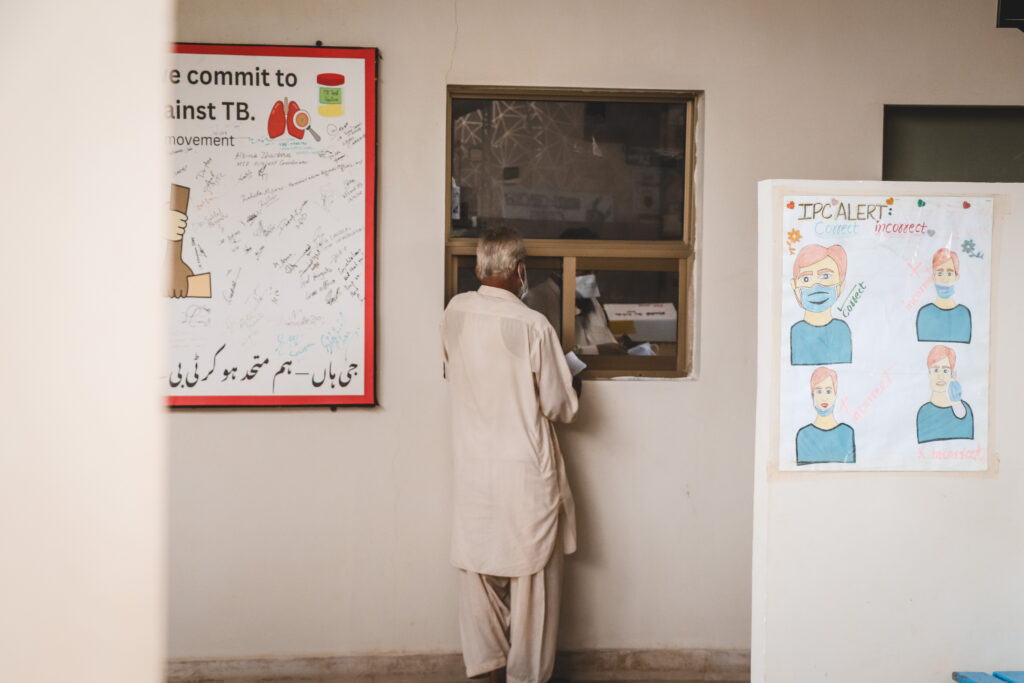
A patient visiting the MSF TB clinic at RHC Baldia, Karachi, is waiting outside the pharmacy to take his medication. At the clinic, MSF provides comprehensive services to patients, including consultations, diagnostic tests such as X-rays and GeneXpert, medications, counseling, and follow-ups. ©Gul Nayab/MSF

 Since the beginning of TB services in Baldia, the MSF team has enrolled 480 patients on TB treatment and screened 7,128 individuals for TB through mobile chest camps. In addition, 955 household contacts of people with TB were traced, and 470 were initiated on TB preventive treatment during this period.   

Projects like RHC Baldia prove that bringing all TB services under one roof at local clinics works. By moving treatment out of crowded city hospitals and into local neighborhoods, health systems can stop the spread of TB and make sure care is within reach of everyone who needs it. 

*Names have been changed to protect patient privacy.