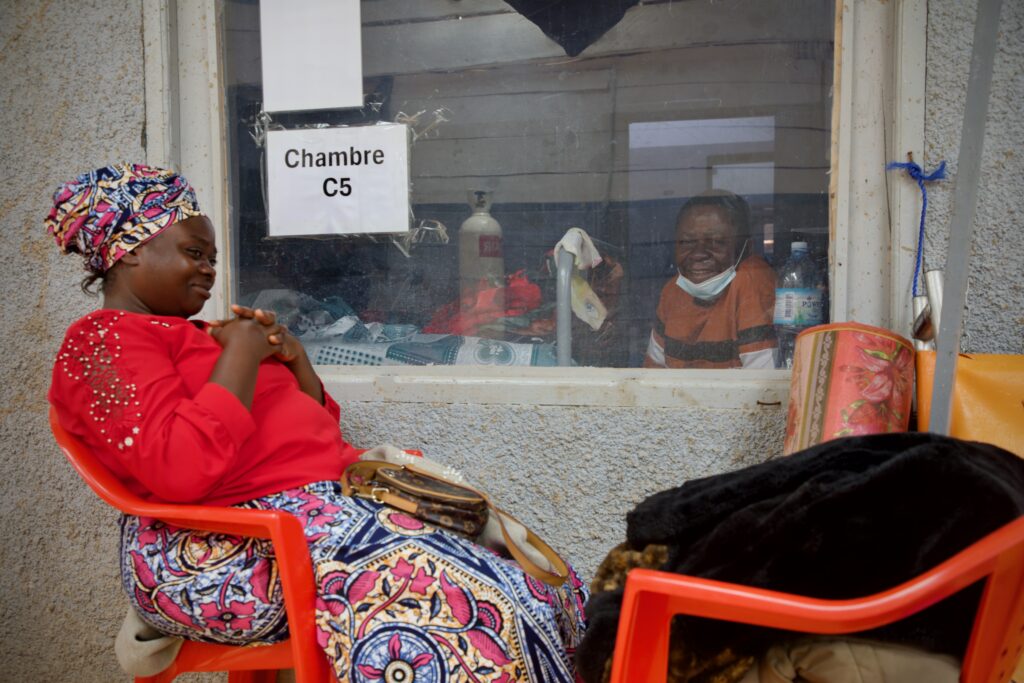
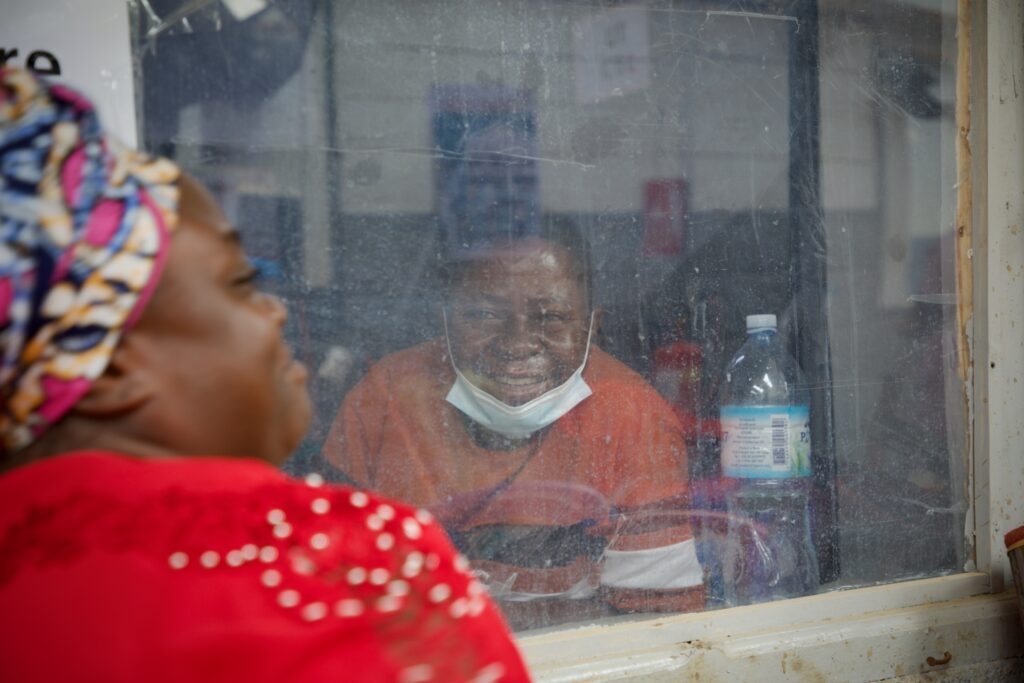
In Butembo, in eastern Democratic Republic of Congo (DRC), Kasoki Zawadi spends her days with her husband, who is being treated for Ebola. A plexiglass window separates them, but they can talk to each other. In MSF treatment centres, psychological support is available to both patients and their loved ones.

In the corridor of Kitatumba’s Ebola treatment centre (ETC) in Butembo, North Kivu, Kasoki Zawadi sits on a plastic chair facing the window that separates her from her husband, Victoire. He has been in hospital for 13 days. On the other side of the plastic screen, he smiles from time to time. 

The hospital where Victoire is being treated is one of the facilities where MSF supports treatment for patients with Ebola. In Butembo, 1,472 cases were confirmed and 735 deaths recorded between May and 22 October 2026. 

The outbreak is hitting people already facing insecurity and economic hardship. 

Victoire, ill with the Ebola virus, spending his days in the ETC of Kitatumba, in Butembo, waiting to leave as his health is getting better. He thinks he got ebola while working as a nurse in another hospital, as he took care of a patient who was afterwards declared positive to the Ebola virus. His wife, Kasoki, comes everyday to support and watch him, from 6.30 a.m till 6.30 p.m. ©Elio Parfait/MSF

Many families are sheltering relatives displaced by fighting in neighbouring areas, while movement restrictions and reduced trade have made daily life even harder. 

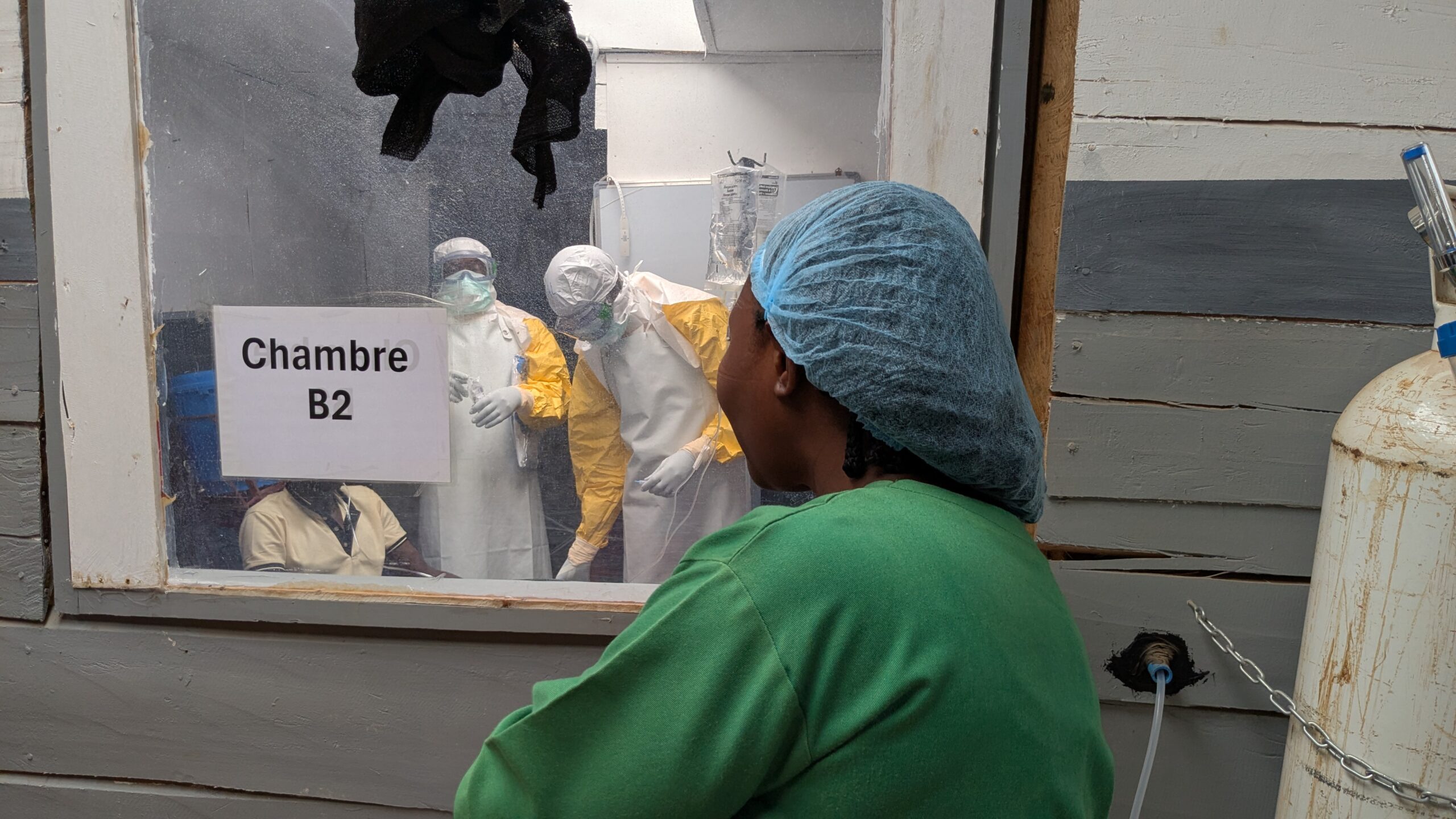
At the treatment centre, teams support not only patients but also their loved ones as they cope with fear, uncertainty and the wait for test results. From the moment of admission, psychologists are there to listen to concerns, explain the care being provided and help families manage the mental strain of hospitalisation. 

Every morning, Kasoki arrives at around 6:30am and stays until 6:30pm. Her brother-in-law takes over at night. “We manage to communicate despite the window,” she says. “We’re allowed to see each other, and this brings us comfort.”

Since her husband was admitted, she has stopped working as a teacher. Their family is supporting them during this time. She also worries about her own health. And when she leaves the centre, the separation weighs heavily on her. 

“In the evening, when I go home and can’t see my husband, I find it hard to sleep,” she says. 

A few days later, Kasoki explains that a negative test result had given them hope that they would soon be able to go home. But a second test came back positive. 

“When he tested positive again, we were exhausted, mentally and physically,” she says. “Fortunately, the psychologists’ support helped us feel calmer, and we managed to wait.” 
Staying in touch during hospitalisation 

The disease and hospitalisation can be distressing for both patients and their loved ones. In Butembo, mental health activities supervisor Patrice Muyisa Kokotz provides psychological support. He describes people who arrive not only fearing the disease, but also worried about what awaits them at the centre. Some fear that isolation means they will be abandoned. 

“We give them time to express themselves, talk about their past and their emotions,” Patrice explains. His team introduces them to how the centre works, explains the care provided and organises visits. He says seeing other patients and their caregivers helps reassure families. 

Some suggest that psychological support can have an impact on patient outcomes. 

As she has done every day for the past 13 days—ever since her husband Victoire was hospitalized—Kasoki intends to stay by his side from 6:30 a.m till 6:30 p.m. Kasoki watches her husband from the other side of the window and offers him support, as his health shows signs of improvement. ©Elio Parfait/MSF

“Ebola disease is traumatic and sudden; it is a viral illness. So you are under stress, always expecting death at any moment,” said Rachel Kashimoto, a clinical psychologist working with MSF in Beni, also in North Kivu.  

“If you are not mentally stable and not well cared for, even physically, things may not go well. But if you are mentally stable, well supported and well monitored, there will also be physical improvement. Because when you have hope of recovering, you follow all the instructions the medical staff give you, and then there can be rapid improvement.” 

Supporting the return home 

Psychological support does not end when patients leave the centre. In Mongbwalu, Ituri, it continues through the survivors’ clinic. 

“We organise individual consultations as well as group discussions,” explains Phoebe Zueya Yonkeu, who manages mental health activities at MSF’s ETC in Mongbwalu. “Many tell us they faced stigma when they returned home, lost their jobs or were rejected by their communities, who believed they were still contagious. Others feel guilty towards loved ones who did not survive the disease, and they even wonder whether they were the ones who infected them.” 

While some patients face stigma after leaving the ETC and the trauma of having come close to death, returning home can also bring immense relief to them and their loved ones. 

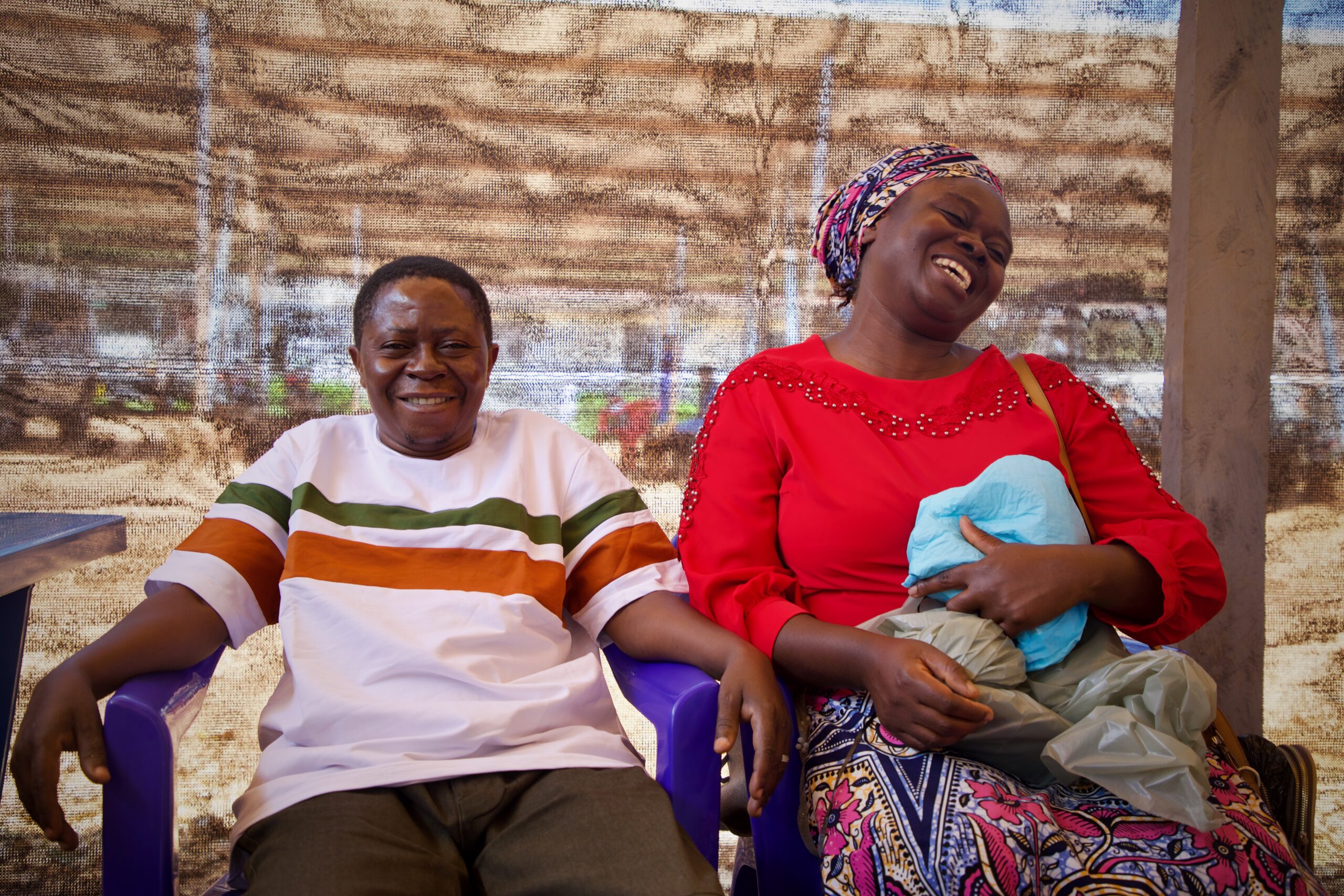
In Butembo, on the twenty-third day of Victoire’s hospitalisation, the couple learns that he is due to leave that same day. The positive result, following the first negative result, prolonged their wait: now that he has finally tested negative twice, Kasoki and Victoire say they are very happy to finally be going home. 

“Kasoki’s presence really is part of my care. I feel comforted. When I see her, it reduces my stress,” says Victoire.