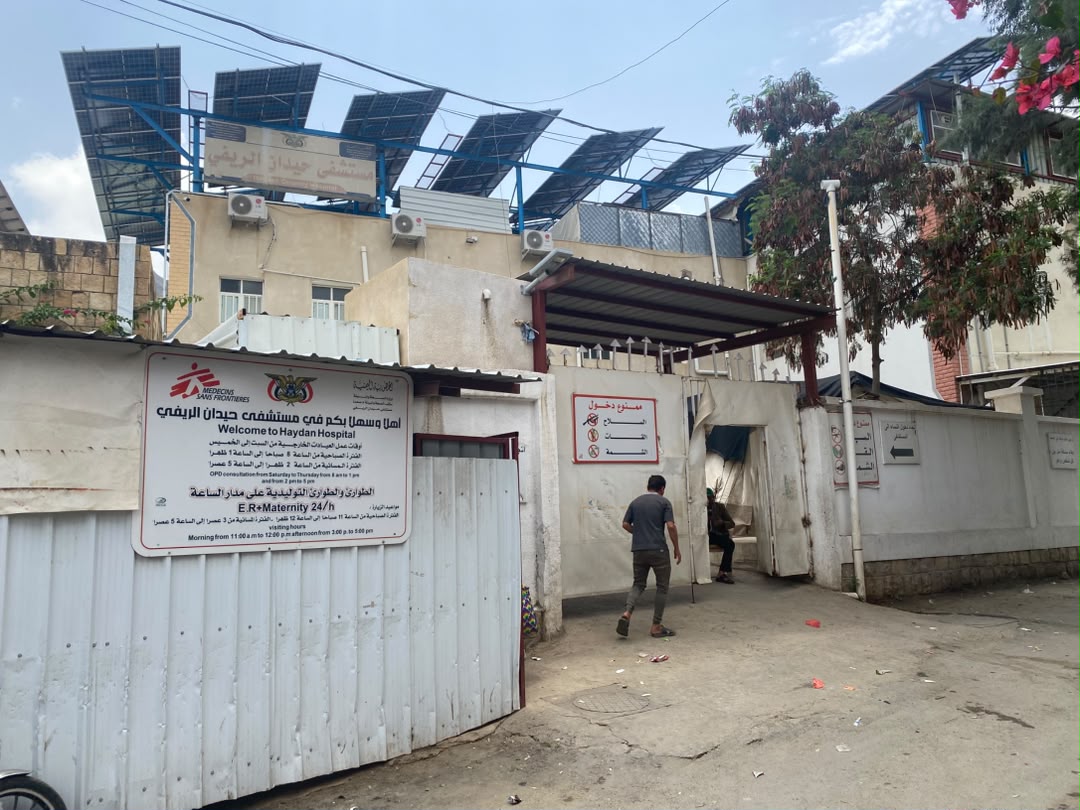
Arwa,* a 27-year-old mother from Haydan in Sa’adah Governorate, Yemen, has precious hopes for her pregnancy this time. “If I had to travel for hours to the city every month just for routine checkups, I would have lost my baby. Having this care right here in our village is what has allowed me to carry my pregnancy safely.”
For 10 long years, Arwa was unable to get pregnant. When she finally did, the pregnancy ended in tragedy. During a routine antenatal care check-up, healthcare staff discovered that the foetus had died in her womb. At the time, Haydan Hospital, her local hospital, did not have the specialised staff or equipment needed to provide comprehensive miscarriage care. Arwa had to travel to Sa’adah city for an emergency procedure, costing her extensive unpaid leave and hefty travel expenses.
While Arwa was still fortunate to have a salary to support her, many women in her village do not have that cushion. For them and their families, travelling to the city, paying private doctors and covering the cost of ultrasounds and medicines can simply be beyond their means.
For a long time, motherhood across Haydan was defined by this shared anxiety, and Haydan Hospital maternity was stretched beyond its capacities.
A typical day for the midwives at Haydan Hospital was a nonstop race against time. Women arrived continuously from Haydan town and surrounding villages. Some had walked for hours over steep hills, while others had travelled by car over difficult roads. The team had to manage routine check-ups, family planning, normal deliveries at the same time as all kinds of emergencies, from severe bleeding to dangerous seizures caused by the high blood pressure disorder eclampsia.
“When these women finally reached the hospital, they were met by a very limited service,” recalls one of the midwives. Back then when there was no separate ward for maternity admissions. Pregnant women, women in active labour, new mothers with their newborns, women with other health needs and children requiring surgery were all squeezed into a single nine-bed ward. “Our midwives were also not allowed to carry out some basic lifesaving procedures, including inducing labour or managing miscarriages, because of strict protocols.”
That began to change in April 2026.
With support from MSF, the maternity department was expanded from nine to 18 beds, separating maternity patients from the general non-obstetric medico-surgical ward. Nine beds are now available for women with complicated pregnancies and postpartum, those recovering from surgery and other patients requiring closer care, while another nine are dedicated to normal pre- and post-partum cases.
The upgrade has strengthened access to maternal healthcare for more than 293,000 people living in the hospital’s catchment area. Most importantly, the hospital recruited four obstetrician-gynaecologists, four additional midwives and four nurse assistants, giving the team, for the first time, both the expertise and capacity to provide critical care within the hospital itself.
As a result, average monthly obstetric and gynaecological admissions tripled from 33 to 100 following the inception of comprehensive emergency obstetric and newborn care services in April, while normal deliveries increased by 20 percent.
But perhaps the biggest difference can be seen in the experiences of the women themselves.
Early in Arwa’s pregnancy, the new obstetric team detected a risk of miscarriage after she experienced mild bleeding. In the past, this would have meant another difficult journey to Sa’adah. This time, she was treated at Haydan hospital, and her pregnancy is now stable.
Shatha,* meanwhile, returned to Haydan Hospital for her second delivery, four years after her first birth. During her monthly prenatal check-ups in the upgraded department, the medical team detected early warning signs but was able to monitor her closely and help prevent postpartum bleeding, a common cause of maternal mortality.
The expansion reflects MSF’s commitment to improving maternal health and newborn care services combined. It aims to reduce delays in reaching care, prevent complications and strengthen care for mothers and their new babies. It also responds to rising needs in Haydan and its surroundings. Humanitarian funding cuts have stripped away maternal services closer to people’s homes, and Haydan Hospital now receives more women, including those needing specialised care.
For women like Arwa and Shatha, the difference perhaps is much simpler: when they need care, more of it is now available closer to home.
*Names have been changed to protect privacy.