As Israeli settlers and armed forces increase attacks across the West Bank of Palestine unabated, Palestinians are struggling to access basic healthcare due to restrictions, insecurity, and systematic violence. Despite Israeli authorities limiting our capacity to respond to major health concerns, Médecins Sans Frontières (MSF) has expanded mobile clinic activities in Hebron, including to support people with their mental health needs that are driven by intentional violence.
Violence driving physical and mental health needs
Repeated attacks, displacement, movement restrictions, and deteriorating living conditions are impacting people’s physical and mental health in Hebron.
Ismail Ibrahim, a patient from outside Yatta, a city in Hebron governorate, says he has been attacked three times in recent months.
“Settlers sprayed pepper spray on my face while I was working in an olive grove the family had been raising for years,” he says. “They grazed animals among the olive trees, damaging the land, destroying and breaking the trees. When the police arrived, they told us we weren’t allowed to speak to the settlers.”
“Every day the situation becomes worse,” says Ibrahim. “Many people in our community have been attacked. Once they came at night and stole 200 sheep. They cut the gate to the sheep enclosure. We managed to recover only a few.”
At least 77 Palestinians have been killed by Israeli forces and settlers this year in the West Bank, according to United Nations Office for the Coordination of Humanitarian Affairs (OCHA).1 This figure is already higher than the whole of 2025. Since March, between 17% and 38% of our psychological consultations were driven by events of intentional violence compared to a range of 13% or less at the beginning of the year.
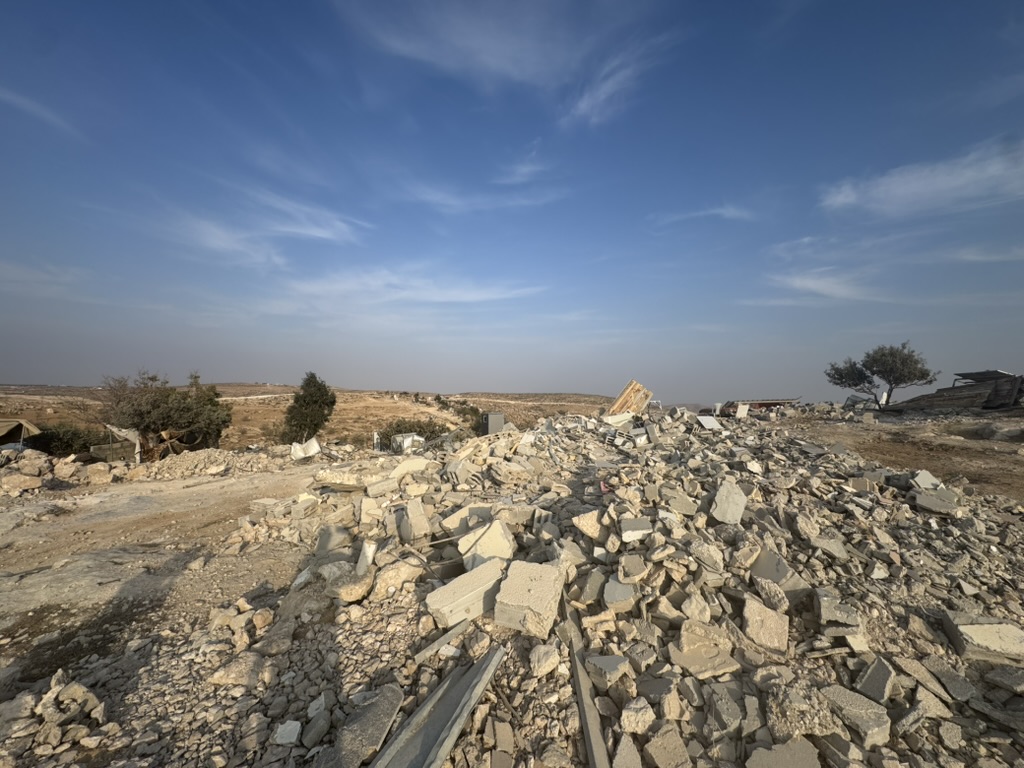
Between January and July, MSF teams provided over 1,930 individual consultations for mental health and conducted 436 group therapy sessions through mobile activities and a fixed consultation room. In the same time period, our teams in Hebron also received nearly 170 alerts for incidents such as home demolitions, injuries, or attacks on the water and sanitation system. We ran 27 rapid responses, which can include mental health support, or the donation of essential items like mattresses or tarpaulin.
Growing barriers to medical care
In addition to escalating violence, movement restrictions and a collapsing healthcare system are also causing barriers to care.
“We have noticed a growing demand for our medical services because people are facing difficult economic conditions and cannot afford private healthcare,” says Dr Mohammad Haroub, assistant medical coordinator for MSF in Hebron.
A shortage of healthcare workers compounds the issue. Following its offensive in Gaza, Israel has withheld billions of dollars of tax revenue from the Palestinian Authority. This has severely impacted the payment of health workers, resulting in medical staff working reduced hours, and in some cases clinics are completely closed.
“The limited availability of health services, and shortages of healthcare workers and medicines within the Ministry of Health have created an additional burden,” says Dr Haroub. “Some patients tell us they have been without medication for several days.”
On top of this, reaching healthcare has also become increasingly difficult for many Palestinians. This is due to insecurity, checkpoints, and road closures.
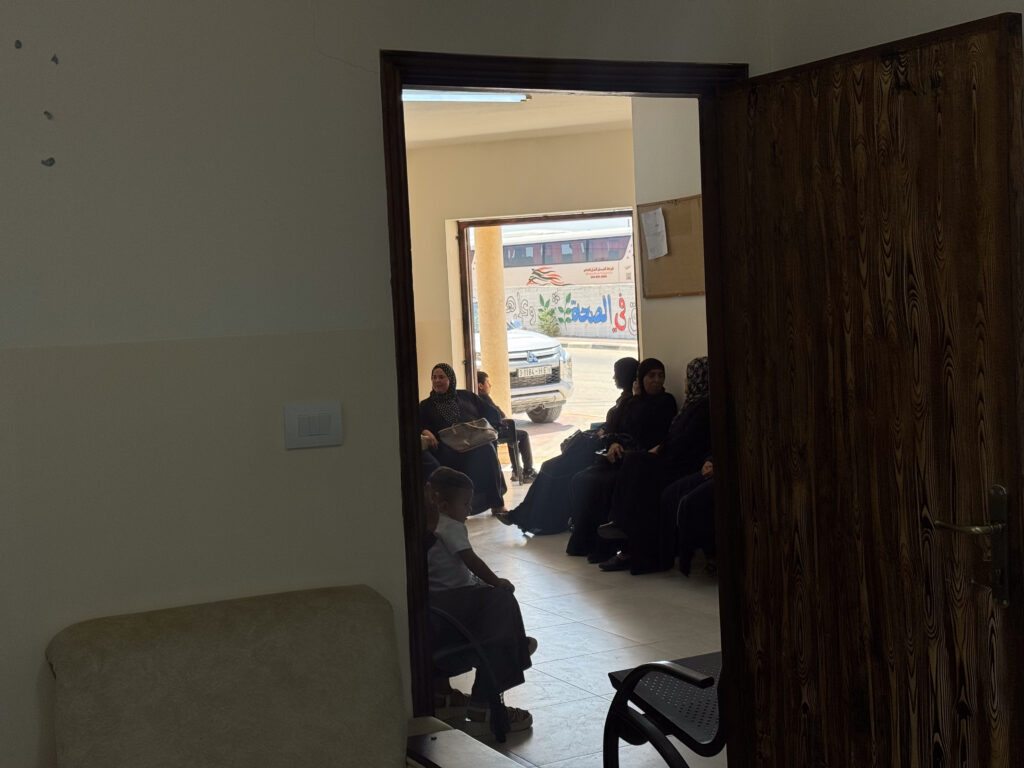
“Life has become a heavy burden because of settler attacks,” says Aisha*, a woman from a village near Yatta who reached an MSF clinic in Khallet Al Mai. “I’m afraid all the time. My relatives hardly sleep. They’re afraid settlers might come.” Although only kilometres away, Aisha’s journey to the clinic was made longer by insecurity and detours.
Her mother-in-law suffers from diabetes and high blood pressure but, she says, “not all the medicines are available” where the family lives.
Operational constraints amid uncertainty
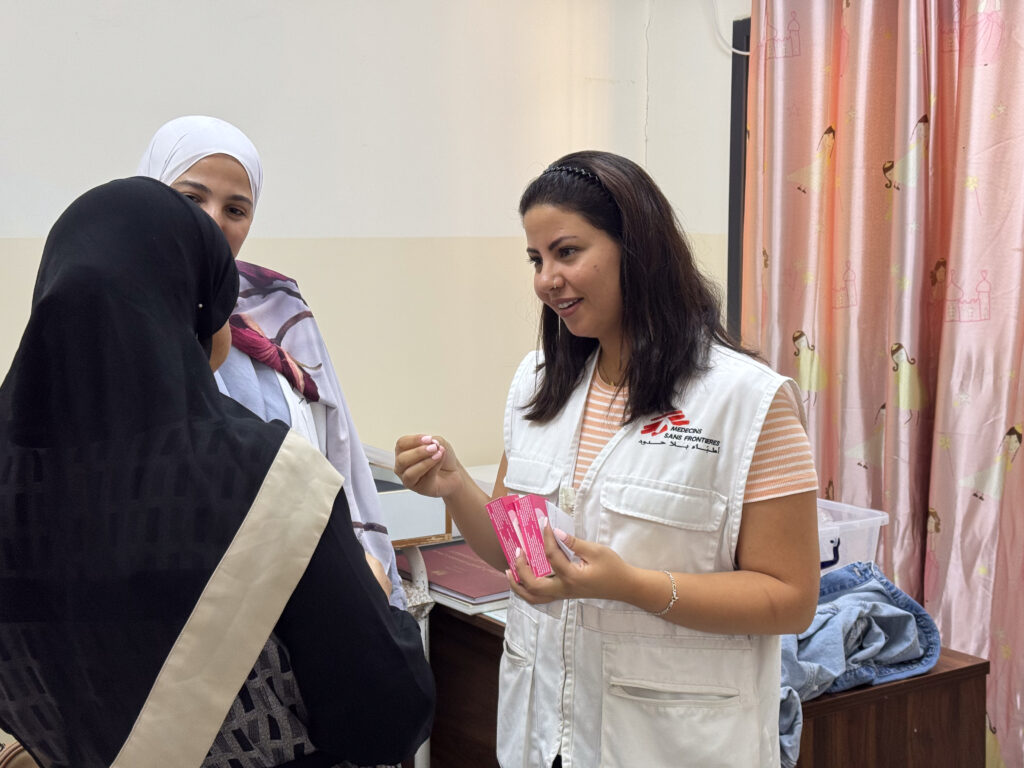
Despite the constraints, between January and July, MSF carried out 7,595 medical outpatient consultations in Hebron, including 1,910 for sexual and reproductive health. In June and July, having expanded from five to eight mobile clinics, MSF teams provided 1,450 and 1,397 outpatient consultations respectively. These were the highest monthly figures in 2026, a 26 per cent increase compared with the previous two months.
The most common issues people required healthcare for were gynaecological conditions, non-communicable diseases, upper respiratory infections, and conjunctivitis.
This comes after we were forced to reduce more than half our mobile activities in the first quarter of the year amid deregistration by the Israeli authorities. This limited access to areas such as the militarised H2 neighbourhood in Hebron City and villages in Masafer Yatta hills, which are prone to violence and attacks. To reach patients from communities that could no longer be visited by MSF, we launched new clinics close to the edge of Area C, an area exclusively controlled by the Israeli forces, ensuring people there could still access our services.
Despite adapting activities, MSF teams continue to face significant operational constraints.
“Every day, we don’t know whether we will even reach the clinic. The context is constantly changing,” says Elisa Tamimi, MSF humanitarian affairs officer in Hebron. “Sometimes entire areas are placed under closure for a day, two days, or even a week. This has a huge impact on people’s lives. Many have lost their jobs and cannot find new work.”
“Israeli authorities must halt all measures that force Palestinians from their homes, ensure unhindered access to healthcare and humanitarian assistance, protect civilians, and comply with international law,” says Joan Tubau, MSF head of mission for Palestine.
Aisha says they are not asking for much: “I hope life can return to how it was before the war. I hope people can live with dignity. I want people to go out without fear, to have healthcare, education, and basic necessities.”